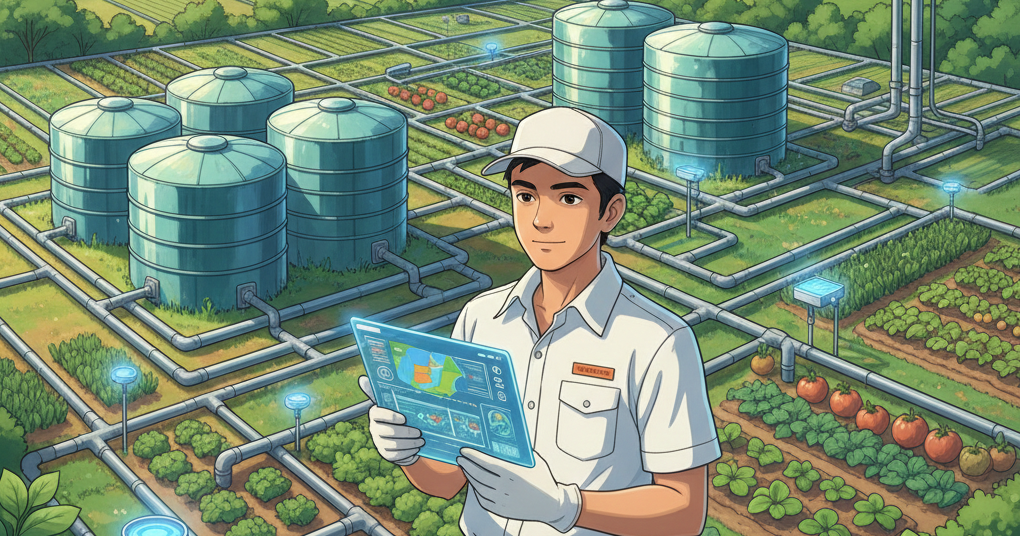
What if you could “program” your farm to survive a drought while cutting your monthly utility bills by 40%? It sounds like science fiction, but with the global population heading toward 9 billion, water is becoming the “blue gold” of the 21st century. The shocking reality is that traditional irrigation systems lose up to 60% of their water to evaporation and runoff before a single drop reaches a plant’s roots. For the modern farmer, the “Challenge” is no longer just about hard work; it is about resource exhaustion. The “Pain Point” is the rising cost of electricity for pumping and the dwindling levels of local aquifers.
The ultimate solution is the adoption of Modern Water Management Systems. This goes beyond simple pipes and pumps; it is about creating a synchronized ecosystem that tracks, saves, and recycles every drop. By moving from a “guess-and-pour” method to a precision data model, farmers can ensure long-term sustainability. This article serves as your comprehensive guide to the technologies defining the future of agriculture. You will learn the core fundamentals of smart water systems, the massive economic advantages they provide, and a practical 5-step plan to modernize your own water infrastructure.
Understanding Modern Water Management: Key Concepts and Importance
Modern Water Management (MWM) is a holistic approach that integrates high-tech hardware with real-time data to optimize water use. Historically, irrigation was a manual chore—opening a gate and letting a field flood. In the modern era, MWM is a “smart” process that considers soil type, crop stage, and even satellite weather forecasts. The importance of these systems lies in their ability to eliminate human error and environmental waste.
Think of Modern Water Management like a high-end drip coffee maker vs. throwing a bucket of water over coffee beans. The bucket method (traditional flooding) is messy, uses way too much water, and results in a poor-quality brew. The coffee maker (MWM) uses exactly the right amount of water, heated to the perfect temperature, and dripped at the perfect speed to get the best result from every bean.
Technically, these systems rely on a “closed-loop” feedback system. Sensors in the soil measure the Volumetric Water Content (VWC). This data is sent to a central controller, which then signals the pumps to deliver water only when a specific threshold is reached. By treating water as a “just-in-time” inventory rather than a free-flowing resource, farmers can maintain a perfect balance in the root zone.
Why It Matters: The Top Benefits of Modern Water Systems
Upgrading your water management is the single most effective way to increase your farm’s profit margin. Here is why it matters:
- Significant Energy Savings: Most water waste happens because of over-pumping. Modern systems use Variable Frequency Drives (VFDs) on pumps to adjust the motor speed to the actual demand, slashing electricity costs by up to 30%.
- Uniform Crop Growth: Traditional watering creates “hot spots” and “wet spots.” Modern precision systems deliver identical amounts of water to every plant, ensuring your entire field matures at the same time for a more efficient harvest.
- Reduced Weed and Disease Pressure: Many pests and fungi thrive in the humid environment created by standing water. By delivering water directly to the soil (and keeping leaves dry), modern systems naturally reduce the need for expensive chemical sprays.
- Enhanced Soil Structure: Massive flooding washes away nutrients and packs the soil tight (compaction). Precision delivery keeps the soil airy and rich, allowing roots to breathe and grow deeper.
Pro Fact: Implementing a SCADA (Supervisory Control and Data Acquisition) system on a medium-sized farm can allow a single operator to manage the irrigation of 500+ acres from a tablet, reducing labor costs by nearly 50%.
How to Get Started: A Practical Guide for Beginners
Modernizing your water system doesn’t have to happen overnight. Follow this 5-step actionable plan to begin your transition:
Step 1: Install a Basic Flow Meter
You cannot manage what you don’t measure. Install a digital flow meter on your main pump. This will reveal exactly how many gallons you are using per acre, giving you a “baseline” to improve upon.
Step 2: Implement Soil Moisture Sensing
Buy three or four wireless soil moisture probes and place them at different depths (6″, 12″, and 18″). This allows you to see if the water is actually reaching the deep roots or just sitting on the surface.
Step 3: Shift to Low-Pressure Delivery
If you are using high-pressure “big gun” sprinklers, you are losing water to wind and mist. Transition to Low-Energy Precision Application (LEPA) tools or drip lines that operate at low pressure, which requires less energy and keeps water on the ground.
Step 4: Automate the “Headworks”
Replace manual valves with Solenoid Valves connected to a basic timer or smart controller. This ensures that irrigation happens at the best time (usually 3:00 AM to 6:00 AM) when evaporation is at its lowest.
Step 5: Explore Tailwater Recovery
Build a small collection pond at the lowest point of your field. Use a small pump to bring this “runoff” water back to the top of the field to be reused. This is the ultimate “recycling” hack for modern farming.
Beginner’s Tip: Start with Pressure Regulators. They are cheap and easy to install. Ensuring that every part of your pipe system has the same pressure prevents “bursts” and ensures that the first plant gets the same amount of water as the last one.
Overcoming Challenges and Looking into the Future
The biggest hurdle for most farmers is the Initial Technical Learning Curve. Digital controllers and sensors can feel intimidating. However, most modern manufacturers now offer “Plug-and-Play” systems with simple smartphone apps. Another challenge is Water Quality; modern emitters are easily clogged by sand or minerals. Investing in a high-quality Sand Media Filter or a disc filter is an essential one-time cost to solve this.
Looking into the future, the trend is moving toward Autonomous Irrigation. We are seeing the rise of “Self-Healing” pipe systems that can detect a leak and shut off a specific valve automatically. Furthermore, the integration of Satellite Imagery (Remote Sensing) allows farmers to see “Heat Maps” of their fields. If a specific corner of the field looks “hot” on the satellite feed, the water system will automatically give that area an extra dose of moisture.
Conclusion
Modern Water Management is the backbone of the “New Green Revolution.” It transforms the farmer from a manual laborer into a high-efficiency manager of natural resources. By adopting meters, sensors, and precision delivery, you aren’t just saving the environment—you are guaranteeing the financial future of your family farm.
Call to Action: This week, check your pump’s electricity bill and divide it by the number of acres you farm. This “Water-Cost-Per-Acre” is your most important number. Once you see it, you’ll realize why modernizing is no longer optional.
The era of wasteful farming is over; the era of the “Smart Grower” has begun.
Frequently Asked Questions (FAQs)
1. Does a modern water system require Wi-Fi across the whole farm? Not necessarily. While Wi-Fi is great, many modern sensors use LoRaWAN or cellular signals, which can travel miles across open fields with very low battery usage.
2. Can I use modern systems with salty (brackish) water? Yes, but you need specialized components. Drip emitters designed for high-salinity water are available, and modern systems can be programmed to “pulse” water to prevent salt buildup in the root zone.
3. Is there a government subsidy for these systems? In many regions, yes! Governments are desperate to save water and often offer grants covering 40–80% of the cost for “Smart Irrigation” and “Water Metering” equipment.
4. How do I prevent my sensors from being damaged by tractors? Most professional sensors are “Buried Sensors” or have low-profile antennas that sit below the tillage line. You simply mark their location on your GPS map to avoid them during plowing or harvest.