Did you know that in the traditional agricultural supply chain, a farmer often receives less than 25% of the final retail price paid by the consumer? The rest is swallowed up by a complex web of middlemen, transport agents, and wholesalers. For the modern grower, the “Challenge” isn’t just growing high-quality produce; it’s surviving a system that devalues their hard work. The “Pain Point” is the lack of price control—farmers are often forced to sell their harvest at whatever rate the local Mandi dictates on that specific day, regardless of their production costs.
The ultimate solution is the Restaurant Supply Farming (RSF) model. This is a direct-to-business (B2B) strategy where the farmer bypasses traditional markets to become a dedicated supplier for local cafes, restaurants, and hotels. By cutting out the middlemen, the farmer captures the full value of the crop while providing the chef with ultra-fresh, “farm-to-table” ingredients. This article provides a strategic roadmap to mastering the RSF model. You will learn the core fundamentals of relationship-based selling, the economic advantages of fixed-price contracts, and a 5-step implementation plan to secure your first restaurant client.
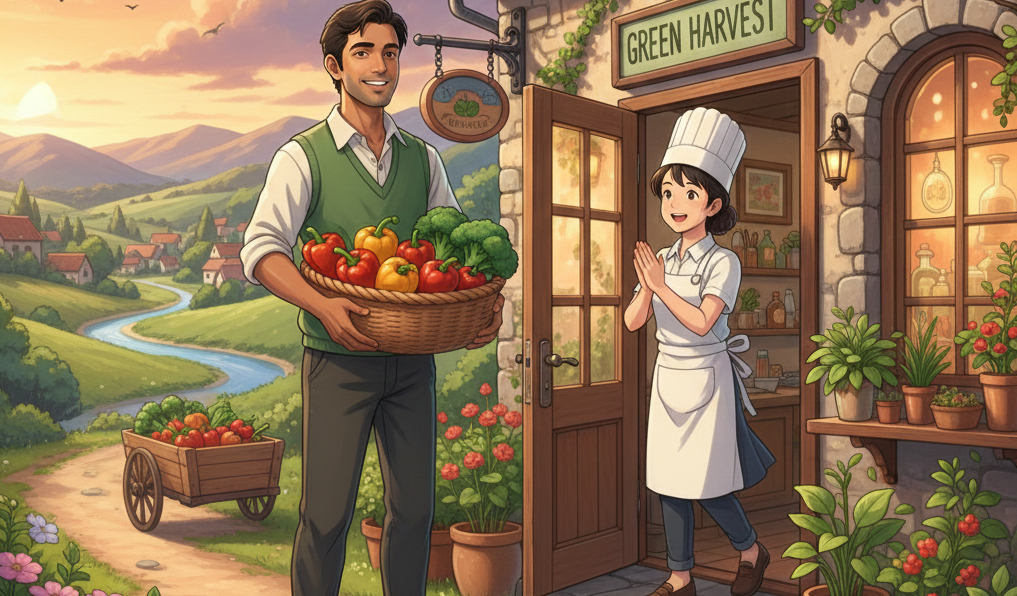
Understanding Restaurant Supply Farming: Key Concepts and Importance
Restaurant Supply Farming is a partnership-driven business model where crops are grown specifically to meet the culinary needs of a particular establishment. Historically, restaurants bought from wholesale markets just like everyone else. However, the modern “Farm-to-Fork” movement has changed the relevance of this niche. Today’s chefs aren’t just looking for “tomatoes”; they are looking for specific heritage varieties, consistent sizes, and produce harvested just hours before service.
Think of Restaurant Supply Farming like a Custom Tailor vs. a Ready-Made Clothing Store. A traditional farmer is the clothing store—they produce large quantities of standard items and hope someone buys them. An RSF farmer is the custom tailor. They sit down with the chef (the client), look at the upcoming seasonal menu, and “sew” (grow) exactly what is needed—whether it’s microgreens, edible flowers, or specific baby vegetables.
The technical core of this model is Crop Customization. You aren’t just growing for volume; you are growing for “Spec.” This might mean harvesting zucchini when they are exactly 4 inches long or growing a specific variety of basil that has a stronger aroma. By focusing on these specialty details, you move from being a “commodity seller” to a “premium partner.”
Why It Matters: The Top Benefits of the RSF Model
Direct selling to restaurants is a game-changer for farm profitability. Here is why it works:
- Price Stability and Higher Margins: In this model, you negotiate a fixed price per kilogram or per box at the start of the season. This protects you from the volatile price crashes of the open market and allows you to keep the 30–50% margin that usually goes to middlemen.
- Guaranteed Market (Reduced Risk): Because you grow based on a pre-agreed “Menu Plan,” your harvest is essentially sold before the seed even hits the soil. This drastically reduces the risk of having a surplus harvest with no buyers.
- Lower Post-Harvest Waste: Since your customer is likely only a few kilometers away in the city, you don’t need expensive long-distance cold storage. You harvest in the morning and deliver by noon, ensuring 100% of your produce reaches the plate in prime condition.
- Brand Building and Community Prestige: Being the “Official Farm Partner” of a popular local restaurant gives your farm an identity. You can leverage this reputation to sell to other high-end clients or even start your own premium “Farm Box” subscription for the restaurant’s customers.
Pro Fact: Restaurants value consistency over everything else. A farmer who can deliver exactly 10kg of fresh lettuce every Tuesday at 9:00 AM can charge a 40% premium over market rates just for that reliability.
How to Get Started: A Practical Guide for Beginners
Launching an RSF business requires a “Sales-First” mindset. Follow this 5-step actionable plan:
Step 1: The “Menu Audit” and Client Prospecting
Don’t just walk into any restaurant. Visit local “Bistro,” “Farm-to-Table,” or high-end “Organic” cafes. Look at their menus. Do they use a lot of cherry tomatoes? Is there a focus on fresh salads? Identify 3–5 potential partners whose brand aligns with your farming style.
Step 2: The “Sample Box” Pitch
Approach the Head Chef or the Owner during their “off-peak” hours (usually between 3:00 PM and 5:00 PM). Bring a Sample Box of your best produce. Let them taste the difference in freshness. Ask one crucial question: “What is the one ingredient you struggle to get in high quality from the local market?”
Step 3: Develop a Seasonal “Growing Calendar”
Once a chef shows interest, create a plan. If they want fresh Italian Basil year-round, show them how you will use a shade-net or greenhouse to provide it. Agree on the weekly quantities and the delivery schedule.
Step 4: Setup a Simple Order System
Professionalism is key. Use a simple WhatsApp group or a basic spreadsheet where the chef can “order” their requirements two days in advance. Provide clear Invoices and keep a log of every delivery.
Step 5: Master the “Last-Mile” Delivery
Invest in a clean, branded delivery vehicle (even a small van or a motorcycle with crates). Use food-grade crates to ensure the produce isn’t bruised. Remember: In the eyes of a chef, the delivery person is the face of the farm.
Beginner’s Tip: Start with Microgreens or Herbs. These are high-value, fast-growing, and restaurants use them daily. They allow you to “get your foot in the door” with a client before you ask them to buy your larger vegetable crops.
Overcoming Challenges and Looking into the Future
The biggest hurdle in RSF is Consistency. If you promise a chef 5kg of arugula and your crop fails due to pests, that chef has an empty menu item. The solution is Succession Planting—planting small batches every week rather than one big field at once—so you always have a fresh batch ready. Another challenge is Payment Cycles; some restaurants pay weekly, others monthly. Ensure you have a clear written agreement on payment terms to manage your cash flow.
Looking into the future, the trend is moving toward Hyper-Local Transparency. Chefs are starting to put the “Farmer’s Name” directly on the menu (e.g., “Salad with Walker Farm Radishes”). We are also seeing the rise of Customized Growing Apps, where a chef can look at a farmer’s digital dashboard to see exactly when their specific crop will be ready for harvest.
Conclusion
Restaurant Supply Farming is the ultimate way to reclaim your independence as a farmer. It turns the act of growing food into a specialized service business. By building direct relationships with chefs, you ensure that your produce is treated with the respect it deserves and that you are paid a price that reflects its true value.
Call to Action: This week, identify three high-end restaurants in your nearest city. Visit them as a customer, look at their vegetables, and ask yourself: “Can I grow this better and fresher?” If the answer is yes, you have your first business lead.
The future of farming is not in the crowded Mandi; it is in the vibrant kitchens of your community.
Frequently Asked Questions (FAQs)
1. Do I need a large farm to sell to restaurants? No! Many “Micro-farmers” make a full-time living on less than half an acre by specializing in high-value herbs, microgreens, and “baby” vegetables that restaurants pay a premium for.
2. How do I decide what price to charge the chef? A good rule of thumb is to look at the Retail Price in a premium supermarket and offer a slightly lower price, or look at the Wholesale Mandi Price and add a 30–50% “Freshness & Quality” premium.
3. What if a restaurant stops ordering suddenly? This is why you should never rely on just one client. Aim to have 3 to 5 restaurant partners. If one has a slow week, the others will likely pick up the slack.
4. Do I need special organic certifications to sell to chefs? While “Certified Organic” is a plus, most local chefs care more about “Trust and Transparency.” If you invite the chef to your farm to see your natural methods and healthy soil, that often holds more value than a piece of paper.