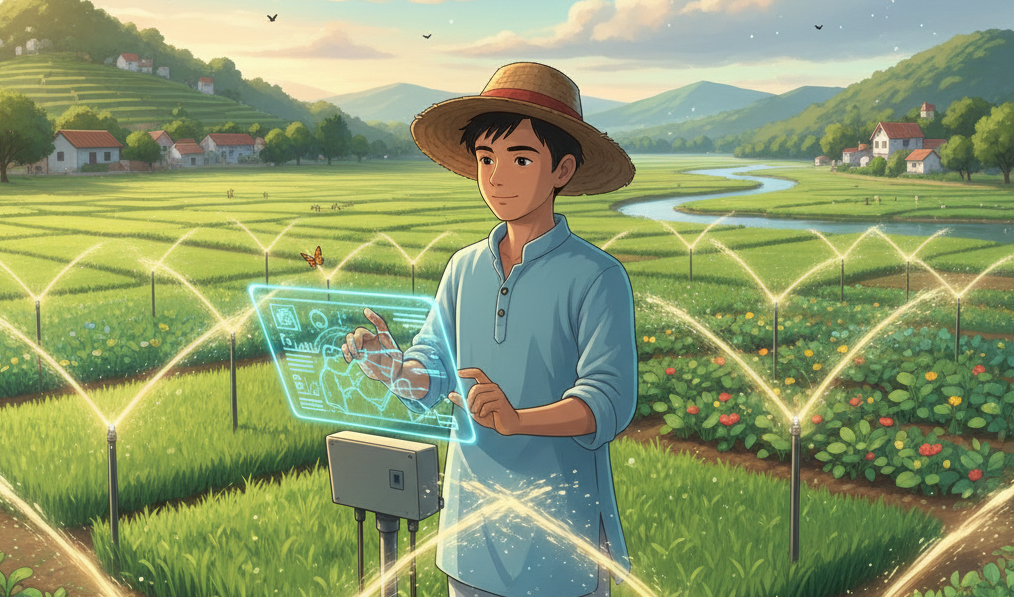
Did you know that agriculture consumes nearly 70% of the world’s freshwater withdrawals, yet more than half of that water is wasted due to inefficient practices? In many regions, the traditional “flood irrigation” method is literally washing away the future of farming. The “Challenge” is a growing global water scarcity that threatens both crop yields and farm profitability. This is the “Pain Point”: as water tables drop and utility costs rise, farmers are finding that their most precious resource is also their most expensive liability.
The ultimate solution lies in Smart Irrigation Techniques. This modern approach shifts the focus from “watering the field” to “feeding the plant.” By using precision technology and data-driven methods, farmers can maintain lush, healthy crops while reducing their water footprint by half. This article serves as your comprehensive guide to the revolution of water management. You will learn the core fundamentals of smart water delivery, the massive economic benefits of conservation, and a 5-step implementation plan to transform your farm into a water-efficient powerhouse.
Understanding Smart Irrigation: Key Concepts and Importance
Smart Irrigation is the practice of delivering the exact amount of water a plant needs, at the exact time it needs it, based on real-time data. Historically, farming relied on manual observation or fixed schedules—watering every Tuesday regardless of whether it rained on Monday. Modern relevance, however, demands a more surgical approach. With climate patterns becoming increasingly unpredictable, relying on the “old ways” is no longer a viable business strategy.
Think of Smart Irrigation like a smart-home thermostat. A traditional thermostat stays on until you turn it off, potentially wasting energy. A smart thermostat, however, senses the room’s temperature and adjusts itself to maintain the perfect environment. In farming, the “sensors” are probes in the soil or weather-linked controllers. Instead of drenching the entire field (like a leaky bucket), smart systems deliver water directly to the root zone (like a targeted IV drip), ensuring that almost zero water is lost to evaporation or runoff.
The importance of this concept cannot be overstated. Beyond just saving water, these techniques prevent Nutrient Leaching—a technical term for when excess water carries away expensive fertilizers into the groundwater, leaving your plants hungry and your money wasted.
Why It Matters: The Top Benefits of Smart Irrigation
Switching to smart water management isn’t just an environmental choice; it is a strategic financial move. Here are the top benefits:
- Significant Cost Reduction: By cutting water usage by 50%, you directly slash your pumping costs and electricity bills. Over a few seasons, these savings often pay for the initial technology investment.
- Enhanced Crop Quality and Yield: Plants thrive on consistency. By avoiding the “stress cycles” of extreme soaking followed by bone-dry soil, crops grow more uniformly, leading to higher-quality harvests and better market prices.
- Labor Efficiency: Automation is a core component of smart systems. Instead of spending hours moving pipes or opening valves manually, farmers can monitor and control their entire irrigation system from a smartphone, freeing up time for other critical tasks.
- Sustainability and Compliance: As governments introduce stricter water usage regulations, smart irrigation ensures your farm remains compliant and “future-proofed” against potential water rationing.
Pro Fact: Research shows that Drip Irrigation, a primary smart technique, is over 90% efficient, whereas traditional flood irrigation often struggles to reach 40% efficiency.
How to Get Started: A Practical Guide for Beginners
Transitioning to smart irrigation doesn’t require an engineering degree. Follow this 5-step actionable plan to begin:
Step 1: Conduct a Soil Moisture Audit
You cannot manage what you do not measure. Start by installing basic Tensiometers or electronic soil moisture sensors at different depths. This tells you exactly how much water is actually available to the roots, rather than just how wet the surface looks.
Step 2: Transition to Drip or Micro-Sprinklers
If you are currently using flood or high-pressure overhead spray, move toward Drip Lines. These tubes have small “emitters” that release water slowly. This reduces weed growth because you aren’t watering the empty spaces between your crops.
Step 3: Install a Weather-Based Controller
Connect your system to a “Smart Controller” that uses Evapotranspiration (ET) data. These devices check local weather forecasts and automatically skip a watering cycle if rain is expected or if the humidity is high.
Step 4: Implement Zone-Based Watering
Not every crop has the same thirst. Group your plants into “Hydrozones” based on their water needs. This prevents the common mistake of overwatering drought-tolerant plants just to keep the thirstier ones alive.
Step 5: Regular System Maintenance and Pressure Testing
A single leak can waste thousands of gallons. Check your filters, flush your lines, and ensure that Pressure Regulators are working. Uniform pressure ensures that the plant at the end of the line gets the same amount of water as the one at the start.
Beginner’s Tip: Avoid “Set it and Forget it.” Even the smartest system needs a human eye. Walk your lines once a week to check for clogs or animal damage to ensure your efficiency stays at 100%.
Overcoming Challenges and Looking into the Future
The primary hurdle for many beginners is the Initial Setup Cost. However, this can be solved through government grants or by starting small—implementing smart systems on just 10% of your land and using the savings to fund the rest. Another challenge is Water Quality; fine emitters in smart systems can clog if your water has high mineral content. Installing a high-quality filtration system is the standard solution for this.
Looking into the future, the trend is moving toward AI-Integrated Irrigation. We are seeing the rise of satellite-linked systems that analyze the “greenness” of your crops from space to detect thirst before the plant even shows physical signs of wilting. Additionally, Subsurface Drip Irrigation (SDI)—where pipes are buried deep underground—is becoming popular as it eliminates surface evaporation entirely, pushing water savings even higher.
Conclusion
Smart Irrigation is no longer a luxury for large-scale industrial farms; it is a necessity for every modern grower. By adopting these techniques, you aren’t just saving water—you are protecting your soil, increasing your yields, and ensuring your farm’s long-term financial survival. The transition from waste to precision is the hallmark of a successful “agri-preneur.”
Call to Action: This week, purchase one simple soil moisture probe (they are very affordable) and test different areas of your farm. You might be surprised to find that you’ve been overwatering all along.
The future of farming is not about having more resources, but about being smarter with the ones you have. Start small, track your data, and watch your farm thrive.
Frequently Asked Questions (FAQs)
1. Is smart irrigation too expensive for a small-scale farm? Not at all. While high-end sensors can be pricey, basic drip kits and manual soil probes are very affordable. The reduction in water and fertilizer costs usually covers the investment within 1 to 2 seasons.
2. Can smart irrigation work with any type of soil? Yes, but the settings will change. Clay soils hold water longer and need less frequent, slower watering, while sandy soils require more frequent, shorter bursts. Smart controllers can be programmed specifically for your soil type.
3. Does smart irrigation help with pest control? Surprisingly, yes. Because drip irrigation keeps the leaves dry and only wets the soil near the roots, it significantly reduces the risk of fungal diseases and leaf-based pests that thrive in humid, wet conditions.
4. Can I control a smart irrigation system from my phone? Yes! Most modern smart controllers connect to your Wi-Fi and have dedicated apps. This allows you to turn your water on or off, adjust schedules, and receive leak alerts from anywhere in the world.