Introduction
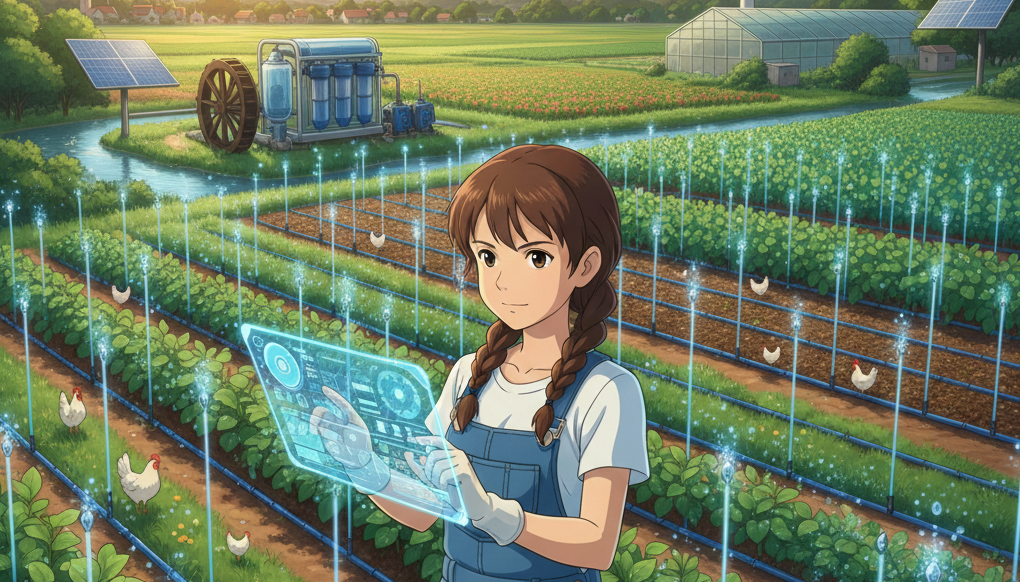
Agriculture faces one of its biggest challenges today: producing more food with less water. Rapid population growth, climate change, and irregular rainfall patterns are forcing farmers to rethink traditional irrigation methods. Water efficient farming has emerged as a modern solution that balances productivity with conservation.
This farming approach focuses on maximizing crop output while minimizing water consumption through innovative practices, improved soil management, and smart irrigation systems.
Understanding Water Efficient Farming
Water efficient farming means supplying crops with the exact amount of water they need at the right time. Instead of excessive irrigation, farmers use precision techniques that reduce waste and improve plant health.
Core principles include:
- Efficient irrigation management
- Soil moisture conservation
- Climate-smart farming practices
- Technology-driven decision making
Importance of Water Efficiency in Agriculture
Water scarcity is becoming a serious global concern. Farming practices that rely heavily on groundwater are no longer sustainable.
Key advantages of water-efficient agriculture:
- Conserves natural resources
- Enhances crop resilience during drought
- Reduces farming costs
- Improves long-term soil productivity
Farmers adopting efficient systems often achieve better yield stability even during dry seasons.
Top Methods for Saving Water in Farming
1. Micro-Irrigation Techniques
Micro-irrigation systems deliver water slowly and directly to plant roots.
Types include:
- Drip irrigation
- Micro-sprinklers
- Subsurface irrigation
These systems significantly reduce evaporation and runoff losses.
2. Conservation Tillage
Minimal soil disturbance helps retain moisture inside the soil.
Benefits:
- Improves soil structure
- Reduces evaporation
- Enhances organic matter content
Healthy soil acts like a sponge, storing water for longer periods.
3. Crop Scheduling
Irrigating crops at critical growth stages ensures optimal water use.
Farmers monitor:
- Growth phase
- Temperature
- Soil moisture levels
This method prevents unnecessary irrigation.
4. Use of Organic Matter
Adding compost and organic manure increases soil water retention capacity.
Organic-rich soil:
- Holds moisture longer
- Supports beneficial microbes
- Improves nutrient absorption
5. Agroforestry Practices
Integrating trees with crops helps maintain soil moisture and reduces temperature stress.
Trees provide:
- Shade protection
- Reduced evaporation
- Improved microclimate conditions
Smart Irrigation Technologies
Modern agriculture increasingly relies on technology.
Automated Irrigation Controllers
These systems water crops automatically based on real-time data.
Mobile-Based Farm Monitoring
Farmers can monitor irrigation using smartphones.
Satellite and Remote Sensing
Advanced monitoring helps identify dry zones within fields.
Such innovations ensure water is used only where necessary.
Benefits for Small and Large Farmers
Water efficient farming works for farms of all sizes.
For Small Farmers
- Reduced input costs
- Stable crop production
- Lower dependency on rainfall
For Large Farms
- Scalable irrigation systems
- Data-driven management
- Increased operational efficiency
Climate Change and Water Management
Climate change is causing unpredictable rainfall and longer drought periods. Water-efficient farming builds resilience against these challenges.
Farmers using efficient irrigation methods experience:
- Less crop stress
- Improved drought tolerance
- Consistent productivity
This makes agriculture more adaptable to changing environmental conditions.
Government Support and Awareness
Many agricultural programs encourage farmers to adopt water-saving technologies through subsidies and training.
Support often includes:
- Financial assistance for drip irrigation
- Farmer education programs
- Technical guidance
Increasing awareness plays a major role in accelerating adoption.
Practical Tips for Farmers
Simple steps farmers can start immediately:
- Irrigate early morning or evening
- Fix leaks in irrigation systems
- Use drought-resistant crop varieties
- Apply mulch regularly
- Monitor soil moisture before watering
Even small improvements can save significant amounts of water over time.
Environmental and Social Impact
Water-efficient farming benefits society as a whole.
Positive outcomes:
- Sustainable water resources
- Reduced environmental degradation
- Increased food security
- Improved rural livelihoods
Responsible water management ensures agriculture remains viable for future generations.
Conclusion
Water efficient farming represents the future of agriculture in a water-scarce world. By combining modern irrigation systems, soil conservation practices, and smart technologies, farmers can grow more crops using fewer resources.
Adopting these practices not only improves farm profitability but also protects ecosystems and strengthens global food security. As water becomes increasingly precious, efficient farming methods will play a crucial role in building sustainable agriculture worldwide.