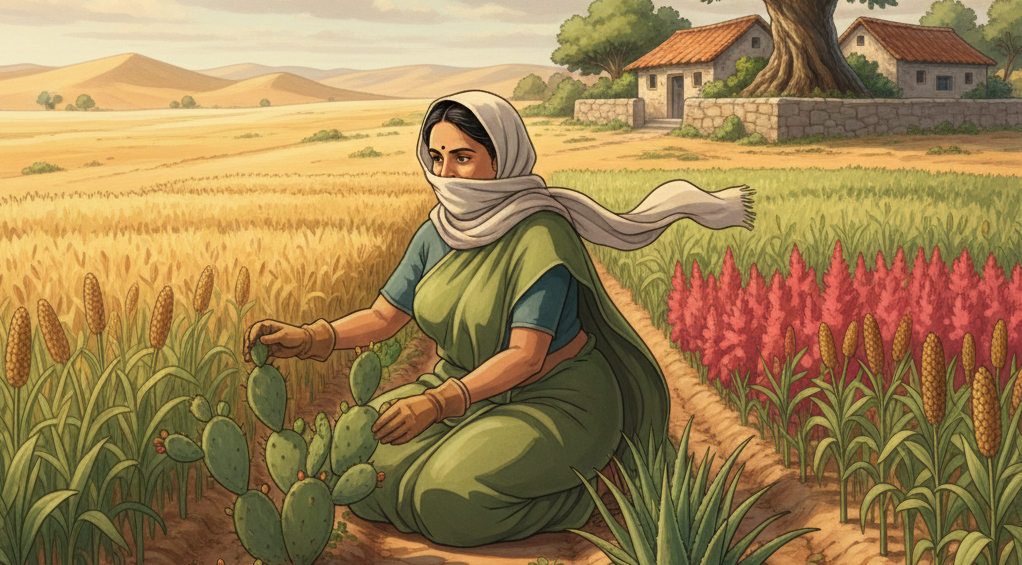
Did you know that by 2030, nearly half of the world’s population will be living in areas with high water stress? For the modern farmer, the “Challenge” is no longer just about finding fertile land; it is about surviving an era of unpredictable rainfall and depleting reservoirs. The “Pain Point” is clear: traditional, water-thirsty crops like sugarcane or rice are becoming financial traps in arid zones, where the cost of irrigation often exceeds the market value of the harvest.
The ultimate solution is a strategic pivot toward Climate-Smart Horticulture. By selecting high-value, drought-resistant crops, farmers can lower their input costs while tapping into lucrative niche markets that value sustainability. This article is your comprehensive roadmap to high-profit farming in dry regions. We will explore the core fundamentals of drought-tolerant plants, break down the top crops that offer the highest return on investment (ROI), and provide a step-by-step implementation guide to transform your dry land into a profitable oasis.
Understanding Low-Water Crops: Key Concepts and Importance
Low-water crops, often referred to as Xerophytes or drought-hardy varieties, are plants biologically engineered by nature to thrive with minimal moisture. Historically, these crops were seen as “subsistence” foods, but modern relevance has shifted them into the spotlight of global food security. In dry regions, the importance of these crops lies in their Water Use Efficiency (WUE)—a measure of how much biomass or fruit a plant produces per drop of water consumed.
Think of low-water crops like a high-performance electric car vs. a vintage gas-guzzler. A traditional crop like corn is the gas-guzzler; it needs a constant, heavy flow of “fuel” (water) just to stay moving. A drought-resistant crop, like Pomegranate or Pearl Millet, is the electric car. It uses its “battery” (stored moisture) efficiently, employs “regenerative braking” (closing its leaf pores or stomata during the heat of the day), and can travel much further on a single “charge” (rainfall).
Technically, these plants often have deep taproot systems to reach underground aquifers or waxy leaf coatings to prevent evaporation. By understanding these biological traits, farmers can select varieties that don’t just “survive” the heat but actually use the intense sunlight to concentrate sugars, often resulting in sweeter, more nutrient-dense produce.
Why It Matters: The Top Benefits of Low-Water Farming
Choosing the right crop for a dry climate is a game-changer for your balance sheet. Here are the primary advantages:
- Drastic Reduction in Input Costs: Lower water demand means fewer hours running expensive diesel or electric pumps. Additionally, many drought-hardy crops are naturally resistant to the pests that thrive in humid, over-watered environments.
- High Market Premiums: Many low-water crops, such as Saffron, Quinoa, or Dragon Fruit, are considered “superfoods” or luxury items. Because they are harder to grow in wet climates, farmers in dry regions hold a competitive monopoly.
- Environmental Resilience: While your neighbors may lose their entire harvest during a heatwave, your drought-tolerant crops remain stable. This consistency builds trust with buyers and ensures a steady income.
- Soil Preservation: Many arid-region crops, like certain legumes, actually fix nitrogen back into the soil, improving the land’s health for future generations rather than stripping it of nutrients.
Pro Fact: Crops like Dragon Fruit require up to 80% less water than traditional fruit trees like Citrus, yet they can fetch 3–4 times the price per kilogram in international markets.
How to Get Started: A Practical Guide for Beginners
Transitioning to high-profit, low-water farming requires a shift in mindset and technique. Follow this 5-step plan:
Step 1: Soil and Climate Mapping
Before planting, test your soil’s Water Holding Capacity (WHC). Even in dry regions, soil texture (sandy vs. loamy) will dictate which low-water crop thrives. Check your “Heat Units”—the average temperature during the growing season—to match the crop to the climate.
Step 2: Select Your “Profit Pillars”
Choose crops that fit your region. For arid zones, consider these top performers:
- Horticulture: Pomegranate, Date Palm, and Fig.
- Field Crops: Pearl Millet (Bajra), Sorghum, and Guar.
- High-Value Niche: Aloe Vera, Dragon Fruit, and Lavender.
Step 3: Implement Mulching and Soil Amendments
Use organic mulch (straw or wood chips) or plastic mulching to cover the soil around your plants. This acts as a shield, reducing surface evaporation by up to 40%. Add biochar or compost to the pits to act as a “sponge” for what little water you do provide.
Step 4: Install Targeted Irrigation
Even low-water crops need help during the initial “Establishment Phase.” Use a drip system targeted specifically at the root zone. Once the plants are established, you can gradually reduce water frequency to encourage deep root growth.
Step 5: Post-Harvest Value Addition
Since dry-region crops often have lower water content, they are perfect for drying or processing. Dehydrated figs, bottled Aloe Vera juice, or packaged millet flour can triple your profits compared to selling raw produce.
Beginner’s Tip: Don’t plant your entire farm at once. Start with a “Trial Plot” of two or three different low-water varieties to see which one reacts best to your specific well water and sun exposure.
Overcoming Challenges and Looking into the Future
The main hurdle in dry-region farming is the Initial Growth Lag; drought-tolerant plants often spend their first year growing roots rather than fruit. Farmers must be patient and have the capital to sustain the first 12–18 months. Another challenge is Market Awareness—local buyers might not be familiar with “new” crops like Quinoa or Dragon Fruit, requiring the farmer to seek out urban wholesalers or export agents.
The future of dryland farming is bright, thanks to Genomic Selection. Scientists are now identifying the specific genes that allow desert plants to survive, leading to new “Ultra-Drought” varieties of staple crops. We are also seeing a rise in Hydrogels—tiny crystals added to the soil that can absorb 500 times their weight in water, releasing it slowly over weeks to keep crops hydrated during a drought.
Conclusion
Farming in a dry region shouldn’t be a struggle for survival; it should be a specialized business opportunity. By choosing crops like Pomegranate, Millets, or Dragon Fruit, you are working with nature instead of fighting it. These “Gold of the Desert” crops offer the dual benefit of low risk and high reward, making them the smartest choice for the modern agri-preneur.
Call to Action: Research the “Heat Zone” of your specific district today and identify one high-value crop from our list that fits your temperature range.
The most successful farmers of the future won’t be the ones with the most water, but the ones who know how to make every single drop turn a profit.
Frequently Asked Questions (FAQs)
1. Can low-water crops grow in completely rainless areas? No crop can grow with zero water. “Low-water” means they can thrive on significantly less than average (e.g., 300–500mm of rain per year) or can survive long dry spells by going dormant. Some supplemental irrigation is usually required for commercial yields.
2. Are drought-resistant seeds more expensive? Initially, specialized seeds or saplings (like hybrid Pomegranate) may cost more. However, the long-term savings in water, electricity, and labor, combined with higher market prices, usually result in a much higher net profit.
3. Does the taste of the fruit change in dry conditions? Actually, it often improves! Lower water intake can lead to a higher concentration of solids and sugars in fruits like grapes, figs, and melons, making them tastier and more valuable to premium buyers.
4. Is Aloe Vera a good option for beginners? Yes! Aloe Vera is incredibly hardy, requires almost no pesticides, and has a very low water requirement. It is a “set-and-forget” crop that is perfect for testing the profitability of dryland farming.