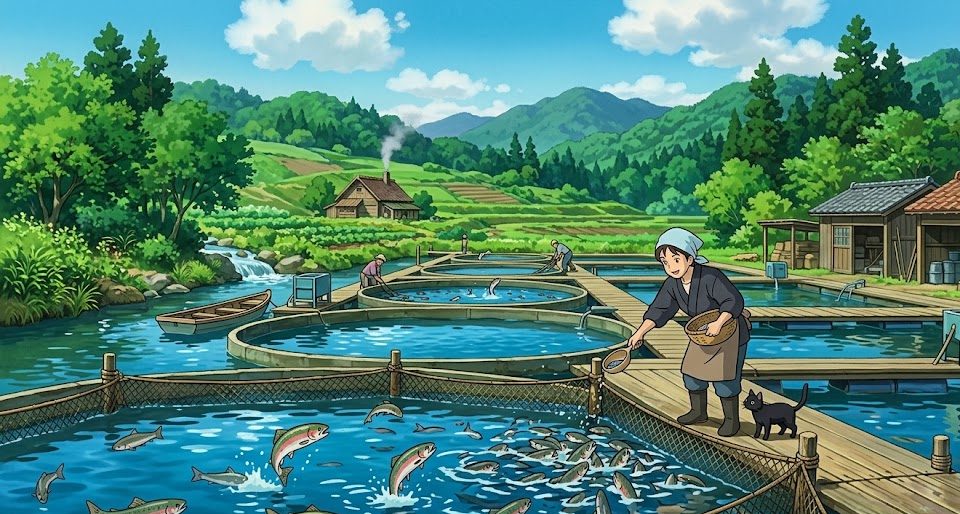
In the agricultural landscape of 2026, diversification is the key to Financial Freedom. While crop farming remains a staple, the “Blue Revolution” is offering a new frontier for high-profit ventures: Aquaculture. Fish farming, often referred to as “Blue Gold,” provides a consistent “Passive Income” stream and a resilient “Closed-Loop” system when integrated with traditional agriculture.
This ultimate guide provides a blueprint for starting a profitable fish farming business by combining Smart Technology with sustainable practices.
1. Why Fish Farming is “Blue Gold” in 2026
The demand for high-quality protein is at an all-time high, and natural water bodies are struggling to keep up. This has made controlled fish farming a highly lucrative “Cash Cow”.
- High Market Demand: Fresh, sustainably raised fish command premium prices in both local and urban markets.
- Efficiency: Modern fish breeds are highly efficient at converting feed into high-value protein.
- Scalability: Whether you are starting with a small “Micro Farming” setup in your backyard or a large-scale commercial innovation hub, aquaculture can scale with your investment.
2. Selecting the Right “Smart” Fish Species
Success in the Blue Revolution begins with choosing species that fit your environment and market demand.
- Tilapia: Known as the “aquatic chicken,” it is hardy, fast-growing, and perfect for beginners.
- Catfish: Highly resilient and in high demand, catfish are excellent for “High-Yield” intensive farming.
- Exotic Varieties: For those targeting niche markets, raising ornamental fish or premium species like Salmon (in temperature-controlled systems) can offer massive returns per square foot.
3. Implementing Smart Farming & AgriTech
To maximize your “Precision Yields,” you must integrate technology into your ponds or tanks.
- Water Quality Sensors: IoT devices monitor oxygen levels, pH, and temperature in real-time, sending alerts to your phone to prevent livestock loss.
- Automated Feeding Systems: These systems ensure that fish are fed the exact amount needed, reducing waste and ensuring uniform growth.
- Recirculating Aquaculture Systems (RAS): This “water-saving technique” filters and recycles water, allowing you to grow a large number of fish in a very small footprint with minimal water exchange.
4. The Integrated “Closed-Loop” Blueprint
The most profitable fish farms are those that work in harmony with other agricultural branches.
- Aquaponics: Use the nutrient-rich water from your fish tanks to grow “High-Value Cash Crops” like lettuce or herbs. The plants clean the water for the fish, and the fish fertilize the plants—creating a perfect “Zero Chemical” cycle.
- Livestock Integration: Poultry or duck waste can be processed into organic fertilizer for pond plankton, further reducing your input costs toward zero.
5. Practical Solutions for Low-Maintenance Success
Fish farming does not have to be labor-intensive if you use “Practical Farming” wisdom.
- Natural Pest Management: Some fish species naturally eat mosquito larvae and water-borne pests, keeping your farm environment clean.
- Sustainable Feed: To achieve “Zero Chemical Costs,” you can supplement commercial feed with farm-grown duckweed, azolla, or black soldier fly larvae.
- Survival Farming Skills: Learning to manage your own fingerling hatchery ensures total independence and food security for your business.
6. Market Access and Digital Branding
In 2026, transparency is your biggest selling point.
- Traceability: Use digital logs to show customers that your fish are raised in a “Zero Chemical” environment.
- Direct-to-Consumer: Bypass middlemen by using digital platforms to sell directly to health-conscious consumers and high-end restaurants.
Conclusion: Your Path to a Digital Goldmine
The Blue Revolution is a strategic path to Financial Freedom. By combining the precision of Smart Technology with the sustainable wisdom of Natural Farming, you can transform your property into a high-yield, low-maintenance “Blue Gold” mine.
Whether you are focusing on “Survival Farming” for self-reliance or scaling a commercial innovation hub, aquaculture is a vital pillar of the 2026 agricultural economy.