Water is one of the most important resources in agriculture, yet it is often wasted through over-irrigation, poor field design, evaporation, leaking systems, and unsuitable watering methods. In many regions, farmers are already facing irregular rainfall, falling groundwater levels, and longer dry periods. These challenges make efficient water management essential for both crop growth and long-term farm survival.
Water-saving farming does not mean giving crops less water than they need. It means delivering the right amount of water, at the right time, and directly where plants can use it. Smart irrigation methods, healthy soil, mulching, crop selection, and better field planning can help farmers reduce waste without reducing yield.
A well-managed farm can often produce healthier crops with less water by improving how moisture is stored and used.
Understand the Water Needs of Each Crop
Different crops require different amounts of water. Rice, sugarcane, vegetables, fruits, pulses, and oilseeds do not have the same irrigation needs. Even the same crop may require more or less water depending on its growth stage.
Seedlings usually need light and regular moisture, while mature plants often benefit from deeper irrigation. Flowering, fruit development, and grain filling are usually sensitive stages when water stress can reduce yield significantly.
Farmers should avoid following one fixed irrigation schedule throughout the season. Weather, soil type, plant growth, recent rainfall, and temperature should influence every watering decision.
Sandy soil drains quickly and may need smaller but more frequent irrigation. Clay soil stores water longer but can become waterlogged if irrigated too heavily.
Understanding these differences is the first step toward reducing water waste.
Use Drip Irrigation for Direct Water Delivery
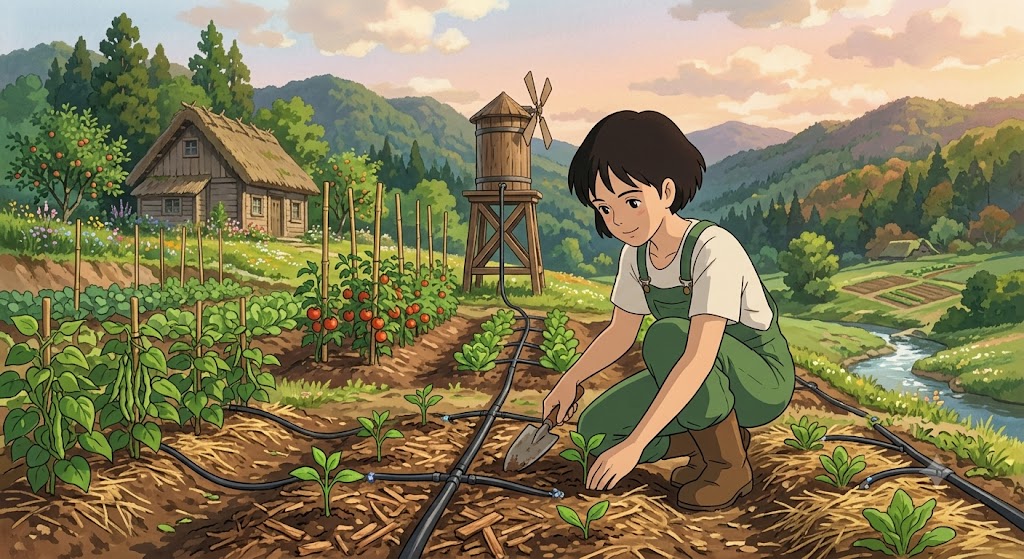
Drip irrigation is one of the most efficient methods for saving water. It delivers small amounts of water slowly and directly to the root zone through pipes and emitters.
Because water is not spread across the entire field surface, evaporation and weed growth are reduced. Drip systems are especially useful for vegetables, orchards, vineyards, nurseries, and row crops.
The main benefits include:
- Lower evaporation losses
- More uniform irrigation
- Reduced weed growth
- Better fertiliser efficiency
- Less soil erosion
- Lower risk of leaf diseases
Drip irrigation must be maintained properly. Filters should be cleaned, damaged pipes repaired, and blocked emitters checked regularly.
A poorly maintained system can create uneven watering, where some plants receive too much water and others receive too little.
Adopt Sprinkler Irrigation Carefully
Sprinkler systems can be useful for crops that require uniform water distribution, especially on uneven land where surface irrigation is difficult.
However, sprinklers should be used during cooler and less windy periods. High temperatures and strong winds increase evaporation and can move water away from the intended area.
Early morning or evening irrigation is usually more efficient than watering during the hottest part of the day.
Low-pressure sprinkler systems can reduce energy use and water loss. Farmers should also check whether nozzles are worn, damaged, or spraying roads and field edges unnecessarily.
Sprinklers are not always suitable for crops that are sensitive to wet leaves or fungal diseases, so crop type and local climate must be considered.
Improve Soil Moisture With Mulching
Mulching is one of the simplest and most affordable water-saving techniques.
Organic materials such as straw, dry grass, leaves, crop residues, and compost can be placed around crops to cover the soil surface. This layer reduces evaporation, controls weeds, and protects the soil from extreme heat.
Mulch also slows rainfall, allowing water to enter the soil instead of running away.
| Water-Saving Practice | Main Benefit |
|---|---|
| Drip irrigation | Delivers water directly to roots |
| Mulching | Reduces evaporation |
| Rainwater harvesting | Stores water for dry periods |
| Soil organic matter | Improves moisture retention |
| Irrigation scheduling | Prevents overwatering |
| Field levelling | Improves even water distribution |
Organic mulch gradually breaks down and improves soil structure. However, it should not be placed too close to plant stems because constant moisture may encourage rot.
Farmers should also avoid using diseased crop residues or materials containing mature weed seeds.
Increase Organic Matter in the Soil
Healthy soil stores water more effectively than degraded soil. Organic matter acts like a sponge, helping soil absorb rainfall and hold moisture for crop roots.
Compost, well-decomposed manure, green manure, cover crops, and crop residues can all improve soil organic matter.
In sandy soil, organic matter reduces rapid drainage. In heavy soil, it improves structure and allows water to enter more easily.
Better soil structure also encourages deeper root growth. Crops with deeper roots can access moisture stored below the surface and are less affected by short dry periods.
Improving soil health may take several seasons, but it provides long-term benefits for water conservation, fertility, and crop productivity.
Irrigate According to Soil Moisture
Many farmers irrigate because the surface looks dry, even though moisture may still be available deeper in the soil.
A simple soil check can prevent unnecessary irrigation. Farmers can dig a small hole near the crop root zone and feel the soil. If it remains moist and holds together, watering may not yet be required.
Soil-moisture sensors provide more accurate information. These devices can indicate when the root zone is becoming dry and help farmers decide when to irrigate.
Smart irrigation controllers can also use weather data, rainfall, and soil moisture to adjust watering automatically.
The aim is to avoid both under-irrigation and over-irrigation. Too little water causes stress, while too much water wastes resources, removes nutrients, and increases disease risk.
Harvest and Store Rainwater
Rainwater harvesting helps farmers make better use of seasonal rainfall.
Farm ponds, tanks, recharge pits, check dams, contour trenches, and rooftop collection systems can store water for later use. Stored rainwater may support irrigation, livestock, nurseries, or emergency watering during dry periods.
Fields can also be designed to slow runoff and increase infiltration. Contour farming, grass strips, terraces, and small bunds help water remain in the field longer.
Harvesting rainwater is especially valuable in regions where rainfall is heavy but concentrated within a short season.
Storage systems must be protected from contamination, excessive seepage, and damage. Open ponds may also lose water through evaporation, so suitable covers, windbreaks, or deeper pond designs can help.
Level Fields for Uniform Irrigation
Uneven fields often waste water. Low areas become waterlogged while higher areas remain dry.
Proper land levelling allows water to move evenly across the field and reduces the time required for irrigation. Laser land levelling can provide highly accurate results on larger farms, while smaller fields can be improved using traditional levelling methods.
Uniform irrigation supports even crop growth and reduces nutrient loss.
Field channels should also be maintained regularly. Cracks, weeds, broken banks, and poorly designed channels can waste large amounts of water before it reaches the crop.
Lining channels may reduce seepage where water loss is severe.
Choose Crops and Varieties Wisely
Crop selection has a major effect on water use.
Farmers in dry regions should consider crops and varieties that are adapted to limited rainfall. Millets, pulses, oilseeds, and certain drought-tolerant varieties may perform better than highly water-demanding crops.
Short-duration varieties can complete their life cycle before severe dry conditions begin.
Crop diversification also reduces risk. If one crop suffers from water stress, another may still perform well.
Farmers should not select crops only because of market price. Water requirement, irrigation cost, soil suitability, and expected rainfall should be included in the decision.
The most profitable crop is often the one that gives a stable yield with manageable water and input costs.
Reduce Weeds Early
Weeds consume water that should be available to crops. A heavily infested field may lose a significant amount of moisture through unwanted plant growth.
Early weed control is therefore an important water-saving practice.
Mulching, shallow cultivation, hand weeding, cover crops, and suitable crop rotation can reduce weed pressure. Weeds should be removed before they become large and develop deep root systems.
Irrigation should also be directed toward crop rows rather than the entire field whenever possible. Drip systems are useful because they keep areas between rows relatively dry, reducing weed germination.
Water During the Best Time of Day
The timing of irrigation affects how much water is lost through evaporation.
Early morning is often the best period because temperatures are lower and wind is usually lighter. Crops then have time to absorb moisture before the heat of the day.
Evening irrigation can also reduce evaporation, but continuously wet leaves overnight may increase disease risk in some crops.
Farmers should avoid irrigating during very hot and windy conditions unless the crop is experiencing severe stress.
Irrigation should also be delayed when reliable rainfall is expected. Weather forecasts can help farmers avoid watering just before rain.
Repair Leaks and Maintain Equipment
Small leaks in pipes, tanks, pumps, valves, and irrigation channels can waste large amounts of water over time.
Farmers should inspect irrigation equipment regularly and repair problems immediately. Filters, emitters, sprinkler nozzles, and pumps should be cleaned and maintained.
Water pressure should also be checked. Excessive pressure may damage equipment and increase water use, while low pressure can cause uneven distribution.
Good maintenance improves irrigation performance and extends the life of the system.
Keeping records of irrigation duration, pump use, rainfall, and crop response can help identify hidden inefficiencies.
Reuse Water Safely
In some farming systems, water from washing, processing, aquaculture, or protected cultivation may be reused.
However, reused water must be tested and managed carefully. It may contain salts, chemicals, pathogens, or excess nutrients that can damage soil and crops.
Water quality is especially important for vegetables and crops eaten raw.
Farmers should follow local agricultural and public-health guidelines before using treated wastewater. Safe reuse can reduce demand on freshwater sources, but poor management can create long-term soil and health problems.
Frequently Asked Questions
Which irrigation system saves the most water?
Drip irrigation is generally one of the most efficient systems because it delivers water directly to the root zone.
How does mulch save water?
Mulch covers the soil, reduces evaporation, controls weeds, and helps rain or irrigation enter the soil more slowly.
Can soil improvement reduce irrigation needs?
Yes. Soil rich in organic matter stores more moisture and supports deeper root growth.
How often should crops be irrigated?
Irrigation frequency depends on crop type, growth stage, weather, soil, and moisture level. A fixed schedule is not suitable for every condition.
Is rainwater harvesting useful for small farms?
Yes. Small tanks, ponds, rooftop systems, recharge pits, and field bunds can all help store or conserve rainfall.
Conclusion
Smart water-saving farming helps farmers produce healthy crops while protecting one of agriculture’s most limited resources. Drip irrigation, mulching, soil improvement, rainwater harvesting, field levelling, suitable crop selection, and moisture-based scheduling can significantly reduce unnecessary water use.
No single technique is suitable for every farm. Farmers should begin by identifying where water is being lost and then introduce affordable improvements gradually.
By delivering water more accurately, improving the soil’s ability to store moisture, and maintaining irrigation systems properly, farmers can reduce costs, protect groundwater, and achieve more reliable crop growth in both normal and dry seasons.