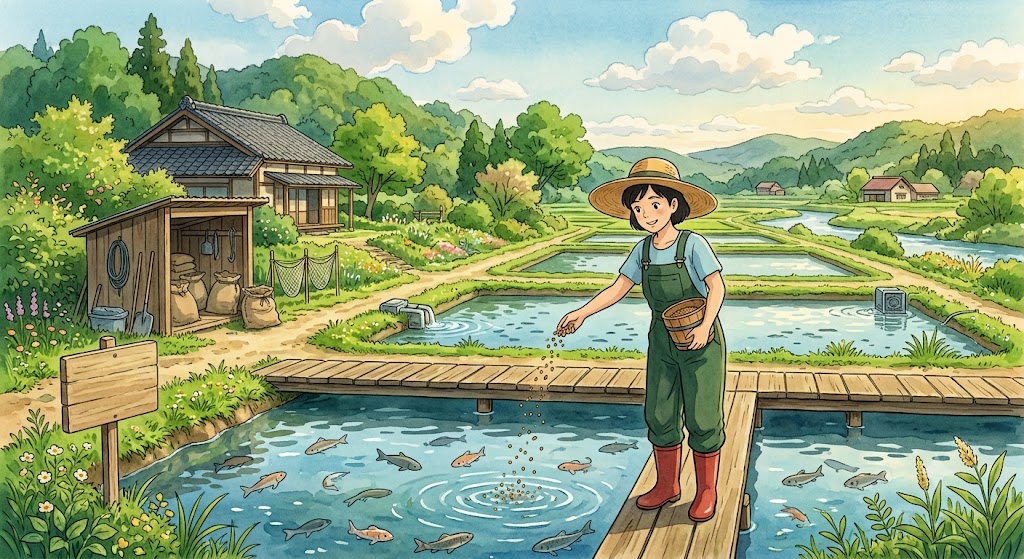
Fish farming can be an important part of a diversified agricultural operation. A well-managed fish pond can provide food, farm income, and an additional production activity alongside crops or livestock.
However, successful fish farming requires more than putting fish into a pond and providing feed. Water quality, pond preparation, stocking density, species selection, feeding practices, fish health, and harvesting all need to work together.
A good production system begins before the fish are stocked. Preparing the pond correctly creates a better environment for fish growth and makes later management easier.
This guide explains the main practices involved in pond-based fish farming, from preparing the pond to managing feed, monitoring water, maintaining fish health, and planning harvests.
Begin With the Pond
The pond is the foundation of the entire fish farming operation.
Before stocking fish, examine the pond’s size, depth, water source, drainage, soil, surrounding area, and ability to retain water.
Important factors include:
- Reliable water availability
- Suitable pond depth
- Stable pond banks
- Good drainage
- Protection from unwanted fish
- Easy access for feeding
- Ability to harvest efficiently
- Protection from pollution and runoff
A pond should also be located where agricultural chemicals, household wastewater, or other contaminants are unlikely to enter the water.
The pond does not need to be extremely large to be productive. Management quality is often more important than simply increasing the size of the operation.
Prepare the Pond Before Stocking
Pond preparation should be completed before introducing new fish.
If an existing pond contains unwanted fish, excessive aquatic weeds, accumulated organic material, or other problems, these issues should be addressed first.
Pond preparation may involve:
- Removing unwanted fish where appropriate.
- Clearing excessive aquatic vegetation.
- Repairing damaged pond banks.
- Checking water inlets and outlets.
- Removing harmful debris.
- Checking water depth.
- Preparing the pond environment for the selected fish species.
The exact preparation method depends on the pond and farming system.
A pond that looks clean from the surface may still have problems below the waterline, so inspection should be thorough.
Check the Water Source
Water quality starts with the source.
Water entering a fish pond should be suitable for the intended species and should not carry harmful pollutants.
Potential concerns include:
- Agricultural runoff
- Sewage
- Industrial discharge
- Excess sediment
- Contaminated drainage
- Sudden changes in water quality
A reliable water source is particularly important during hot or dry periods.
Farmers should also understand how water enters and leaves the pond so that sudden water-quality changes can be managed.
Understand Basic Water Quality
Fish live directly in their water environment, so water quality has a major influence on growth and survival.
Important characteristics include:
- Temperature
- Dissolved oxygen
- pH
- Ammonia
- Nitrite
- Water clarity
- General cleanliness
These factors can change throughout the day and across different seasons.
Dissolved oxygen is particularly important because fish need oxygen in the water for normal respiration.
Low oxygen conditions can cause fish to become stressed and may lead to serious losses if not corrected.
Regular monitoring is therefore an important part of pond management.
Select Fish Species Carefully
Different fish species have different requirements.
Species selection should consider:
- Local climate
- Water conditions
- Growth characteristics
- Available feed
- Pond type
- Market demand
- Availability of quality fingerlings
- Local regulations
- Farmer experience
Some farming systems use a single species, while others use compatible species that occupy different feeding zones or ecological niches.
The correct combination should be selected according to local aquaculture recommendations rather than simply choosing species because they appear popular.
Purchase Healthy Fingerlings
The quality of young fish can strongly influence the performance of the entire production cycle.
When purchasing fingerlings, look for active and healthy fish from a reliable source.
Healthy fingerlings generally show:
- Active swimming
- Normal body shape
- Good response to movement
- No obvious wounds
- No unusual discoloration
- No visible signs of disease
Avoid introducing weak or visibly unhealthy fish into a production pond.
Before stocking, farmers should also understand the expected size and age of the fingerlings and how they were transported.
Acclimate Fish Before Release
Fish can experience stress when moved from one water environment to another.
Differences in temperature, water chemistry, and other conditions can make sudden transfer risky.
Acclimation allows fish to gradually adjust to the new pond environment.
The exact method depends on the transport system and species, but the general principle is to avoid unnecessary sudden changes.
Fish should be handled gently during stocking to minimize physical stress.
Avoid Overstocking
Stocking too many fish can create problems even when food is available.
As fish numbers increase, competition for food and oxygen also increases.
High stocking density can contribute to:
- Slow growth
- Poor water quality
- Increased disease pressure
- Higher feed requirements
- Oxygen stress
- Greater management difficulty
The appropriate stocking density depends on species, pond size, water quality, feeding system, aeration, and production goals.
It is better to plan stocking according to the pond’s actual carrying capacity than to focus only on maximizing the number of fish.
Feeding Is About Quality and Timing
Feed is usually one of the major operating costs in fish farming.
Good feeding management aims to provide enough nutrition for healthy growth without creating unnecessary waste.
Overfeeding can be particularly problematic because uneaten feed decomposes in the water and can contribute to deteriorating water quality.
Feed should therefore be provided according to:
- Fish species
- Fish size
- Stocking density
- Water temperature
- Growth stage
- Fish activity
- Natural food availability
As fish grow, their nutritional requirements and feeding quantities can change.
Use Appropriate Feed
Different fish require different types of nutrition.
Commercial aquaculture feeds are available in different formulations and pellet sizes.
The feed should be appropriate for the species and fish size.
Farmers should consider:
- Protein level
- Energy
- Pellet size
- Feed quality
- Storage conditions
- Shelf life
- Cost
- Feeding response
Poorly stored feed can lose quality or become contaminated.
Feed should therefore be stored in a clean, dry location away from moisture and pests.
Observe Fish During Feeding
One of the easiest ways to improve feeding management is to watch the fish.
During feeding, observe:
- How quickly fish respond
- Whether feed is being consumed
- Whether fish appear active
- Whether unusual behavior is present
- Whether large amounts of feed remain uneaten
If fish suddenly stop feeding or their behavior changes, this may indicate a water-quality issue, disease problem, environmental stress, or another management concern.
Feeding observations can therefore act as an early warning system.
Maintain Good Water Quality
Water management should continue throughout the production cycle.
Farmers should regularly observe:
- Water color
- Surface activity
- Fish behavior
- Unusual odors
- Dead fish
- Excessive algae
- Aquatic weeds
- Water level
Where possible, appropriate testing equipment can be used to monitor key water parameters.
Sudden changes deserve attention because fish can respond quickly to environmental stress.
Manage Dissolved Oxygen
Oxygen management is one of the most important aspects of intensive pond farming.
Oxygen levels can change because of:
- Temperature
- Algae activity
- Organic matter
- Fish density
- Weather
- Decomposition
- Water movement
Oxygen can fall significantly under certain conditions, especially when there is heavy organic loading or limited water movement.
Aeration equipment can be useful in systems where additional oxygen management is required.
Farmers should understand how their particular pond behaves rather than waiting until fish begin showing severe signs of oxygen stress.
Control Excessive Aquatic Weeds
Aquatic plants can provide some ecological benefits, but excessive growth can interfere with fish production.
Dense vegetation may:
- Reduce open-water space
- Interfere with harvesting
- Change oxygen conditions
- Create difficult areas for feeding
- Make pond maintenance harder
Vegetation should therefore be monitored and managed according to the pond’s production goals.
Mechanical removal may be suitable in some situations, while other approaches depend on the specific plant and pond conditions.
Any chemical treatment must be selected and used according to appropriate aquaculture guidance and legal requirements.
Prevent Unwanted Runoff
The land surrounding the pond can affect water quality.
Heavy rainfall can carry:
- Soil
- Fertilizer
- Manure
- Pesticide residues
- Organic waste
into the pond.
Vegetative buffer areas, proper drainage, and careful placement of agricultural activities can help reduce unwanted runoff.
This is especially important for ponds located near crop fields or livestock areas.
Watch for Signs of Fish Stress
Healthy fish generally show active and appropriate behavior for their species.
Warning signs may include:
- Fish gathering unusually near the surface
- Reduced feeding
- Erratic swimming
- Unusual floating behavior
- Visible wounds
- Changes in body color
- Excessive rubbing
- Unexpected deaths
These signs do not automatically identify a specific disease.
They indicate that something may be wrong and should prompt further investigation.
Checking water quality is often an important first step.
Reduce Disease Risk Through Prevention
Disease management starts before disease appears.
Good preventive practices include:
- Stocking healthy fingerlings
- Avoiding excessive stocking density
- Maintaining water quality
- Keeping equipment clean
- Avoiding unnecessary fish handling
- Monitoring fish behavior
- Removing dead fish promptly
- Preventing contaminated water from entering the pond
Farmers should avoid randomly applying medicines or chemicals without identifying the problem.
When significant disease or unexplained mortality occurs, advice from a qualified aquaculture professional or local fisheries authority can help determine the appropriate response.
Keep the Pond Environment Stable
Fish generally perform better when environmental changes are controlled.
Sudden changes in:
- Water temperature
- Water level
- Water quality
- Feed quantity
- Stocking density
can create stress.
Farmers should therefore avoid unnecessary sudden changes.
If water replacement is required, it should be managed according to the pond’s condition and the needs of the fish species.
Keep Records From the Beginning
Good records can turn fish farming from guesswork into a measurable operation.
Record:
- Pond size
- Stocking date
- Species
- Number of fingerlings
- Fingerling size
- Feed quantity
- Feeding dates
- Water-quality observations
- Fish health observations
- Mortalities
- Treatments or interventions
- Sampling weights
- Harvest quantity
- Selling price
- Total production costs
These records help identify what worked and what needs improvement.
They also make it easier to compare different production cycles.
Monitor Fish Growth
Farmers should periodically estimate fish growth rather than waiting until harvest to find out how the stock has performed.
Sampling can provide information about:
- Average fish size
- Growth rate
- Feed response
- Differences between groups
- Whether feeding practices need adjustment
Sampling should be carried out carefully to minimize fish stress and physical injury.
Growth information can then be used to adjust management decisions.
Plan Harvesting in Advance
Harvesting should not be treated as an afterthought.
Before fish reach market size, identify potential buyers and understand their requirements.
Consider:
- Preferred fish size
- Quantity required
- Harvest date
- Transportation
- Market price
- Handling requirements
- Storage or temporary holding arrangements
Different markets may prefer different sizes or species.
A farmer who understands the market before harvest can make better production decisions throughout the growing cycle.
Handle Fish Carefully After Harvest
Fish quality can decline quickly when handling is poor.
Harvested fish should be handled in a way that minimizes physical damage and unnecessary exposure to unsuitable conditions.
Depending on the market, post-harvest operations may include:
- Sorting
- Washing where appropriate
- Grading
- Cooling
- Packing
- Transportation
Clean equipment and suitable handling practices are important for maintaining product quality.
Manage Pond Banks and Infrastructure
Pond infrastructure should be inspected regularly.
Check for:
- Erosion
- Cracks
- Animal burrows
- Damaged outlets
- Blocked screens
- Leaking areas
- Weak embankments
A small structural problem can become much more serious after heavy rainfall.
Regular maintenance is usually easier and less expensive than repairing major damage later.
Integrate Fish Farming With Other Farm Activities
Fish farming can sometimes work well as part of an integrated farming system.
For example, a farm may combine fish production with:
- Crop cultivation
- Livestock
- Poultry
- Vegetable production
- Composting
- Rainwater harvesting
However, integration should be carefully managed.
Water entering the fish pond should remain suitable for fish. Agricultural waste should never be added to a pond simply because the farm is trying to recycle everything.
Food safety and environmental protection should remain priorities.
Improve Efficiency Gradually
A new fish farmer does not need to install every available technology immediately.
Start with the basics:
Good pond preparation → healthy fingerlings → suitable stocking → proper feeding → water monitoring → fish health management → planned harvesting
Once these fundamentals are working, additional tools can be introduced.
Useful technologies may include:
- Digital water-quality meters
- Automatic feeders
- Aerators
- Water-level sensors
- Farm management software
- Digital weighing systems
- Remote monitoring equipment
Technology is most valuable when it solves a specific management problem.
Common Fish Farming Mistakes
Several mistakes can reduce fish growth and increase costs.
Common problems include:
- Overstocking the pond
- Feeding more than fish can consume
- Ignoring water quality
- Buying poor-quality fingerlings
- Introducing fish without proper acclimation
- Neglecting pond-bank maintenance
- Ignoring unusual fish behavior
- Using treatments without understanding the cause
- Failing to record feed usage
- Waiting too long to plan the market
Avoiding these problems can improve the consistency of the operation.
A Simple Fish Farming Management Routine
A practical routine can keep the operation organized.
Every Day
Observe fish activity, feeding response, water appearance, and unusual behavior.
Every Week
Review feed consumption, inspect pond infrastructure, check for excessive vegetation, and update production records.
Regularly
Monitor important water-quality parameters and estimate fish growth.
After Heavy Rain
Inspect water quality, pond banks, drainage, and water levels.
Before Harvest
Confirm buyers, target sizes, equipment, labor, transportation, and handling arrangements.
This routine can be adapted according to pond size and production intensity.
Final Thoughts
Successful fish farming begins with good preparation and continues through careful daily management.
A productive pond requires more than fish and feed. The farmer needs to maintain suitable water conditions, select healthy fingerlings, control stocking density, provide appropriate nutrition, monitor fish behavior, maintain pond infrastructure, and plan harvesting carefully.
Feeding should be based on actual fish requirements rather than simply trying to maximize the amount of feed provided. Similarly, water management should focus on maintaining a stable environment instead of reacting only when fish show signs of stress.
The most reliable approach is to build strong fundamentals first and improve the system gradually.
With proper pond preparation, responsible feeding, regular monitoring, good record keeping, and careful attention to fish health, fish farming can become a well-organized and productive part of a diversified agricultural operation.