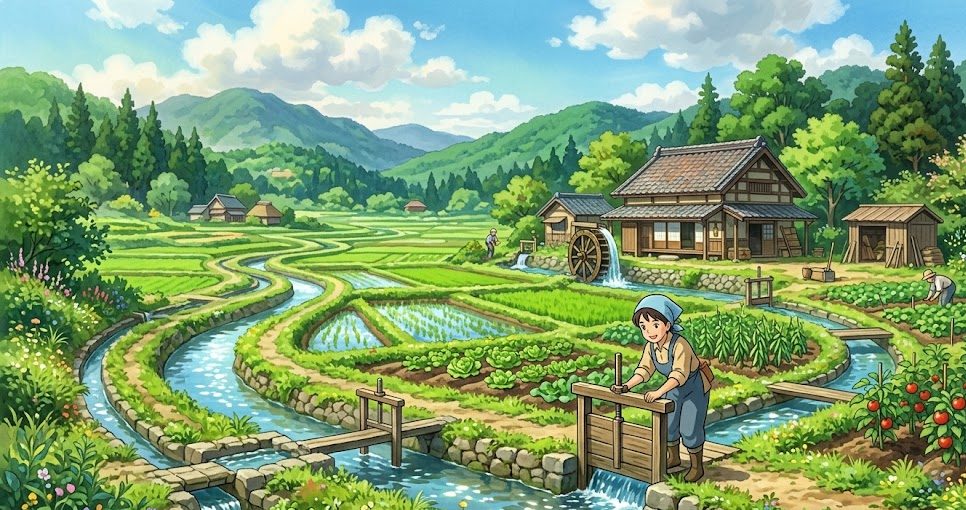
Water is the lifeblood of agriculture, yet it is one of the most misused resources in the global food production chain. As climate patterns shift and freshwater scarcity increases, the agricultural sector faces a pivotal turning point. Traditional, wasteful irrigation methods are no longer commercially or environmentally viable.
To ensure long-term food security and farm profitability, the transition toward Efficient Water Management and Sustainable Irrigation Farming is essential. This guide explores the advanced technologies, strategic frameworks, and regenerative practices that allow modern farmers to grow more with less.
The Critical Need for Irrigation Efficiency
Global agriculture accounts for approximately 70% of all freshwater withdrawals. In many regions, inefficient “flood” or “furrow” irrigation results in up to 50% of water being lost to evaporation, runoff, or deep percolation beyond the root zone.
Sustainable water management isn’t just about saving the planet; it’s about resource optimization. By reducing water waste, farmers can:
- Lower Energy Costs: Pumping thousands of gallons of water requires significant electricity or fuel.
- Prevent Soil Degradation: Over-irrigation leads to salinization and nutrient leaching, which destroys soil health over time.
- Increase Crop Quality: Precise water delivery reduces plant stress, leading to more uniform growth and higher-grade produce.
1. Precision Irrigation Technologies
The core of sustainable irrigation lies in “Precision Application”—delivering the right amount of water, at the right time, to the right place.
A. Drip and Micro-Irrigation Systems
Drip irrigation is the gold standard for water efficiency. By using a network of tubes and emitters, water is delivered directly to the base of each plant.
- Efficiency: Drip systems can achieve over 90% efficiency compared to the 50-60% seen in traditional methods.
- Nutrient Delivery (Fertigation): These systems allow for “fertigation,” where liquid fertilizers are mixed into the water stream. This ensures nutrients reach the roots directly, preventing chemical runoff into local water supplies.
B. Subsurface Drip Irrigation (SDI)
For large-scale commercial crops like corn or cotton, Subsurface Drip Irrigation involves burying the irrigation lines below the soil surface. This eliminates surface evaporation entirely and prevents weed growth by keeping the topsoil dry.
C. Variable Rate Irrigation (VRI)
Not every part of a field has the same soil type or elevation. VRI technology, often integrated with center-pivot systems, uses GPS and software to adjust the amount of water sprayed on specific sections of the field. This prevents over-watering in low-lying areas and under-watering on slopes.
2. Smart Water Management through IoT and Data
The “Smart Farm” revolution has introduced data-driven tools that take the guesswork out of irrigation scheduling.
Soil Moisture Sensors
Strategically placed IoT sensors provide real-time data on exactly how much moisture is available in the root zone. Instead of irrigating on a fixed calendar, farmers can wait until the soil reaches a specific “trigger point,” drastically reducing unnecessary water use.
Weather-Based Controllers (ET Controllers)
Evapotranspiration (ET) is the combination of water evaporated from the soil and transpired by the plant. Modern irrigation controllers use local weather station data to calculate ET rates. If a cool, humid day reduces a plant’s water needs, the system automatically skips or shortens the irrigation cycle.
Automated Leak Detection
In large-scale operations, a single broken pipe can waste millions of liters before it is noticed. Smart flow meters can detect unusual pressure drops and instantly shut down the system while alerting the farm manager via a mobile app.
3. Sustainable Soil Practices to Enhance Water Retention
Efficient water management is only half the battle; the soil must also be capable of holding that water. This is where sustainable soil care meets irrigation strategy.
- Cover Cropping: Planting “green manure” or cover crops between seasons creates a biological “mulch” that shields the soil from the sun, reducing surface evaporation.
- No-Till Farming: Tilling the soil breaks up its structure and speeds up moisture loss. By leaving the soil undisturbed, farmers preserve the organic matter that acts like a sponge, holding water for longer periods during dry spells.
- Organic Matter Incorporation: Increasing soil organic matter (through compost or biochar) by just 1% can allow the soil to hold thousands of additional gallons of water per acre.
4. Alternate Water Sources: Diversification for Resilience
Sustainable farming also involves looking beyond traditional groundwater or river sources.
- Rainwater Harvesting: Building retention ponds and high-capacity storage tanks allows farms to capture heavy rainfall and store it for use during lean summer months.
- Recycled Wastewater: In some regions, treated “greywater” or industrial wastewater is being safely repurposed for non-edible crop irrigation, reducing the strain on local aquifers.
- Desalination for Agriculture: While currently expensive, small-scale solar-powered desalination units are becoming a viable option for coastal farms with brackish water supplies.
The Economic Impact: ROI of Sustainable Irrigation
For commercial growers, the transition to efficient water management is a long-term investment with a clear Return on Investment (ROI):
- Regulatory Compliance: As governments introduce stricter “Water Rights” and usage caps, efficient farms are protected from legal risks.
- Drought Insurance: Farms with high water-holding soil and precision systems are significantly more likely to survive extreme drought years that would otherwise lead to total crop failure.
- Market Premium: Consumers and retailers are increasingly prioritizing “Sustainably Grown” certifications, which can open doors to higher-value export markets.
Conclusion: Securing the Future of Food
Efficient water management and sustainable irrigation farming are the twin pillars of the next agricultural revolution. By combining the power of Precision Tech, IoT Data, and Regenerative Soil Care, we can build an agricultural system that is both highly profitable and environmentally resilient.
The future of farming is not about having more water; it is about managing the water we have with the highest level of intelligence and care. For the modern cultivator, efficiency is no longer an option—it is the only way forward.