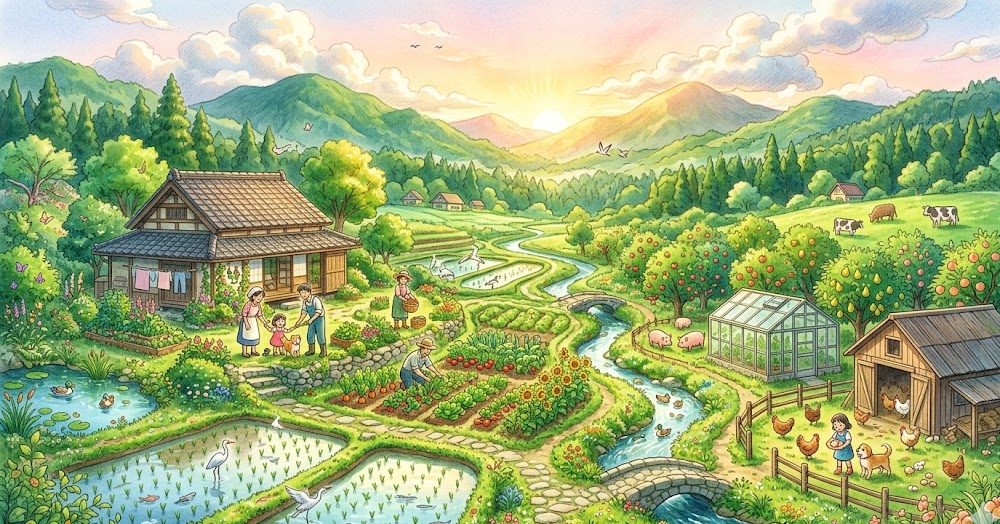
The traditional image of a farmer—toiling over a single crop and praying for rain or market stability—is rapidly becoming a relic of the past. As global populations soar and arable land shrinks, the agricultural sector is undergoing a paradigm shift toward Integrated Farming Systems (IFS). This model isn’t just a technique; it’s a biological symphony where the waste of one enterprise becomes the fuel for another, ensuring that not a single square inch of land or a drop of water goes to waste.
Understanding the Core Philosophy
At its heart, Integrated Farming is about synergy. Unlike monoculture, which exhausts soil nutrients and leaves farmers vulnerable to a single market crash, IFS combines various agricultural sectors—such as crops, livestock, poultry, fisheries, and even bee-keeping—into a single, cohesive unit.
The goal is simple but profound: to create a self-sustaining ecosystem. By mimicking the cycles of nature, IFS reduces the need for external inputs like chemical fertilizers and expensive animal feed, thereby slashing production costs while boosting total output.
The Pillars of an Integrated Model
To understand how this works in practice, let’s look at the primary components that make an integrated farm thrive:
1. Diversified Cropping Systems
Instead of planting only wheat or rice, an integrated farmer uses intercropping and crop rotation. For instance, planting legumes (which fix nitrogen in the soil) alongside leafy greens reduces the need for synthetic urea. This ensures the soil remains “alive” and fertile year-round.
2. Livestock Integration
Animals are the engines of an integrated farm.
- Cattle & Goats: They provide milk and meat for income, but their more valuable contribution is manure.
- The Loop: This manure is processed into organic compost or fed into a biogas plant, providing clean cooking energy for the household and nutrient-rich slurry for the fields.
3. Poultry and Aquaculture
One of the most efficient “mini-cycles” is the Poultry-Fish-Rice model.
- Poultry droppings serve as high-protein feed for fish in a nearby pond.
- The nutrient-rich pond water is then used to irrigate the rice paddies.
- The fish eat pests and weeds in the water, acting as natural “pesticides.”
4. Horticulture and Apiculture
Growing fruit trees (Horticulture) alongside beehives (Apiculture) creates a win-win scenario. The bees ensure high pollination rates, which increases fruit yield, while the farmer gains an additional high-value product: pure honey.
Economic Benefits: Why It’s a Game Changer
The most compelling argument for IFS is the Multiple Income Stream strategy. In a standard farm, the farmer gets paid once or twice a year after the harvest. In an integrated model, the cash flow is continuous:
- Daily Income: From milk, eggs, and vegetables.
- Monthly Income: From fish or poultry sales.
- Seasonal Income: From major grain harvests or fruits.
This “portfolio” approach acts as an insurance policy. If a pest attack destroys the tomato crop, the income from the dairy and fish pond keeps the farm afloat.
Environmental Sustainability and Climate Resilience
In an era of climate change, the Integrated Farming Model is a fortress of resilience.
- Waste Management: There is no “waste” in IFS. Crop residues become animal fodder; animal waste becomes fertilizer. This circular economy significantly reduces the carbon footprint of the farm.
- Soil Health: By avoiding the heavy use of chemicals and utilizing organic matter, the soil structure improves, allowing it to retain more water. This makes the farm more resistant to droughts.
- Biodiversity: A diverse farm attracts beneficial insects and birds, creating a natural balance that keeps harmful pests in check without the need for toxic sprays.
Challenges to Implementation
While the benefits are clear, transitioning to an IFS model requires more than just seeds and soil.
- High Initial Knowledge: A farmer must understand the basics of veterinary science, soil chemistry, and aquatic management simultaneously.
- Labor Intensity: Managing multiple enterprises is more time-consuming than managing a single crop.
- Initial Investment: Setting up fish ponds, cattle sheds, and irrigation systems requires upfront capital.
The Future of Farming
The Integrated Farming Model is the bridge between traditional wisdom and modern efficiency. It addresses the three most critical challenges of our time: food security, farmer poverty, and environmental degradation.
By treating a farm as a living, breathing organism rather than a factory line, we can maximize land productivity to its true potential. For the modern farmer, success is no longer measured by the size of the harvest alone, but by the health of the soil and the stability of the multiple income streams that keep the hearth burning year-round.
Final Thought: Integration is not just a farming strategy; it is a survival strategy for the 21st century. As we look toward a sustainable future, the path forward is clearly written in the soil of the integrated farm.