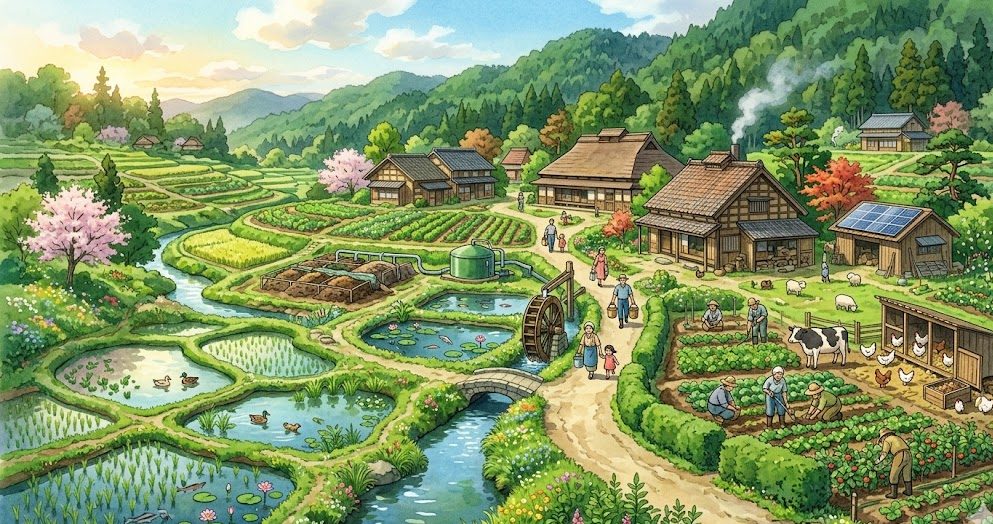
Introduction: The Industrialization of Circular Agriculture
The agricultural sector is confronting an unprecedented convergence of economic and environmental challenges. Traditional, linear farming models—which operate on a “take, make, waste” philosophy—are becoming financially unsustainable. Rising synthetic input costs, stricter environmental regulations regarding chemical runoff, and volatile market pricing for single commodities have compressed profit margins across open-field operations.
To secure long-term financial survival, modern agribusinesses are shifting toward structural optimization through Smart Integrated Farming Systems (IFS). This methodology treats the entire farm acreage not as a collection of isolated production fields, but as a closed-loop, bio-digital factory. The foundational objective of an IFS framework is the creation of a Zero-Waste Ecosystem. In this setup, the operational output, byproduct, or waste streams of one enterprise are systematically captured, processed, and deployed as the high-value input asset for another. By utilizing smart technologies to monitor and automate these internal resource loops, agricultural operators can eliminate external input overhead, mitigate environmental risks, and maximize bottom-line profitability.
1. The Core Mechanics of Integrated Loops: Crop-Livestock Synergy
The primary scaling mechanism of a smart integrated farming system begins with the structural pairing of crop cultivation and livestock management. In standard single-enterprise models, crop residues (such as stalks, husks, and stubble) are treated as waste and are frequently burned, creating environmental liabilities and wasting organic carbon. Conversely, specialized livestock operations face massive recurring overhead expenses from buying external feed.
Automating the Biomass Exchange
A smart integrated system solves both inefficiencies simultaneously through targeted circular workflows:
- The Feed Conversion Loop: Crop biomass and post-harvest residues are harvested and processed into nutrient-dense silage and fodder for livestock (such as goats, cattle, or poultry). This immediate internal diversion slashes external feed purchasing costs by up to 40%.
- The Precision Manure Matrix: Livestock manure is collected using automated scraper systems and directed into specialized aerobic composting facilities. Instead of applying raw, unmanaged manure—which can introduce weed seeds and pathogens to fields—the waste is thermophilically composted.
- Data-Driven Application: The resulting organic fertilizer is rich in humic acids, natural Nitrogen, Phosphorus, and Potassium (NPK), and beneficial microbial life. This high-grade compost is returned to the crop fields via precision variable-rate spreaders, rebuilding the soil’s organic matter baseline and reducing reliance on synthetic, petroleum-based fertilizers.
2. Multi-Tier Waste Monetization: Integrating Aquaculture and Hydroponics
Expanding the integrated system beyond traditional livestock and field rows introduces high-margin aquatic and soil-less production subsystems. Aquaponics and integrated crop-fishery networks represent the absolute peak of volumetric efficiency, producing multiple high-value revenue streams from the exact same footprint of water and spatial area.
Navigating the Nutrient Stream
The integration of managed aquaculture ponds with vegetable or crop production relies on strict biological filtration and data-driven automation:
- Effluent Diversion: Fish waste naturally contains high concentrations of ammonia, which is toxic to the fish population if left to accumulate in standard aquaculture systems. In an integrated loop, this nutrient-heavy effluent water is continuously pumped out of the fish enclosures.
- Biological Nitrification: The water passes through a bio-filtration matrix where naturally occurring nitrifying bacteria convert the toxic ammonia first into nitrites, and then into nitrates. Nitrates serve as a highly bioavailable, premium liquid fertilizer for plants.
- Substrate-Less Feeding: This nitrate-rich water is routed directly into commercial hydroponic channels or vertical growing racks. The root zones of the cash crops (such as premium leafy greens or gourmet berries) act as natural water filters, absorbing the nitrates to fuel rapid vegetative development.
- The Clean Return: Once the plants extract the nutrients, the purified, oxygenated water is gravity-fed directly back into the aquaculture ponds. This continuous closed-loop cycle drops total farm water consumption by up to 90% compared to traditional open-field flood irrigation.
3. The Centralized Energy Engine: Anaerobic Digestor Systems
A true zero-waste agricultural profile requires a reliable mechanism to process heavy, highly organic waste products that cannot be directly applied back to crops or fed to aquatic life, such as excess dairy slurry, poultry droppings, and spoiled organic materials. The structural heartbeat of this recovery phase is the Anaerobic Biogas Digestor.
Converting Liabilities into Utility Assets
Anaerobic digestion utilizes specialized bacterial consortiums working in an oxygen-deprived environment to break down complex volatile solids into simple chemical compounds:
- Biogas Generation: The primary byproduct of this microbial fermentation process is biogas, which is composed heavily of methane (CH4) and carbon dioxide (CO2). This gas is captured via sealed membrane roofs, scrubbed of impurities, and funneled directly into on-farm combined heat and power (CHP) generators. This setup produces zero-cost electricity and thermal energy to power farm utilities, greenhouse heating systems, and processing machinery.
- High-Grade Bio-Slurry Production: The secondary output of the digestor is “digestate”—a stabilized, nutrient-dense liquid slurry. The intense heat generated inside the digestor completely sanitizes the material, killing off weed seeds, harmful bacteria, and fungal spores.
- Foliar Nutrition: This liquid digestate serves as a highly concentrated organic foliar spray. When applied through standard drip irrigation networks or agricultural drones, it delivers an immediate boost of micro-nutrients to crop canopies without leaving toxic synthetic chemical residues on the final harvest.
4. Smart Automation: The Digital Infrastructure of IFS
An integrated farming system features multiple moving parts and interdependent biological cycles. If one link in the chain breaks—such as an ammonia spike in the fish ponds or a temperature drop in the biogas digestor—the entire ecosystem can suffer. Managing these risks requires a robust layer of digital infrastructure and smart automation.
Implementing Internet of Things (IoT) Management Networks
Modern IFS operations embed solar-powered IoT sensor arrays across every individual enterprise node to feed data back into a centralized management dashboard:
- Aquatic Telemetry Nodes: Submersible sensors continuously read dissolved oxygen (DO), pH scales, and ammonia parts per million (ppm) inside the aquaculture tanks, triggering automated aeration pumps the moment water quality metrics drift outside optimal thresholds.
- Substrate Moisture Sensors: IoT sensors placed inside crop root zones communicate directly with automated fertigation valves. This ensures that the nitrate-heavy water from the aquaculture loops or the liquid slurry from the digestor is distributed drop by drop strictly when the soil telemetry indicates a deficit, eliminating resource runoff completely.
- Predictive AI Workflows: Machine learning models process these real-time data inputs alongside regional weather patterns to forecast exact output volumes for each sub-tier (milk, meat, fish, vegetables, and energy), allowing the agricultural enterprise to optimize its B2B supply logistics weeks before the physical harvest.
Conclusion: Maximizing Profitability Through Systemic Efficiency
Pivoting an agricultural business toward a Smart Integrated Farming System represents a permanent shift from traditional manual extraction to high-efficiency systems engineering. By designing a farm as a zero-waste ecosystem, you effectively decouple your operational cost profile from volatile external commercial markets. You no longer buy expensive chemical fertilizers, external livestock feed, or commercial grid energy; the farm creates its own input assets internally.
As consumer demand for verified sustainable, zero-waste, and organically produced foodstuffs continues to scale globally, the operators who treat their fields like an interconnected biological machine will secure the most resilient cost controls, the highest volume efficiencies, and the most consistent bottom-line financial profitability.