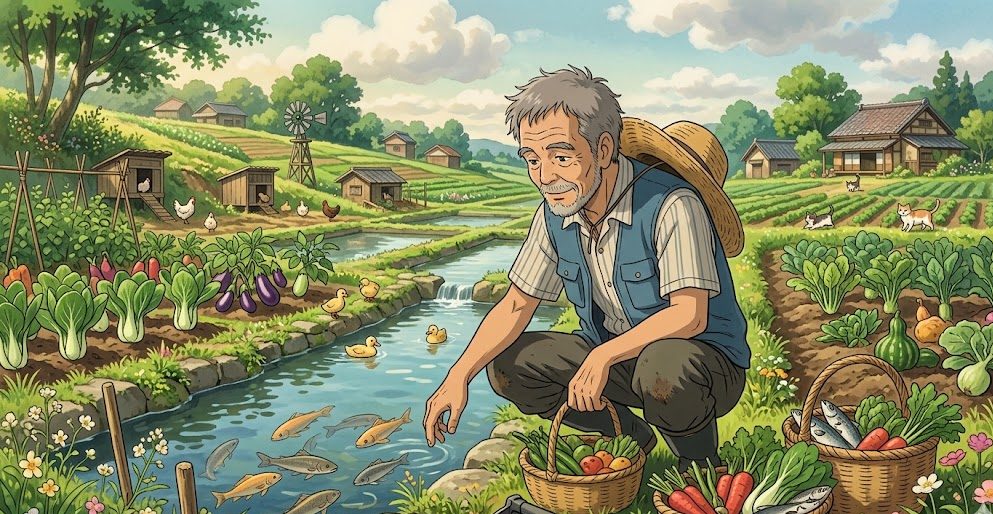
In modern agriculture, the old adage “don’t put all your eggs in one basket” has never been more relevant. As climate volatility and market fluctuations become the new normal, successful farmers are looking beyond traditional monoculture. Diversification—the practice of growing multiple types of crops and integrating livestock or aquaculture—is the ultimate strategy for financial stability and long-term land health.
Whether you are looking to tap into high-end urban markets with exotic produce or maximize the utility of your water resources through fish farming, this guide provides the roadmap to a multi-revenue farm.
1. Entering the World of Exotic Vegetables
Consumers are increasingly seeking culinary variety, and the demand for exotic vegetables has skyrocketed. Crops like Broccoli, Cherry Tomatoes, Bok Choy, Bell Peppers, and Zucchini often sell for 3x to 5x the price of standard local varieties.
Keys to Successful Exotic Cultivation:
- Market Research: Before planting, identify your local premium market—high-end restaurants, organic grocery stores, or direct-to-consumer subscription boxes.
- Climate Control: Exotic vegetables often require specific conditions. Utilize Polyhouses or Greenhouses to regulate temperature and humidity, which allows you to grow these high-value crops even in the off-season.
- Specialized Care: Exotic plants often have unique nutrient needs. Invest in high-quality organic fertilizers and drip irrigation to ensure the premium quality that buyers expect.
2. Integrated Farming: The Ecosystem Approach
Integrated Farming System (IFS) is the backbone of a sustainable farm. It is the practice of linking multiple agricultural enterprises so that the waste of one becomes the resource of another.
- The Livestock Connection: If you raise poultry or dairy cows, their manure acts as a nutrient-rich base for vermicomposting, which in turn fuels the growth of your vegetable crops.
- Space Optimization: By layering your production—for example, growing shade-tolerant crops beneath fruit trees—you maximize the “output per square foot” of your land. This significantly lowers your overhead costs while diversifying your income streams.
3. Fish Farming (Aquaculture): Profit from Your Water
Integrating fish farming (often called Integrated Fish Farming) into your operation is perhaps the most lucrative way to utilize water resources. You don’t need a massive lake; modern setups like Biofloc or Recirculating Aquaculture Systems (RAS) allow you to farm fish in confined, highly controlled environments.
The Synergy of Fish and Plants (Aquaponics)
- Natural Fertilizer: Fish waste provides a constant source of ammonia and nutrients. Through a recirculating system, this water is filtered through your plant beds, where bacteria convert the waste into plant-available nutrients.
- Dual Revenue: You generate profit from the harvest of protein-rich fish (like Tilapia or Catfish) and nutrient-dense vegetables simultaneously.
- Water Conservation: Aquaponic systems use up to 90% less water than traditional soil-based farming because the water is constantly recycled rather than drained.
4. Why Diversification is Your Best Financial Hedge
When you manage a single crop, a bad season—caused by pests, disease, or a market price crash—can be catastrophic. Diversification protects you:
- Income Distribution: Exotic vegetables bring in quick, high-margin cash flow. Fish farming provides consistent mid-term returns. Traditional crops provide a stable, long-term foundation.
- Risk Mitigation: If a pest targets your tomatoes, your fish stocks and leafy greens remain unaffected, ensuring you still have revenue coming in.
- Efficiency: Integrated systems reduce the need to buy external inputs. Your fish food waste fertilizes your crops, and your crop residues can feed your livestock.
5. Getting Started: A Phased Strategy
You don’t have to overhaul your entire farm overnight. Follow these steps:
- Phase 1 (Small Trials): Dedicate 10% of your land to exotic vegetable trials. Choose high-demand crops like Bell Peppers or Cherry Tomatoes.
- Phase 2 (Pilot Integration): Introduce a small, manageable fish tank or poultry setup. Learn the cycle of how their waste can be processed into fertilizer for your test plots.
- Phase 3 (Scaling): Once you have mastered the synergy between your fish and plants, expand your systems. Use the profits from your first successful exotic harvest to fund the expansion of your aquaculture setup.
Conclusion: Build a Farm that Lasts
Diversification is more than just a business strategy; it is a philosophy of resilience. By combining the high-margin potential of exotic produce with the efficiency of integrated systems and the productivity of aquaculture, you transform your farm into a thriving, self-sufficient enterprise.
The future of agriculture belongs to the “Smart Farmer”—one who thinks like an ecosystem manager. Start small, observe the connections between your crops and livestock, and scale your way toward a more profitable, sustainable future.