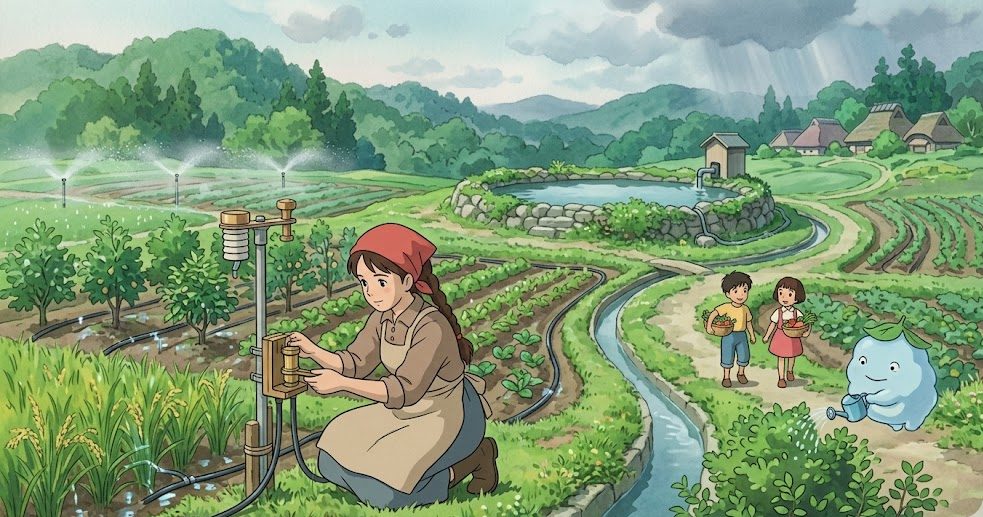
Water is the lifeblood of any successful farm. Yet, ask any grower today about their biggest worries, and changing weather patterns, dropping water tables, and rising pumping costs will top the list. Clean, reliable fresh water is becoming harder to access, making traditional watering methods highly unsustainable.
If you are still watering your crops using open flood ditches or basic overhead sprinklers on a fixed timer, you are losing money to the air.
Up to half of the water sprayed through traditional overhead systems evaporates into the sky or runs off into ditches before it ever touches a plant’s root system. That is not just a waste of a precious resource; it is a waste of your hard-earned money and field nutrients.
Transitioning to water saving farming does not mean starving your crops. In fact, by embracing smart irrigation management, you can actually improve your yields while using a fraction of the water. Here is a practical guide on how modern growers are mastering water efficiency.
1. Drip Irrigation: Placing Water Exactly Where It Counts
If you want to maximize water saving farming, you need to change your delivery system. Drip irrigation is the undisputed king of water efficiency, operating at an incredible 90% efficiency rate compared to the 50% rate of traditional flooding.
Surface vs. Subsurface Drip Lines
Drip irrigation uses flexible plastic tubing with tiny built-in holes (called emitters) laid out along your crop rows.
- Surface Drip: The lines sit on top of the soil right next to the plant stems. This is perfect for annual vegetables and row crops.
- Subsurface Drip (SDI): The lines are buried permanently 4 to 12 inches beneath the surface. This sends water directly to the root zone, completely eliminating surface evaporation and weed growth between rows.
Why It Helps the Plant
Because drip systems apply water slowly and steadily, the soil maintains a perfect balance of moisture and oxygen. Your crops won’t suffer from the classic “flood-and-drought” stress cycle that happens when you soak a field and let it dry out completely.
2. IoT Soil Moisture Sensors: Stop Guessing, Start Measuring
How do you decide when it is time to turn on your irrigation valves? Do you look at a calendar, or do you kick the top inch of dirt to see if it feels dry?
Looking Deeper Into the Root Zone
The surface of your soil can look bone dry while the earth six inches down is still perfectly wet. Shoving an electronic Internet of Things (IoT) soil moisture sensor into your fields changes everything. These affordable prongs stay buried in your active root zone all season long.
Real-Time Data Dashboards
These smart sensors connect wirelessly to your smartphone or laptop. Instead of wondering if your crops need water, you can look at a simple chart that tells you the exact volumetric water content of your soil.
Pro Tip: Set up system alerts. You can program your software to send a notification to your phone only when soil moisture drops below a specific threshold (like 20%), preventing unnecessary watering cycles.
3. Weather-Based Smart Irrigation Controllers
A classic mistake in farm automation is relying on standard, mechanical system timers. We have all driven past properties where sprinklers are spraying furiously in the middle of a heavy rainstorm. It looks foolish, and it wastes massive amounts of resources.
The Power of Evapotranspiration (ET)
Smart irrigation controllers replace basic clocks with intelligent computing. These devices connect to local Wi-Fi or cellular networks to monitor real-time weather stations. They calculate a specific metric called Evapotranspiration (ET)—which is the total amount of water evaporating from the soil combined with the water breathed out by the plants.
[Local Weather Station Data] ➔ [Controller Calculates ET Rate] ➔ [Automatically Adjusts or Cancels Watering Sync]
Automated Weather Pauses
If the controller detects high humidity, cool temperatures, or an incoming rainstorm, it automatically shrinks or cancels the scheduled watering cycle. You don’t have to drive out to the field to turn off pumps manually; the smart system handles it all in the background.
4. Alternate Wetting and Drying (AWD) for Rice and Grains
When people think of growing rice, they picture deep, flooded paddies stretching across landscapes. While rice thrives in water, keeping fields continuously flooded consumes staggering amounts of water and releases high levels of methane gas.
Breaking the Flooding Habit
A hidden water saving farming breakthrough for grain growers is a method called Alternate Wetting and Drying (AWD). Instead of keeping the paddy flooded constantly, the water is allowed to recede naturally until the soil surface dries out.
The Perforated Pipe Trick
To use AWD safely, farmers drop a simple, perforated plastic pipe into the soil to check the underground water table.
- Flood the field normally to a depth of a few inches.
- Let the water level drop over several days.
- Look inside your buried pipe. As long as the internal water level stays within 15 centimeters below the soil surface, the roots have plenty of moisture.
- Re-flood the field only when the underground water drops past that 15-centimeter line. This simple adjustment can slash your water use by up to 30% without dropping your harvest weight.
5. Tailwater Recovery and On-Farm Recycling Loops
No matter how efficient your setup is, heavy rains or long watering cycles will eventually cause some water to run off the edges of your fields. A sustainable farm doesn’t let that water escape; it catches and reuses it.
Building a Tailwater Capture System
A tailwater recovery system uses a series of gently sloped ditches at the lowest points of your property. Any excess water running off the fields flows down these channels and empties into a dedicated, lined storage pond.
Cleaning and Re-pumping
- Nutrient Catching: Runoff water usually carries away expensive fertilizers and topsoil. By catching this water in a pond, you keep those nutrients on your property.
- Secondary Irrigation: Once the sediment settles to the bottom of your storage pond, a secondary pump can pull that nutrient-rich water right back into your main irrigation lines, creating a highly cost-effective, circular recycling loop.
Conclusion: Every Drop Counts
Embracing water saving farming is no longer just an environmental choice—it is a core business strategy for the modern grower. By upgrading from crude flooding to precise drip systems, using soil sensors to measure actual moisture, and letting smart controllers adapt to the daily weather, you insulate your farm from drought and skyrocketing utility bills. Water management might seem intimidating at first, but starting with just one smart sensor can set your operation on the path toward long-term resilience and profitability.
Frequently Asked Questions (FAQs)
1. Will drip irrigation lines clog if I use well water or pond water?
Yes, raw water containing algae, sand, or heavy minerals can clog fine drip emitters over time. To prevent this, you should always install a high-quality disc or mesh filter at the beginning of your irrigation system and flush the lines out with clean water at least once a season.
2. How many soil moisture sensors do I need for my farm?
You don’t need a sensor under every single plant. Instead, place one or two sensor stations in each distinct “management zone”—areas that share the same soil type, slope, and crop variety. If you have a five-acre field with uniform clay soil, one well-placed sensor station is usually enough.
3. Can smart irrigation controllers function without internet access?
Yes. While they work best when connected to live internet weather stations, many smart controllers can be paired with an affordable, on-site mini weather station or a simple rain sensor probe installed directly on your barn roof.
4. Does subsurface drip irrigation interfere with tilling the field?
It can. If you plan to use subsurface drip irrigation, you must bury the lines well below the depth of your equipment blades (usually 12 inches or deeper), or transition your field to a low-till or no-till farming system to protect the underground pipes from tearing.
5. Is water saving farming practical for small backyards?
Absolutely. The exact same concepts apply perfectly to a home garden. You can purchase affordable micro-drip kits, connect a Bluetooth-enabled hose timer to your outdoor faucet, and use a manual hand-held moisture meter to significantly cut down your home water bills.