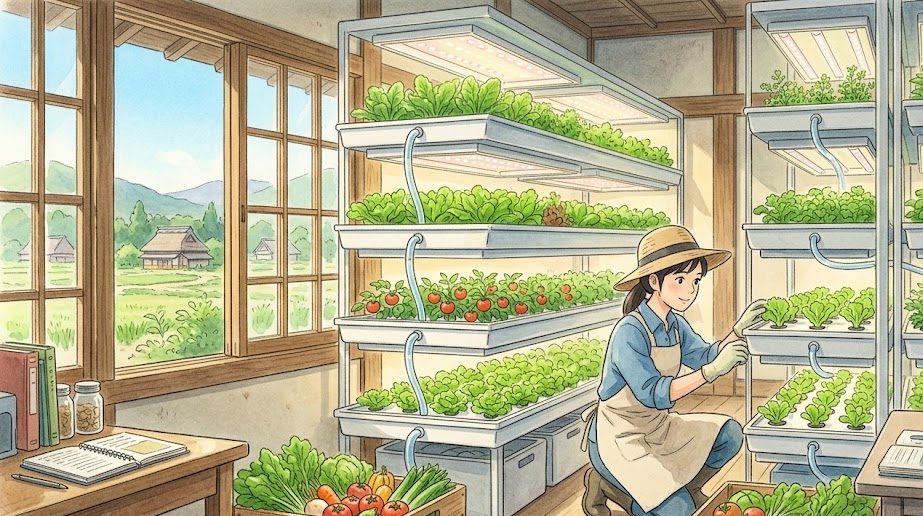
Agriculture is the backbone of our economy, but it is currently facing a massive challenge: the rapid depletion of groundwater and unpredictable climate patterns. For the modern farmer, the key to staying profitable lies not just in working harder, but in working smarter. Water-saving farming is the transition from traditional, wasteful habits to precision-based, efficient systems.
In this guide, we will explore why water conservation is the most important investment you can make for your farm’s future and how you can implement these changes effectively.
Why Water Conservation is the Key to Farm Profitability
Many farmers mistakenly believe that using more water leads to bigger crops. However, over-irrigation often leads to soil degradation, nutrient leaching, and increased costs for electricity and pump maintenance. By adopting water-saving techniques, you achieve three things:
- Reduced Overhead: Lower electricity bills and fuel costs for irrigation pumps.
- Improved Crop Quality: Precise water delivery prevents root rot and ensures the plant gets exactly what it needs, when it needs it.
- Long-term Sustainability: You protect your land from salinity and maintain soil health for generations to come.
Top 5 Proven Water-Saving Techniques
To build a truly profitable agriculture business, you need to integrate technology and traditional wisdom. Here are five methods that provide the highest return on investment.
1. Drip Irrigation (The Precision Approach)
Drip irrigation is the most efficient method available today. Instead of flooding the field, this system uses a network of valves, pipes, and emitters to drip water directly into the soil at the root zone.
- Benefit: It minimizes evaporation and prevents weed growth between rows.
- Impact: Studies show that drip systems can increase crop yields by 20-50% while saving up to 70% of water.
2. The Power of Mulching
Mulching is the process of covering the soil surface with organic matter like straw, hay, or specialized plastic films.
- Benefit: It acts as a protective shield against the sun, significantly reducing the rate of evaporation.
- Impact: It maintains soil temperature and suppresses weeds, meaning you spend less money on herbicides and labor.
3. Sensor-Based Smart Irrigation
If you want to take your farm to the next level, integration of soil moisture sensors is essential. These devices measure the exact moisture level of the soil and only trigger the irrigation system when the plants actually need it.
- Benefit: Eliminates human error and over-watering.
- Impact: Highly efficient in areas where electricity is expensive or water supply is limited.
4. Deep Tillage and Soil Amendments
Improving the physical structure of your soil is just as important as the irrigation system itself. Adding compost, manure, or biochar increases the organic matter in the soil.
- Benefit: High organic matter acts like a sponge, holding water for longer periods, even during dry spells.
- Impact: Better root penetration and naturally stronger plants.
5. Crop Rotation and Drought-Resistant Varieties
Not all crops have the same water requirements. By planning your planting cycle around crop rotation, you can ensure the soil recovers its nutrients and moisture-holding capacity. Additionally, shifting to drought-resistant hybrid seeds can drastically reduce your dependency on constant irrigation.
Integrating Modern Technology into Traditional Farms
Transitioning to water-saving farming doesn’t mean you have to abandon your traditional knowledge. Instead, it is about augmenting that knowledge with data.
For instance, using a mobile app to monitor weather forecasts can help you decide when to irrigate. If rain is predicted, you save the cost of pumping water. This is the essence of “Smart Farming”—using information to make better financial decisions.
Calculating the ROI of Water-Saving Systems
When you invest in a drip system or a smart sensor, it might seem like a large upfront cost. However, it is vital to look at the Return on Investment (ROI).
- Calculate your current monthly electricity bill for water pumps.
- Calculate the cost of labor involved in manual irrigation.
- Subtract the projected costs after installing a drip or sprinkler system.
Most farmers find that these systems pay for themselves within 2 to 3 harvest cycles. After that, the saved money goes directly into your profit margin.
Addressing Common Challenges
We know that moving away from flood irrigation comes with challenges. Some farmers worry about the maintenance of pipes or the complexity of new systems.
- Maintenance: Most modern drip kits are designed to be “plug and play.” A simple filter cleaning every week is often enough to keep the system running for years.
- Adoption: Start small. You don’t need to convert your entire farm at once. Convert one acre as a pilot project, analyze the yield difference, and then scale up.
The Future of Agriculture: A Call to Action
The world is moving toward sustainable agriculture, and the consumers of the future prefer products grown with eco-friendly practices. By branding your farm as a “Water-Conscious Enterprise,” you may even be able to command a premium price for your crops in specific markets.
Your land is your biggest asset. Treating it with care through water-saving techniques is not just an environmental duty—it is the smartest business strategy you can adopt.
Final Thoughts
Water-saving farming is about efficiency, precision, and long-term vision. As a beginner in the agricultural space, focusing on these systems now will put you ahead of the competition.
Start by analyzing your water usage today. Take a soil sample, look into drip irrigation options, and take the first step toward a more profitable and sustainable farming business.