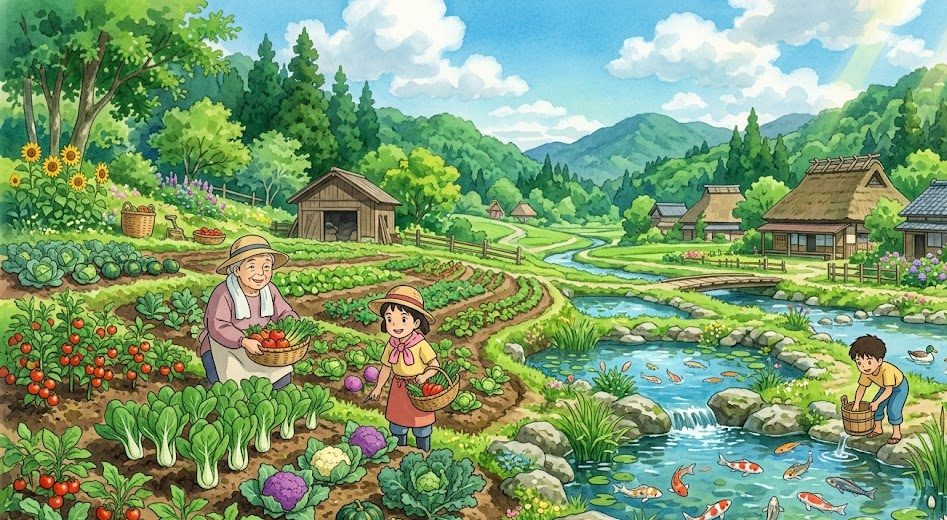
In the evolving landscape of modern agriculture, the traditional “single-crop” model is rapidly becoming obsolete for small to mid-sized rural landholders. As market volatility increases and climate patterns shift, the path to sustainable wealth in the rural sector lies in Diversification and Synergy.
The most lucrative frontier in this shift is the integration of Exotic Vegetable Farming with Integrated Fish Production Systems (IFPS). By combining these two high-value sectors, farmers can create a circular economy that slashes input costs while doubling revenue streams.
1. The Economics of High-Value Diversification
Why exotic vegetables and fish? The logic is driven by market demand. As urban diets become more globalized, the demand for “superfoods” and premium produce—such as kale, colored bell peppers, broccoli, and pak choi—has skyrocketed. Simultaneously, fish remains the primary source of lean protein for a growing population.
By integrating these two, you aren’t just running two businesses; you are running one Symbiotic System. The waste of one becomes the wealth of the other.
2. Part I: Strategic Exotic Vegetable Farming
Exotic vegetables often fetch 3 to 5 times the price of local staples. However, they require a more “stealthy” and calculated management approach.
A. Selecting the Right Portfolio
Don’t plant what everyone else is planting. Focus on high-demand, low-competition crops:
- Cruciferous Greens: Broccoli and Red Cabbage (High antioxidant demand).
- Leafy Exotics: Lettuce (Iceberg/Romaine) and Bok Choy (High demand from the hospitality sector).
- Vine Crops: Cherry Tomatoes and Seedless Cucumbers (High margin per square foot).
B. Controlled Environment Agriculture (CEA)
To maximize profit, you must move away from seasonal dependency. Using low-cost poly-houses or net-houses allows you to maintain the specific micro-climates these exotic plants require, ensuring a year-round harvest when market prices are at their peak.
3. Part II: Integrated Fish Production Systems (IFPS)
Integrated Fish Production is the practice of raising fish in a way that the water and nutrients can be recycled back into the farm ecosystem.
A. Species Selection for Rapid Turnover
For rural profitability, you need fish that grow fast and are hardy.
- Tilapia: Known as the “aquatic chicken,” it is hardy and has a high feed-conversion ratio.
- Catfish: High density tolerance and excellent market demand in rural and semi-urban areas.
- Carp: Ideal for poly-culture systems where different fish occupy different levels of the water column.
B. The Nutrient Loop
The water in a fish pond is rich in ammonia, nitrogen, and phosphorus—the exact ingredients found in expensive commercial fertilizers. In an integrated system, this “waste” water is pumped directly to the exotic vegetable beds.
4. The Synergy: How the Integration Works
The magic happens in the exchange. This is often referred to as Aquaponics or Integrated Agri-Aquaculture (IAA).
| Component | Contribution to the System | Financial Benefit |
|---|---|---|
| Fish Waste | Provides organic nitrogen and minerals. | Replaces 70-90% of chemical fertilizer costs. |
| Vegetable Roots | Acts as a natural filter, cleaning the water for the fish. | Reduces the need for expensive water filtration systems. |
| Water Recycling | The same water is used for both crops and fish. | Reduces water consumption by up to 80% compared to traditional farming. |
Export to Sheets
5. Step-by-Step Strategic Implementation
Phase 1: Site Design and Gravity Logic
A smart rural setup uses the natural topography. Place your fish ponds at a slightly higher elevation than your vegetable plots. This allows you to use gravity for irrigation, saving significantly on electricity and pumping costs.
Phase 2: The Biological “Seasoning”
Before introducing exotic crops, the fish pond must be established for 4–6 weeks to build up a healthy colony of nitrifying bacteria. These bacteria are the “invisible workers” that convert fish waste into plant-available nitrates.
Phase 3: Staggered Harvest Cycles
To maintain a steady cash flow (the “Rural Profit Engine”), implement staggered planting. While the fish take 4–6 months to reach market weight, leafy exotic greens can be harvested every 30–45 days. This ensures that the farm generates weekly income while waiting for the “big payday” of the fish harvest.
6. Market Strategy: Moving Up the Value Chain
To truly maximize rural profits, you must stop being a “price taker” and start being a “price maker.”
- Direct-to-Consumer (D2C): Use social media and WhatsApp groups to sell directly to urban housing societies.
- The “Freshness” Premium: Exotic vegetables lose nutritional value rapidly. By branding your produce as “Harvested and Delivered within 6 Hours,” you can charge a 20% premium over supermarket prices.
- Value Addition: If you have surplus fish, consider smoke-drying or vacuum-packing. For vegetables, look into “ready-to-eat” salad kits.
7. Managing Risks: The “Smart” Layer
Integrated systems are high-reward but require vigilant management.
- Water Quality Monitoring: Use basic kits to check pH and Dissolved Oxygen (DO). If the fish are stressed, the plants will eventually suffer.
- Diversified Energy: Consider solar-powered aerators. In rural areas, power cuts can be fatal for high-density fish tanks. A solar backup is not an expense; it is insurance.
8. The Environmental and Social Impact
This model isn’t just profitable; it’s restorative.
- Zero Runoff: Because the water is recycled, there is no chemical runoff into local streams.
- Soil Health: Over time, the organic matter from the fish water transforms sandy or depleted soil into a dark, carbon-rich loam.
- Job Creation: These systems are labor-intensive in the setup phase, providing high-quality employment opportunities for local rural youth.
Conclusion: The Future is Integrated
The days of struggling with low-margin cereal crops are numbered for the forward-thinking rural entrepreneur. By integrating the high-value world of Exotic Vegetables with the consistent yields of Fish Production, you create a resilient, climate-smart, and highly profitable business.
The logic is simple: Waste is only waste if you don’t use it. In an integrated system, every drop of water and every gram of nutrient is pushed to its maximum biological potential. This is the blueprint for the new rural middle class—a revolution built on the synergy of nature and strategic planning.
Final Pro-Tip: Start small. Master the “Nitrogen Cycle” with one pond and one greenhouse. Once the logic of the system is proven on your specific land, scale vertically, not horizontally. Profitability lives in the density of the system, not just the size of the land.