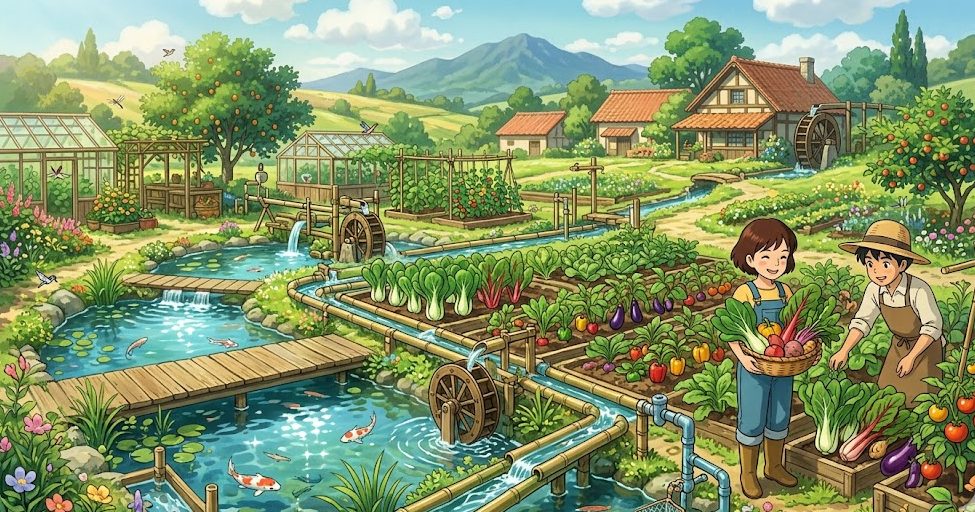
In the modern quest for food security and economic independence, the concept of Advanced Integrated Agriculture (AIA) has emerged as a game-changer. It represents the pinnacle of resource-efficient farming, where multiple production systems are interlinked to create a self-sustaining, high-profit ecosystem.
Imagine a system where the waste from your fish tanks becomes the primary nutrient source for your premium-priced exotic vegetables. This is not science fiction—it is the reality of modern aquaponics and integrated farm management. In this guide, we will explore how you can master this hybrid model to turn your farm into a high-yield, year-round revenue machine.
1. The Core Concept: Synergistic Production
Integrated agriculture moves away from the “silo” mentality of traditional farming. Instead of managing a fish pond, a greenhouse, and a composting unit separately, you connect them.
The most common model for this is Aquaponics, which combines aquaculture (fish farming) with hydroponics (soil-less plant cultivation).
- The Cycle: Fish produce ammonia-rich waste. Beneficial bacteria convert this waste into nitrates. Plants absorb these nitrates as organic fertilizer. The cleaned water is then recirculated back to the fish tanks.
- The Result: A closed-loop system that uses 90% less water than traditional soil farming and eliminates the need for synthetic chemical fertilizers.
2. Maximizing Profit with Exotic Vegetables
While basic crops like lettuce and herbs are the entry point, the true profit lies in Exotic Vegetables. As market demand for high-end produce grows in urban centers, farmers who can produce “difficult-to-grow” crops consistently are reaping significant rewards.
High-Value Crops to Consider:
- Bok Choy & Asian Greens: Fast growth cycles, high turnover, and high demand in the hospitality sector.
- Exotic Herbs (Basil, Rosemary, Thyme): These command premium prices per kilogram and have a long shelf life.
- Colored Bell Peppers & Cherry Tomatoes: If you have a temperature-controlled greenhouse, these high-end crops can fetch 3x to 5x the price of conventional varieties.
- Microgreens: The “gold mine” of modern farming. They require very little space, grow in just 7–14 days, and are highly sought after by high-end restaurants.
3. The Technical Blueprint for Success
Transitioning to an integrated system requires precision. You are no longer just a farmer; you are an ecosystem manager.
Water Quality Management
In fish farming, water is your lifeblood. You must monitor:
- pH Levels: Keep it between 6.8 and 7.2.
- Dissolved Oxygen: Essential for both fish health and plant nutrient uptake.
- Temperature: Ensure your fish species (e.g., Tilapia or Catfish) match your climate.
Infrastructure Essentials
- Automated Monitoring: Use low-cost IoT sensors to monitor water quality and send alerts to your smartphone if levels fluctuate. This prevents the “disaster risk” of losing an entire fish population.
- Greenhouse Integration: Use poly-tunnels or high-end greenhouses to control the environment for your exotic plants. This allows for year-round production, insulating you from seasonal price drops.
4. Scaling the Business: From Farm to Market
Integrated farming generates a diverse range of products, which is your greatest business advantage. You are not dependent on a single harvest.
- Diversified Revenue Streams: Sell fresh fish locally and supply high-end, exotic greens to restaurants and premium retailers. This diversification protects you from market volatility.
- Marketing the “Story”: Consumers are willing to pay more for products that are “sustainably grown,” “chemical-free,” and “locally sourced.” Use this in your branding. A clean, professional website and social media presence highlighting your “Modern Integrated Farm” can justify premium pricing.
5. Overcoming the Learning Curve
AIA is not “easy” farming; it is “intelligent” farming.
- Start Small: Begin with a pilot unit. Perfect your water chemistry and plant growth cycles before scaling to a commercial size.
- Focus on Data: Keep a digital log of your fish growth rates, plant yields, and electricity usage. Data is how you find your “profit sweet spot.”
- Continuous Learning: Join local agriculture groups or online forums dedicated to aquaponics. Technology changes fast, and staying updated with the latest in nutrient solutions can save you thousands in input costs.
Conclusion: The Future of Farming
Integrated agriculture is the ultimate solution for farmers dealing with shrinking land, water scarcity, and rising input costs. By converting waste into wealth and adopting high-value crops, you transform your land into a resilient, high-performance business.
Mastering this system takes time, but the reward is a sustainable, scalable operation that is largely immune to the traditional limitations of weather and soil quality.
Frequently Asked Questions (FAQ)
Q: Is fish farming and vegetable cultivation expensive to set up? A: Initial setup costs are higher than traditional farming because of tanks, pumps, and greenhouse infrastructure. However, the operational costs are much lower over time, and the higher price point of exotic crops ensures a faster ROI.
Q: Which fish species are best for beginners? A: Tilapia is widely considered the best starter fish because it is hardy, grows quickly, and can tolerate a wide range of water conditions.
Q: Can I integrate this into a traditional farm? A: Yes. You don’t have to replace your entire farm. Start with a small integrated greenhouse module as an “R&D” section to see how it performs before expanding.