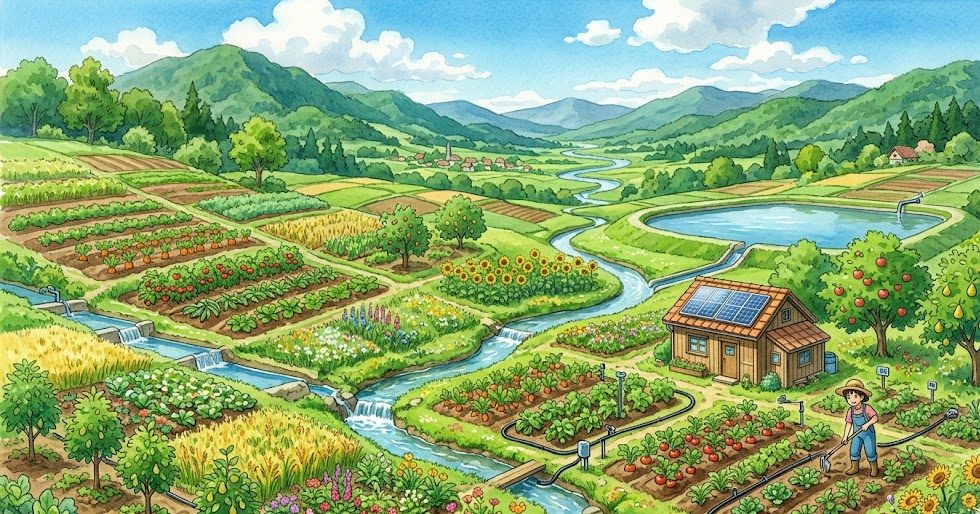
In the modern agricultural landscape, the two most critical challenges facing farmers are water scarcity and the risks associated with monoculture (growing only one crop). As climate patterns become increasingly unpredictable, the ability to manage water efficiently and diversify crop systems is no longer a luxury—it is a necessity for survival and profitability.
Smart Farm Management is the bridge between traditional agricultural wisdom and the modern need for sustainability. By integrating technology with ecological principles, farmers can protect their most valuable resource—water—and create resilient, high-yield ecosystems.
1. The Imperative of Water Conservation
Water is the lifeblood of any farm. However, traditional flood irrigation methods are inherently wasteful, often losing up to 50% of water to evaporation, runoff, and deep percolation. Smart water management focuses on the principle of “precision delivery”—getting the right amount of water to the right place at the right time.
Precision Irrigation Technologies
The transition to Drip Irrigation is the most significant step a farmer can take. By delivering water directly to the plant’s root zone, you drastically reduce evaporation and prevent the surface water that encourages weed growth and fungal diseases.
- Smart Sensors & IoT: By deploying soil moisture sensors, you can track the water content of the soil in real-time. This data can be linked to automated valves that turn the irrigation system on or off based on actual plant needs rather than a rigid, calendar-based schedule.
- Rainwater Harvesting Systems: Smart farms treat rainfall as a precious commodity. By constructing swales, ponds, and underground cisterns, farmers can capture runoff during peak rain months to buffer against drought during the dry season.
Soil Management for Water Retention
Technological tools are only as good as the soil they irrigate. Improving soil structure is a passive, highly effective way to conserve water.
- Increasing Organic Matter: Every 1% increase in soil organic matter can store an additional 20,000 gallons of water per acre. By using compost, green manures, and mulch, you effectively turn your soil into a massive, natural sponge.
- Mulching: Covering the soil with straw, wood chips, or biodegradable fabrics acts as an “insulation layer” for your land, keeping the ground cool and preventing moisture from evaporating under the hot sun.
2. Diversified Crop Systems: The Risk Mitigation Strategy
Monoculture is a fragile system. When you grow only one crop, you are vulnerable to total ruin if a specific pest hits, or if market prices for that crop collapse. Diversified crop systems provide biological and economic insurance.
Biological Benefits of Diversity
Diversity mimics nature. In a wild forest, you don’t see one plant species covering miles of land. You see a complex mix of plants that support one another.
- Pest and Disease Suppression: When you mix crops, pests that are specialized for one plant (like corn earworms) struggle to find their “target” amidst a sea of different scents and species. This natural “masking” effect keeps pest populations below the threshold where they cause damage.
- Nutrient Cycling: Different plants have different root structures. Deep-rooted crops (like legumes) pull nutrients from deep in the soil profile, while shallow-rooted crops utilize the surface. By rotating or intercropping these species, you maintain a balanced soil nutrient profile naturally.
Economic Resilience
Diversification allows you to stagger your harvests. Instead of having one “make-or-break” harvest season, you have multiple revenue windows throughout the year. This steady cash flow is essential for managing farm operational costs and paying staff consistently.
3. Integrating the Two: The “Smart” Synergy
The true magic happens when water conservation and crop diversification are integrated into a single management plan.
Intercropping for Water Efficiency
Certain crop combinations act as “living mulch.” By pairing a high-canopy crop (like corn) with a ground-covering plant (like squash or sweet potatoes), you create a multi-story canopy. The large leaves of the squash shade the ground, keeping the soil cool and moist, which significantly reduces the water required for the corn. This is a classic example of using ecological design to do the work that machinery or excess water would otherwise do.
Data-Driven Crop Rotation
Use digital farm management software to track your rotations. AI can help you plan your planting cycles by analyzing historical data on rainfall patterns, soil health, and market prices. This ensures that you are always planting the right crop in the right spot at the right time, minimizing your water footprint and maximizing your return.
4. Challenges to Implementation
Transitioning to a smart, diversified farm does not happen overnight. It requires:
- Observational Skills: You must spend time walking your fields to understand how your land handles water differently in various zones.
- Infrastructure Investment: While drip lines and sensors have an upfront cost, the ROI is usually realized within 1–2 seasons through lower water and labor costs.
- Market Development: If you are moving away from a monoculture, you must identify local markets for your diverse crops (e.g., selling through farmers’ markets, farm-to-table restaurants, or online subscriptions).
Conclusion: Building a Resilient Legacy
Smart Farm Management is about shifting your perspective from “controlling” nature to “partnering” with it. By using technology to monitor and optimize your water usage, and using biological diversity to build a robust farm ecosystem, you are creating a farm that is not only more profitable today but more resilient for tomorrow.
The future of agriculture is water-wise and biodiverse. Start by auditing your current water usage and identifying one new crop you can interplant this coming season. Every small step toward diversity and conservation adds up to a more sustainable—and successful—farming business.