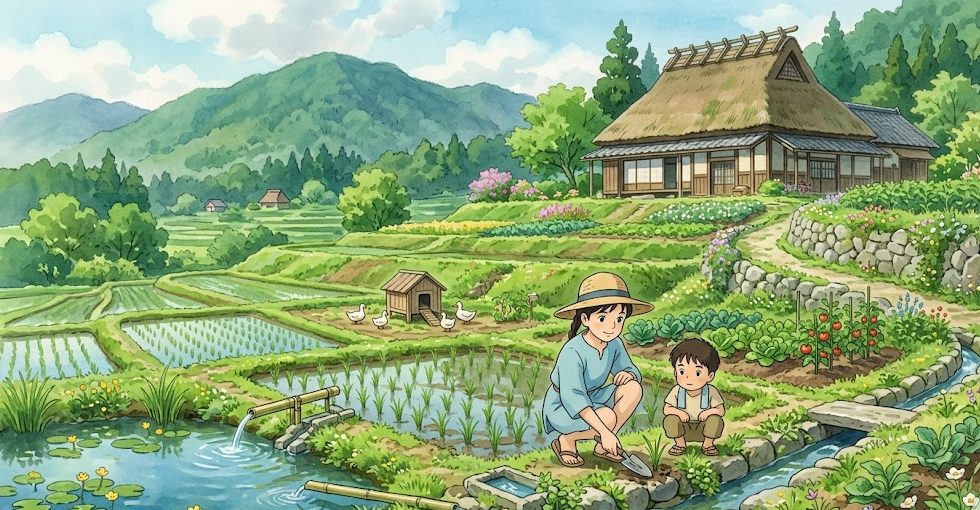
As we move through 2026, water scarcity and soil degradation have become the two most significant hurdles for the global agricultural sector. However, the rise of Integrated Farming Systems (IFS) and Advanced Water-Saving Techniques offers a promising path forward. For farmers, landowners, and agricultural entrepreneurs, mastering these practices is not merely an environmental responsibility—it is a cornerstone for building a profitable, sustainable, and high-yield farming business.
This comprehensive guide explores how to integrate diverse farming activities with precision water management to maximize your farm’s productivity and financial resilience.
1. Understanding Integrated Farming Systems (IFS)
Integrated Farming Systems represent a holistic approach where different agricultural components—such as crop production, livestock, poultry, and aquaculture—are managed in a mutually beneficial cycle.
The Circular Economy of the Farm:
- Waste as a Resource: In an integrated system, the byproduct of one activity serves as an input for another. For example, animal manure serves as organic fertilizer for crops, while crop residues provide feed for livestock or bedding for poultry.
- Diversified Income Streams: By diversifying what you produce, you hedge against market volatility. If crop prices drop, your livestock or poultry income provides a financial buffer.
- Ecological Balance: Integrated systems naturally manage pests. For instance, ducks in a rice paddy eat pests and weeds, while their droppings fertilize the crop, eliminating the need for expensive chemical pesticides.
2. Advanced Water-Saving Techniques
Water is the most critical resource in agriculture. Traditional flood irrigation often wastes over 50% of water through evaporation and runoff. Next-gen water management focuses on efficiency and precision.
Key Strategies for Water Conservation:
- Drip Irrigation (Micro-Irrigation): This is the gold standard for water saving. By delivering water directly to the root zone of the plant through a network of pipes and emitters, you minimize evaporation and nutrient leaching.
- Subsurface Drip Irrigation (SDI): By burying drip lines below the soil surface, you eliminate surface evaporation completely. This is particularly effective for high-value crops in arid climates.
- Hydro-Zoning: Organize your crops based on their water requirements. By grouping high-water-need plants together and low-water-need plants elsewhere, you can optimize your irrigation scheduling and avoid over-watering.
- Smart Sensor Automation: Utilize IoT-based soil moisture sensors that communicate with your irrigation controller. The system will automatically stop irrigation once the soil reaches its field capacity, preventing water waste and “root rot” caused by over-irrigation.
3. Soil Moisture Management: The “Hidden” Reservoir
Water-saving isn’t just about how you irrigate; it’s about how well your soil retains that moisture.
- Organic Matter Enrichment: Increasing the soil’s organic carbon content allows it to act like a sponge. For every 1% increase in soil organic matter, an acre of soil can hold an additional 20,000 gallons of water.
- Mulching: Covering the soil surface with organic matter (like straw or crop residue) or plastic mulch drastically reduces evaporation. This keeps the soil temperature cool and suppresses weed growth, which competes with crops for water.
- Conservation Tillage (No-Till): By leaving the soil structure undisturbed, you maintain the “capillary pores” that allow water to infiltrate deeper into the soil profile rather than running off the surface.
4. Synergy: Where Integration Meets Water-Saving
The real magic happens when you combine these systems. An integrated farm that uses water-saving techniques creates a “virtuous cycle” of growth.
- Aquaponics Integration: You can combine aquaculture (fish farming) with hydroponics. The nutrient-rich water from the fish tanks is pumped to the plants, which act as a bio-filter. The water is then recycled back into the fish tanks. This system uses up to 90% less water than traditional farming.
- Rainwater Harvesting: Modern integrated farms treat rainfall as a capital asset. By building ponds or underground storage tanks, you can capture runoff from roofs and field edges to sustain your crops during dry spells.
5. Implementation Roadmap: Getting Started
If you are looking to transform your operation, don’t try to change everything at once. Follow this phased approach:
- Audit Your Resources: Start by measuring your current water usage and identifying the biggest “leaks” in your system (e.g., inefficient irrigation or poor soil structure).
- Invest in Infrastructure: Prioritize drip irrigation and soil sensors. These offer the fastest Return on Investment (ROI) by lowering your water and energy bills.
- Introduce One Integrated Element: Start small—perhaps by adding a small poultry or composting unit to your existing crop farm—to learn the synergy between the two systems.
- Data Tracking: Use simple apps or journals to track how these changes affect your yields. Transparency in data will help you scale your successes.
The Economic Reality
Integrated and water-saving techniques significantly improve the bottom line of any farming business:
- Lower Input Costs: You spend less on water, electricity (for pumping), and chemical fertilizers/pesticides.
- Higher Resilience: Your farm becomes “climate-proof.” During a drought, your neighbors might suffer yield losses, but your water-efficient and moisture-rich soil will likely sustain your production.
- Premium Market Value: Consumers are willing to pay more for products produced on “water-smart” and “sustainably integrated” farms, allowing you to move your product into high-margin niches.
Frequently Asked Questions (FAQs)
Q: Is integrated farming labor-intensive? A: It requires better management, but not necessarily more labor. By using automation (sensors, drip lines, and smart feeders), you can manage complex systems with a smaller, more efficient team.
Q: How long does it take to see results from improving soil health? A: You will see immediate benefits in terms of water retention after the first season of adding organic matter. However, the full “biological reset” of the soil usually takes 2 to 3 years.
Q: Can I implement these techniques on a small plot of land? A: Absolutely. In fact, integrated farming is most efficient on smaller landholdings where you can tightly control the flow of nutrients and water between different parts of the farm.
Conclusion
The future of agriculture lies in the integration of nature’s intelligence with human-engineered efficiency. By treating your farm as an interconnected, living ecosystem and managing your water resources with surgical precision, you ensure that your business remains profitable regardless of the changing climate.
Next-gen farming is not about fighting nature—it’s about optimizing its natural cycles. By adopting these integrated and water-saving techniques today, you are positioning your enterprise for long-term success.
Disclaimer: Agriculture is inherently site-specific. Before making significant changes to your farm’s infrastructure, consult with local agricultural experts or regional extension offices to ensure the methods align with your specific crop type and geographic conditions.