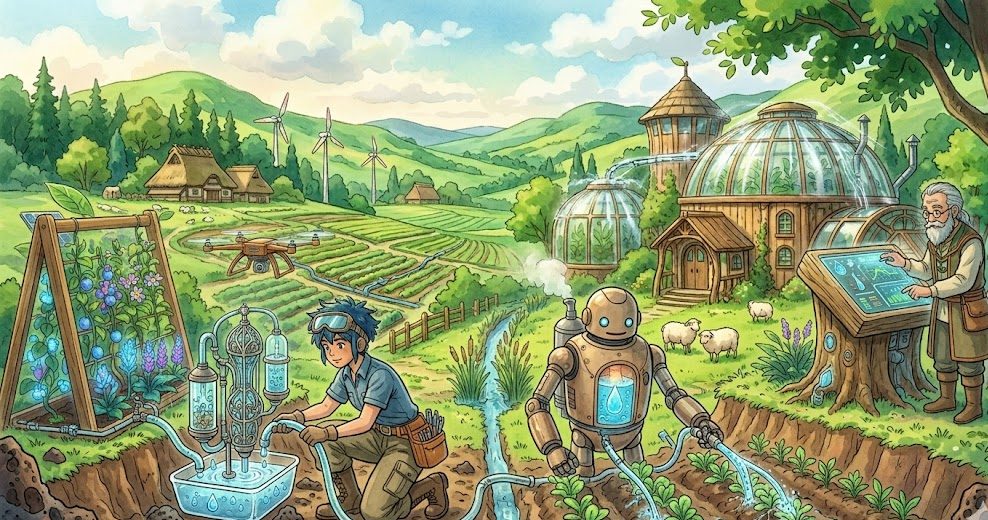
Water is the absolute lifeblood of agriculture. For generations, farmers relied on abundant rainfall or deep underground wells to flood their fields and produce massive harvests. But times have dramatically changed. Unpredictable weather patterns, prolonged droughts, and shrinking groundwater reserves are making traditional watering methods incredibly difficult to maintain. Today, clean water is a premium resource, and wasting it is simply no longer an option.
The future of agriculture belongs to those who know how to make every single drop count. Fortunately, saving water does not mean you have to sacrifice your harvest. In fact, when you water plants more efficiently, they often grow stronger and produce higher yields. By adopting smart, water-saving techniques, you protect the local environment, secure your water supply, and significantly lower your monthly operating costs.
The Shift to Precision Watering
For decades, the standard practice was overhead watering. Massive sprinklers would shoot water high into the air, soaking the entire field. While this looks impressive, it is highly inefficient. On a hot, breezy day, up to thirty percent of that water evaporates into the air before it ever touches the dirt.
Modern farming requires precision. Instead of watering the whole field, smart farming focuses entirely on watering the roots. When you deliver moisture directly to the base of the plant, you eliminate evaporation, reduce the growth of weeds in the empty spaces, and prevent moisture-related leaf diseases. It is a fundamental shift from soaking the farm to feeding the plant.
Practical Tips for Water-Efficient Farming
You do not need a multi-million-dollar budget to reduce your water usage. By implementing a few proven strategies, you can drastically cut down on waste. Here are some of the most effective methods you can apply to your land right now.
1. Switch to Drip Irrigation If you only make one change to your farm, make it this one. Drip irrigation uses a network of plastic tubes with tiny holes (emitters) that slowly drip water directly onto the soil right next to the plant stems. Because the water is applied slowly, the soil has time to absorb it fully, preventing runoff. This method easily uses half the water of a standard sprinkler system.
2. Apply Thick Organic Mulch The hot sun is your biggest enemy when trying to keep the ground moist. Covering the bare dirt around your plants with a thick layer of organic mulch, such as straw, wood chips, or dried leaves, acts as a protective shield. Mulch keeps the soil cool, completely blocks the sun from evaporating the ground moisture, and eventually breaks down to feed the earthworms.
3. Explore Hydroponic Systems For crops like lettuce, tomatoes, and herbs, consider moving away from the soil entirely. Hydroponics is a highly efficient method where plants grow in a closed loop of nutrient-rich water. Because the water is constantly recirculated and never lost to the deep earth, a hydroponic greenhouse can use up to ninety percent less water than an open outdoor field.
4. Plant Deep-Rooted Cover Crops Bare soil is damaged soil. When fields are left empty after a harvest, the sun bakes the earth, turning it hard and dry. Planting a cover crop like clover or rye keeps the soil structure intact. Their roots create channels in the earth, acting like a giant sponge that captures and holds onto rainwater instead of letting it wash away.
A Real-Life Example: The Elderly Farmer Couple
Let us look at a practical situation involving an elderly farmer couple who grew bell peppers in a naturally dry, windy region. For years, they relied on overhead sprinklers. But as the local water table dropped, their well began running dry by mid-summer, threatening their entire livelihood.
Knowing they had to adapt, the couple decided to overhaul their approach. They removed the overhead sprinklers and rolled out simple drip irrigation lines along their crop rows. To protect the newly installed lines and trap the moisture, they covered the entire planting area with a thick layer of straw mulch.
The results were immediate and striking. The soil stayed damp for days after a single watering cycle. The peppers, no longer subjected to the stress of dry spells and wet leaves, grew larger and thicker. By the end of the season, the couple had doubled their pepper yield while reducing their total water consumption by over sixty percent.
Step-by-Step Guide: Installing a Basic Drip Line
Setting up a basic drip irrigation system is surprisingly easy and can be done in a single weekend. Here is how to set up a system for a small to medium-sized crop bed.
Step 1: Secure a clean water source. Connect your main water hose to your outdoor tap. It is highly recommended to attach a simple digital water timer to the tap first, so your system can turn itself on and off automatically.
Step 2: Install a filter and pressure regulator. Drip emitters have tiny holes that clog easily with dirt. Attach a mesh filter to the timer, followed by a pressure regulator. The regulator ensures the water does not blow the plastic tubes apart.
Step 3: Lay the mainline tubing. Run a solid, half-inch plastic mainline tube from the water source down the edge of your planting area. This is the main highway that carries the water to your crop rows.
Step 4: Connect the drip lines. Using simple plastic “T” connectors, attach the smaller, pre-punched drip lines to the mainline. Lay these drip lines straight down the crop rows, ensuring the emitter holes are sitting right next to the base of your plants.
Step 5: Cap the ends and test. Once your lines are laid out, fold over the ends of the tubing and secure them with end caps so the water does not shoot out. Turn the water on. Walk the lines to ensure every plant is getting a slow, steady drip of water and that there are no major leaks.
Common Mistakes to Avoid
Water conservation is simple in theory, but execution matters. Avoid these common traps that can ruin your efforts and damage your crops.
- Watering in the Midday Heat: Never water your crops when the sun is at its peak. The heat will evaporate the water before the roots can drink it. Always water early in the morning or late in the evening.
- Over-Watering Because the Surface Looks Dry: The very top layer of dirt dries out quickly, but there may be plenty of moisture just two inches down. Always dig your finger into the dirt before turning on the water. If it feels damp below the surface, wait another day.
- Ignoring Leaks in the System: A tiny leak in a main water line can waste hundreds of gallons of water in a single week. Walk your fields regularly and check all hoses, valves, and connectors for drips.
Conclusion
Farming sustainably requires us to respect the resources we have. Water is no longer cheap or guaranteed, and relying on outdated flooding methods is a fast track to failing harvests. By making a deliberate shift toward water-saving techniques, you take control of your farm’s future.
Whether you are laying down your first row of drip tape, covering your soil with a thick blanket of mulch, or experimenting with modern hydroponics, every drop you save counts. The transition might take a little effort and careful planning, but the payoff is immense. You will build a farming operation that is resilient against drought, gentle on the environment, and highly profitable for years to come.
Frequently Asked Questions (FAQs)
Q: Does drip irrigation work for all types of crops? A: Drip irrigation works perfectly for row crops, vegetables, bushes, and orchard trees. However, it is not practical for densely planted broadcast crops like wheat or commercial grass seed, which still require efficient overhead or furrow watering.
Q: How much water does organic mulching actually save? A: Depending on the climate and the thickness of the application, a good layer of mulch can reduce soil moisture evaporation by 50% to 70%. This means you can often cut your watering frequency in half.
Q: Is rainwater harvesting worth the cost for a farm? A: Yes, even on a small scale. Hooking up collection barrels to the gutters of your barns or greenhouses provides free, highly oxygenated, chlorine-free water that plants love. It is an excellent backup system during dry weeks.
Q: Can I use hydroponics to save water outdoors? A: While hydroponics is usually done inside greenhouses to control the climate, outdoor hydroponic setups are entirely possible and very efficient. You just need to ensure the water reservoir is shaded so the sun does not heat the water and damage the roots.
Q: When is the absolute best time of day to water my crops? A: Early morning, just before sunrise, is the perfect time. The air is cool, preventing evaporation, and the water has time to soak deep into the soil. It also ensures the plant leaves dry off quickly once the sun comes up, which prevents mold and fungus.