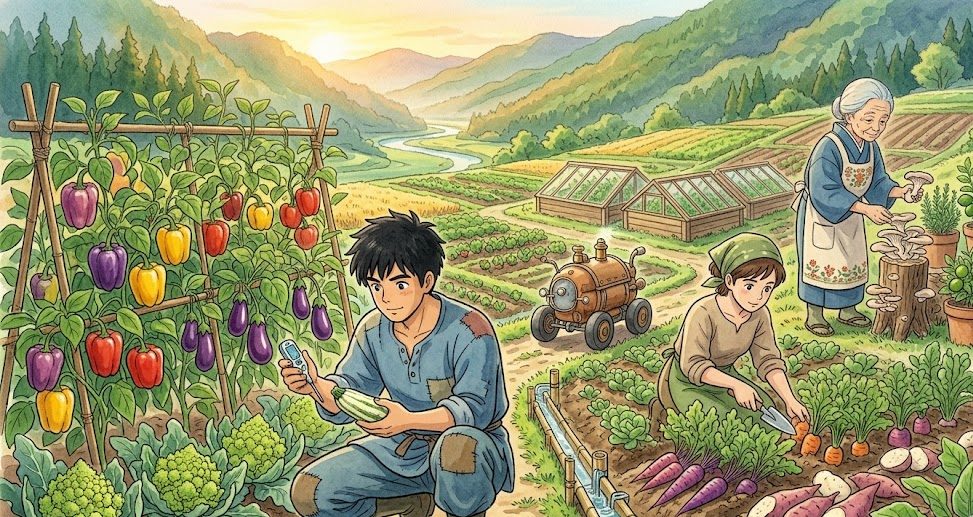
Traditional farming is the historical backbone of agriculture, but modern growers face a harsh reality: profit margins on everyday commodity crops are rapidly shrinking. If you are planting the exact same standard onions, potatoes, or cabbages as every other farmer in your region, you are forced to compete purely on volume and low prices. To break out of this exhausting cycle, smart farmers are shifting their focus to a highly lucrative alternative: exotic vegetable farming.
Exotic vegetables are specialty crops that command premium prices at local supermarkets, high-end restaurants, and direct-to-consumer health markets. Growing these high-value crops is not necessarily about working harder; it is about working smarter and understanding modern consumer culinary trends.
If you want to significantly increase your farming income without having to buy or rent hundreds of additional acres, shifting to high-value, exotic produce is a proven business strategy. Let us explore the best crops to consider and how to grow them successfully.
Top Exotic Vegetables to Grow for High Returns
Not all vegetables offer the same return on investment. To maximize your profit per square foot, focus on crops that have strong urban demand but limited local supply.
Colored Bell Peppers (Capsicum) While standard green bell peppers are common, vibrant red and yellow varieties are considered premium items. They are heavily used in modern cooking, salads, and gourmet restaurants. Because they require slightly more care and longer growing times to change color, they consistently sell for double or even triple the price of their green counterparts. They thrive best in controlled environments like greenhouses or polyhouses.
Zucchini and Summer Squash Zucchini has exploded in popularity, largely driven by health-conscious consumers and low-carb diets. It is a remarkably fast-growing plant and a very heavy yielder. A single healthy zucchini plant can produce an abundance of fruit throughout the summer. Yellow and dark green varieties both sell well and are relatively easy to grow outdoors in well-drained, rich soil.
Bok Choy and Asian Greens With the rising popularity of Asian cuisine globally, crops like Bok Choy, Napa cabbage, and Chinese broccoli are in high demand. The greatest advantage for a farmer here is the speed of production. Many of these leafy greens have an incredibly short crop cycle, often going from seed to harvest in just 30 to 45 days. This allows you to plant and harvest multiple successions in a single season, generating rapid cash flow.
Asparagus If you own your land and are willing to make a long-term investment, asparagus is an incredible cash crop. It is a perennial vegetable, meaning you plant it once, and it comes back year after year. While it takes about two to three years for the crowns to establish themselves before you can do a full harvest, a well-maintained asparagus bed will produce highly profitable, premium spears for over fifteen years.
Cherry Tomatoes Standard slicing tomatoes are heavily saturated in the market, but specialty cherry tomatoes remain highly profitable. Small, incredibly sweet varieties—especially those that are yellow, purple, or striped—are highly sought after for fresh salads and snacking. They grow exceptionally well in vertical trellis systems, allowing you to produce a massive yield in a very small physical footprint.
Practical Tips for Better Yield and Quality
Growing exotic crops often requires a bit more precision than broadcasting traditional seeds across an open field. Buyers are paying top dollar, which means they expect visually perfect, delicious produce.
First, invest in your irrigation. Exotic vegetables are highly sensitive to inconsistent watering. Installing a drip irrigation system ensures that the plants receive a steady, even supply of moisture directly to their roots. This prevents the fruits from splitting (a common problem with tomatoes) and keeps the leaves dry, which naturally drastically reduces the risk of fungal diseases.
Second, use high-quality mulch. Covering the soil beds with specialized plastic mulch or thick organic straw regulates the soil temperature and stops competing weeds from stealing valuable nutrients.
Finally, lean heavily into natural pest control. Premium buyers prefer clean, safe food. Instead of spraying harsh chemicals that leave a residue, use yellow sticky traps for flying insects, introduce beneficial ladybugs to eat aphids, and use organic neem oil sprays to keep the crops pristine and market-ready.
A Real-Life Example: The Polyhouse Pivot
Consider the experience of a traditional farmer who grew field tomatoes and cucumbers for over a decade. Every year, his income was at the mercy of the weather. A sudden heavy rainstorm or an unexpected pest invasion could wipe out half his profit, and he was constantly forced to accept whatever low price the local wholesale market offered.
Realizing this was unsustainable, he secured a small loan to build a 1,000-square-meter polyhouse. He completely stopped growing standard field crops and pivoted to growing exotic yellow and red bell peppers, along with seedless English cucumbers.
Because the polyhouse protected his crops from the harsh weather and kept major pests out, his yield per plant nearly doubled. More importantly, the quality of his peppers was flawless. Armed with a superior product, he bypassed the wholesale market entirely and secured a direct, fixed-price supply contract with a regional chain of luxury hotels. He transformed a small patch of land into his most profitable asset simply by upgrading his infrastructure and changing his crop.
Common Mistakes to Avoid
The transition to exotic farming can be highly lucrative, but it is easy to make costly errors. Avoiding these common traps is vital for your success.
The most dangerous mistake is growing without a guaranteed buyer. Do not plant a quarter-acre of exotic purple kale just because it looks great in a catalog. If the local restaurants and grocers in your specific area do not buy kale, you will be left with rotting produce. Always do your market research and secure verbal commitments before you buy your seeds.
Another frequent error is trying to save money by purchasing cheap seeds. Exotic vegetables get their value from their exact shape, vibrant color, and specific taste. Cheap seeds often result in irregular, unattractive vegetables that premium buyers will reject. Always source high-quality, certified seeds from reputable suppliers.
Lastly, do not expand too quickly. Exotic crops require precise timing for harvesting and careful post-harvest handling. Start with a small, manageable plot. Master the specific needs of the crop before you scale up your operation.
Step-by-Step Guide to Starting Your Exotic Farm
If you are ready to upgrade your farming operation, follow this straightforward roadmap to launch your exotic vegetable business:
- Analyze Local Demand: Visit premium supermarkets, weekend farmer’s markets, and high-end restaurants. Ask the produce managers and chefs what specific items they struggle to source locally and consistently.
- Match the Crop to Your Setup: Decide if you are growing outdoors, in a shade net, or inside a greenhouse. Choose crops that naturally thrive in the specific environment you can provide.
- Prepare the Growing Medium: Exotic vegetables demand rich soil. Conduct a soil test and amend your beds heavily with organic compost, aged manure, and the correct balance of natural fertilizers.
- Implement Smart Systems: Set up your drip irrigation lines and vertical trellises before you plant. Trying to install infrastructure around delicate, growing plants usually results in damage.
- Plan Your Harvest and Packaging: Exotic produce bruises easily. Harvest early in the morning when it is cool, handle the vegetables gently, and pack them in clean, ventilated, professional packaging to justify your premium price tag.
Conclusion
The future of profitable farming is not necessarily found in acquiring more land; it is found in growing smarter, higher-value products. By shifting a portion of your focus to exotic vegetables, you open the door to premium markets, reliable chef contracts, and a much better return on your daily labor.
It takes a bit more research, careful management, and precise growing techniques, but the financial rewards speak for themselves. Start small, focus obsessively on the visual and culinary quality of your harvest, and build strong relationships with local buyers. When you deliver a superior, exotic product, the market will gladly reward your efforts.
Frequently Asked Questions (FAQs)
Q: Do I absolutely need a greenhouse to grow exotic vegetables? A: No, a greenhouse is not strictly necessary for all exotics. Crops like zucchini, asparagus, and certain Asian greens can grow perfectly well in open fields if the seasonal climate is right. However, for sensitive crops like colored bell peppers and English cucumbers, a greenhouse or polyhouse drastically improves quality and yield.
Q: What is the fastest-growing exotic vegetable to turn a quick profit? A: Asian leafy greens, such as Bok Choy and Tatsoi, are some of the fastest. They can be ready for harvest in as little as 30 to 45 days, allowing you to grow multiple batches in a single season for quick cash flow. Microgreens are even faster, often ready in 10 to 14 days.
Q: Where is the best place to sell exotic vegetables? A: To get the best price, avoid traditional wholesale middlemen. Target direct-to-consumer avenues like premium farmer’s markets, local health food stores, and farm-to-table independent restaurants.
Q: Are exotic vegetables much harder to grow than regular vegetables? A: They are not necessarily “harder,” but they are less forgiving. They often require more precise watering, better soil nutrition, and careful handling during harvest. They require attentive management rather than purely back-breaking labor.
Q: How much land do I need to start an exotic vegetable farm? A: You can start a highly profitable operation on as little as a quarter of an acre, especially if you utilize vertical farming techniques or a polyhouse. Exotic farming is about maximizing the dollar value of every square foot, not farming massive expanses of land.