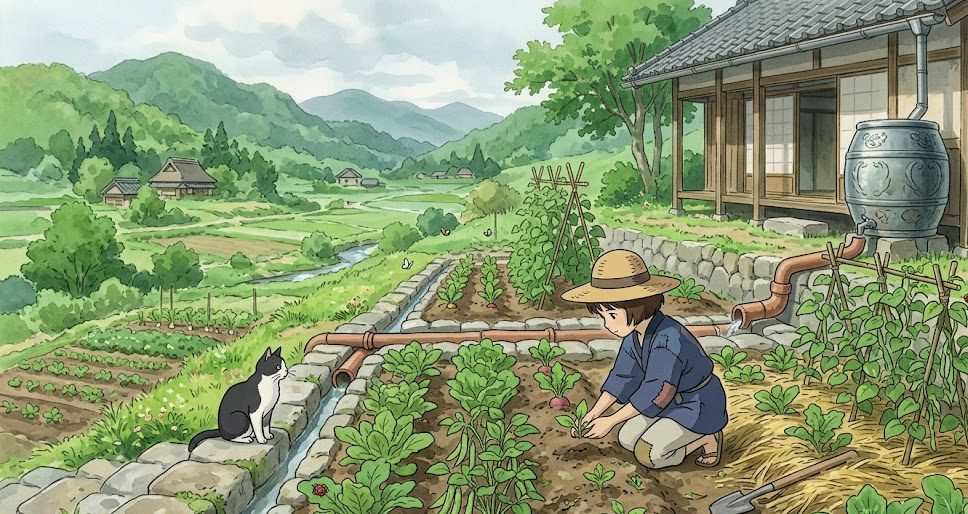
In the agricultural landscape of 2026, water has become the most valuable currency. With unpredictable weather patterns and rising costs, the ability to “Grow More with Less” is no longer just an environmental goal—it is a mechanical necessity for achieving Financial Freedom. This guide explores the profit-driven side of conservation, providing a blueprint for high-yield harvests with minimal water dependency.
1. The Economics of Water in Smart Farming
Every drop of water saved is a direct addition to your profit margin. Traditional flood irrigation often wastes up to 60% of water through evaporation and runoff. By adopting Smart Farming innovations, you transform water from a massive overhead cost into a precision-managed asset.
- Cost Reduction: Lower water usage means lower electricity bills for pumping and reduced wear on irrigation machinery.
- Nutrient Retention: Over-watering leaches expensive fertilizers out of the root zone. Low-water techniques keep nutrients exactly where the plant can reach them.
2. Precision Irrigation: The Digital Goldmine
In 2026, “Smart Technology” allows for the most efficient distribution of water in history.
- IoT Soil Sensors: These devices act as the “eyes” of your farm, providing real-time data on moisture levels. Instead of watering on a schedule, you water only when the data says the plant is under stress.
- Automated Drip Systems: By delivering water directly to the root zone, drip systems act as a vital water-saving technique. This ensures the “biological engine” of the plant is fueled without wasting water on weeds or empty space.
3. Mulching: Nature’s Protective Blanket
Mulching is a cornerstone of Practical Farming that acts as a low-maintenance shield for your soil.
- Evaporation Lockdown: Covering the soil with organic residues like straw or dried leaves can reduce soil evaporation by over 50%.
- Thermal Regulation: Mulch keeps the soil cool during the summer heat, preventing the root zone from baking and ensuring the moisture stays locked in the ground.
- Natural Weed Control: By blocking sunlight, mulch naturally smothers weeds that would otherwise steal water from your High-Value Cash Crops.
4. Healing the Soil Naturally for Moisture Retention
Healthy soil acts like a sponge. “Healing the soil naturally” is the most effective long-term water-saving strategy.
- The No-Till Advantage: Tilling breaks up the soil structure and lets moisture escape. No-till practices preserve the organic matter that holds onto water.
- Organic Bio-Inputs: Fermented organic matter and bio-inputs “recharge” the soil’s microbial life. This increase in organic carbon significantly improves the soil’s water-holding capacity.
5. High-Value Crops with Low-Water Demand
Maximizing profit means selecting the right “Smart Crops” for your environment.
- Climate-Resilient Varieties: Focus on seeds bred for drought tolerance and high-yield performance in low-water conditions.
- Niche Markets: Exotic vegetables like broccoli or Mediterranean herbs often require less water than traditional staples but fetch a much higher price in urban markets.
6. Integrated Systems: The Closed-Loop Blueprint
For total efficiency, your farm should operate as an integrated hub.
- Livestock Integration: Poultry or goats provide natural manure that improves soil quality and water retention.
- Survival Farming Skills: Learning to harvest rainwater or create small on-farm reservoirs ensures you have a backup supply during dry seasons, protecting your investment.
Conclusion: Securing Your Agricultural Future
Low-water farming is not about scarcity; it is about Precision Yields. By combining “Smart Technology” with “Natural Farming” principles, you create a resilient, high-profit environment that requires less effort and Zero Chemical Costs. Whether you are scaling a commercial innovation hub or practicing Micro Farming, the profit angle is clear: save water to grow your future.