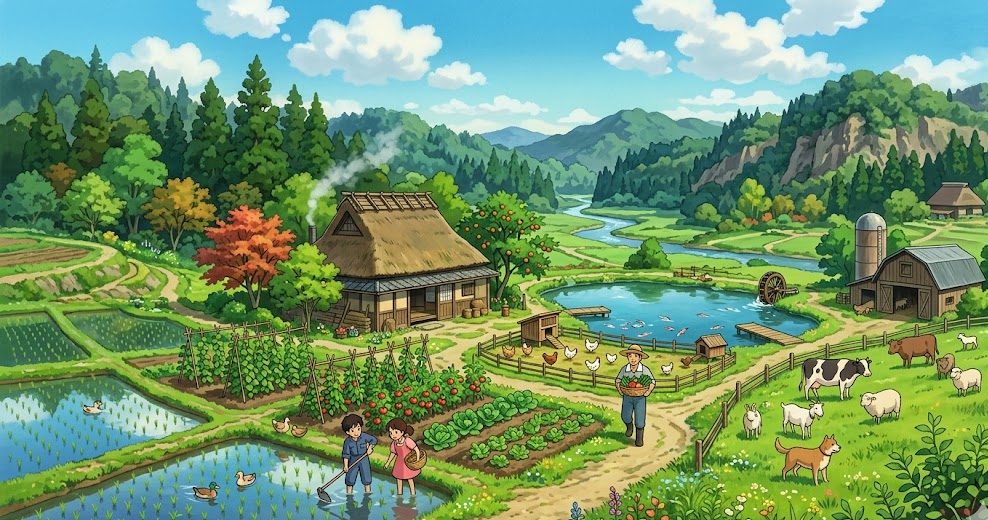
In an era where land is becoming scarce and the cost of chemical inputs is skyrocketing, farmers around the world are returning to a concept that nature has practiced for millennia: synergy. The traditional model of “specialized farming”—where a farmer grows only one crop or raises only one type of animal—is increasingly being viewed as inefficient and environmentally taxing.
The modern solution is the Integrated Farming System (IFS). By combining multiple agricultural activities—such as crop production, livestock rearing, aquaculture, and bee-keeping—on a single piece of land, farmers can create a self-sustaining ecosystem. This holistic approach doesn’t just increase food production; it maximizes every square inch of the farm while drastically reducing waste.
In this comprehensive guide, we will explore the core principles of Integrated Farming Systems, the various models available, and how this strategy is the key to maximizing agricultural efficiency in the 21st century.
What is an Integrated Farming System (IFS)?
An Integrated Farming System is a resource management strategy that aims at monoculture diversification. It is a cross-linked farming system where the waste product of one enterprise becomes a high-value input for another.
For example, in a simple integrated model, crop residues (like stalks and husks) are used as fodder for cattle. In return, the cattle produce manure, which is processed into organic fertilizer to nourish the next cycle of crops. This “closed-loop” cycle eliminates the need for expensive external fertilizers and reduces the farmer’s overall carbon footprint.
The Core Principles of Efficiency in IFS
To achieve maximum efficiency, an Integrated Farming System relies on four foundational pillars:
- Waste Recycling: Nothing is considered “trash” in an IFS. Every byproduct is evaluated for its potential use in another part of the farm.
- Resource Optimization: Land, water, and sunlight are used at peak efficiency. For instance, growing shade-loving vegetables under a canopy of fruit trees uses the same plot of land for two different harvests.
- Income Diversification: Because the farmer is producing multiple products (milk, eggs, grains, honey, fish), they are protected from market fluctuations. If the price of grain drops, the profit from poultry or dairy can sustain the farm.
- Sustainability: By reducing the reliance on synthetic chemicals and heavy machinery, IFS preserves soil health and water quality for future generations.
Popular Models of Integrated Farming
The beauty of IFS is its flexibility. A system can be designed based on the local climate, soil type, and the farmer’s specific goals. Here are some of the most efficient models currently in use:
1. Crop-Livestock Integration
This is the most common and accessible model. It involves the cultivation of food crops alongside the rearing of animals like cows, goats, or buffalo.
- The Synergy: The crops provide feed for the animals, and the animals provide manure for the fields. Additionally, bullocks can be used for draught power in the fields, reducing the need for diesel-powered tractors on small-scale farms.
2. Rice-Fish-Poultry Integration
Common in Southeast Asia and parts of India, this model is a masterpiece of biological engineering.
- The Synergy: Poultry sheds are built directly over or adjacent to a fish pond. The poultry droppings fall into the water, acting as a natural fertilizer that promotes the growth of plankton, which the fish eat. The nutrient-rich pond water is then used to irrigate nearby rice paddies. The fish in the paddies eat harmful insects and weeds, acting as a natural pesticide and herbicide.
3. Agri-Horti-Silvi-Pasture System
This model combines field crops (Agri), fruit trees (Horti), timber or fuel trees (Silvi), and livestock grazing (Pasture).
- The Synergy: Trees act as windbreaks and prevent soil erosion while providing fruit and timber. The grass growing between the trees provides grazing land for livestock, whose waste fertilizes both the trees and the crops. This multi-layered approach maximizes the vertical space of the farm.
4. Integration with Apiculture (Beekeeping)
Integrating beehives into an existing farm is one of the simplest ways to boost efficiency.
- The Synergy: Bees are elite pollinators. Integrating them into a farm can increase crop yields by 20% to 30% through improved pollination. In return, the farmer gets high-value products like honey and beeswax with almost zero extra labor or space requirements.
How IFS Maximizes Agricultural Efficiency
1. Drastic Reduction in Input Costs
In conventional farming, a significant portion of a farmer’s budget goes toward chemical fertilizers, pesticides, and animal feed. In an Integrated Farming System, these are produced internally. The shift from “purchased inputs” to “farm-generated inputs” significantly increases the net profit margin.
2. Year-Round Income and Employment
Traditional crop farming is seasonal, leaving farmers with “dry spells” where there is no income. An integrated system provides a steady flow of cash. For example, while waiting three months for a grain harvest, a farmer can sell milk daily and eggs weekly. This constant cash flow improves the financial stability of the farming household.
3. Enhanced Soil Productivity
Monoculture often leaves the soil depleted and lifeless. The constant application of organic manure and the rotation of various plant species in an IFS model improve soil structure, increase organic carbon levels, and encourage beneficial microbial activity. Healthy soil is the ultimate engine of agricultural efficiency.
4. Environmental Resilience
Integrated farms are naturally more resilient to climate change. The presence of trees (agroforestry) helps regulate the local microclimate, keeping the farm cooler during heatwaves. Multiple crop varieties ensure that even if one crop fails due to a specific pest or weather event, others will survive.
Challenges and Considerations
While the benefits are immense, transitioning to an Integrated Farming System requires careful planning:
- Initial Knowledge Gap: Farmers need to understand the biology and management of multiple enterprises (e.g., knowing both how to grow wheat and how to care for fish).
- Labor Management: IFS is more labor-intensive than mechanized monoculture because it involves various daily tasks like feeding animals, managing compost, and harvesting different products.
- Initial Setup Cost: Building fish ponds, poultry sheds, or biogas plants requires an initial investment, though the long-term ROI (Return on Investment) is typically very high.
The Path Forward: Smart Integrated Farming
As we look to the future, technology is making IFS even more efficient. Biogas plants are being integrated into these systems to turn animal waste into clean cooking gas and high-quality slurry for fertilizer. Solar-powered irrigation systems are being used to move water between different integration zones without electricity costs.
Furthermore, digital tools are helping farmers track the “input-output” data of their systems, allowing them to tweak the balance of animals versus crops for maximum profit.
Conclusion
The Integrated Farming System is more than just a technique; it is a philosophy of abundance. It proves that we do not need more land to produce more food; we simply need to manage our existing resources with more intelligence and synergy.
By mimicking the cycles of nature, IFS transforms the farm into a high-efficiency engine of production. It provides food security, protects the environment, and ensures that farming remains a profitable and dignified profession for the next generation. For any farmer looking to thrive in the modern age, the message is clear: Integrate to Accelerate.