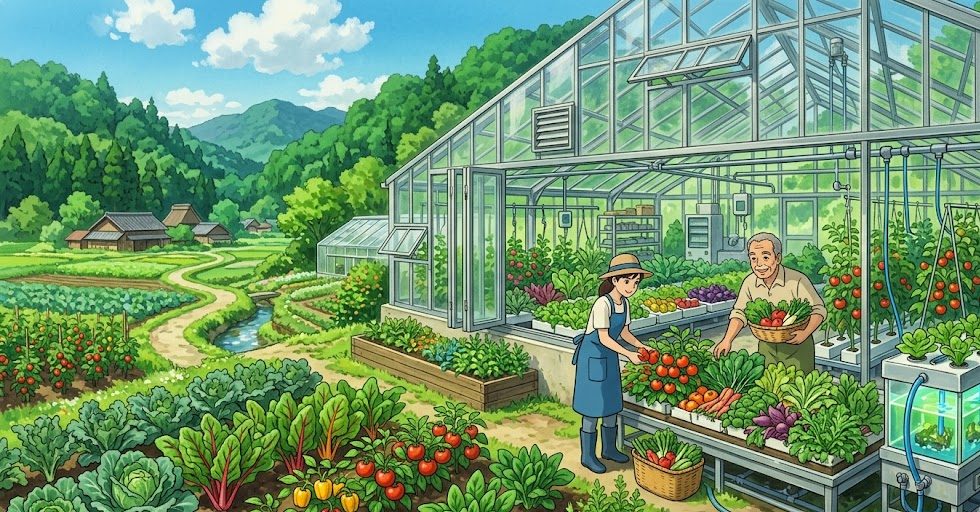
The global culinary landscape is shifting rapidly. With the rise of fine dining, health-conscious consumers, and international cuisines, the demand for non-traditional crops has broken all previous records. Today, traditional open-field agriculture faces challenges like unpredictable weather and low profit margins. In response, forward-thinking agri-entrepreneurs are turning to Premium Exotic Vegetable Farming and High-Value Cultivation powered by Greenhouse Tech.
Growing premium crops under controlled environments allows farmers to bypass seasonal limitations, protect harvests from pests, and consistently supply high-end retail chains, star hotels, and supermarkets.
In this comprehensive guide, we will break down the most profitable exotic vegetables, the technology required to cultivate them, and step-by-step strategies to build a highly lucrative commercial agribusiness.
What is Premium Exotic Vegetable Farming?
Exotic vegetables are crop varieties that are not native to a specific geographic region but are introduced due to their high nutritional value and growing market demand. When cultivated using advanced agricultural systems, these crops enter the category of high-value cultivation because their price per kilogram can be 5 to 15 times higher than local staple vegetables (like potatoes or onions).
Why Shift to Exotic Vegetables?
- Exponential Profit Per Square Foot: Maximizes revenue from smaller landholdings.
- Insulated from Market Gluts: Local vegetable prices collapse when production peaks, but exotic vegetables maintain stable, premium price tiers.
- Year-Round Production: Greenhouse technology ensures continuous harvests, allowing farmers to sell during off-seasons when prices are highest.
Top High-Value Exotic Vegetables to Cultivate
To maximize your return on investment (ROI), select crops that offer a balance of high market price, manageable growth cycles, and strong demand.
1. Colored Bell Peppers (Capsicum – Red & Yellow)
Unlike green capsicum, red and yellow bell peppers require precise temperature controls to develop their vibrant colors and sweet flavor profile. They are heavily used in continental, Italian, and Mexican cuisines.
- Growth Cycle: Ready for harvest in 90–100 days; harvesting continues for 4–6 months.
- Yield Potential: Under a well-managed greenhouse, a single acre can yield up to 30–40 tons of premium capsicum annually.
2. Cherry Tomatoes
Cherry tomatoes are smaller, sweeter, and significantly more expensive than standard round tomatoes. They are a staple in gourmet salads and premium snacking segments.
- Cultivation Advantage: High-density vertical trellising inside a greenhouse allows farmers to grow thousands of plants in a restricted footprint, leading to massive vertical yields.
3. Broccoli and Purple Cabbage
Once considered luxury items, broccoli and purple cabbage are now mainstream superfoods due to their high antioxidant content.
- Market Demand: They have an excellent shelf life compared to leafy greens, making them ideal for long-distance transport to urban wholesale hubs.
4. Zucchini (Green & Yellow)
Zucchini belongs to the squash family and grows incredibly fast. It is highly sought after by urban consumers looking for low-carb, keto-friendly dietary alternatives.
- Turnaround Time: Starts yielding within 45–50 days of planting, offering immediate cash flow to the farm.
The Role of Greenhouse Tech in High-Value Cultivation
Open-field cultivation of exotic crops is highly risky; a single heatwave or unseasonal rain can ruin the entire premium aesthetic of the produce. Greenhouse Tech acts as a protective shield and climate optimizer.
Core Components of Modern Greenhouse Infrastructure:
- Climate Control Systems: Automated exhaust fans, cooling pads, and shade nets work together to keep temperatures between 18∘C and 28∘C, even during harsh summers.
- Drip Irrigation & Fertigation Units: Exotic vegetables are highly sensitive to water logging and nutrient imbalances. Micro-drip systems supply exact water doses mixed with water-soluble nutrients directly to the root zone.
- Hydroponic Integration (Soilless Culture): Many premium farms replace soil with inert media like coco-peat or rockwool. This eliminates soil-borne diseases, optimizes root oxygenation, and increases growth speeds by up to 30%.
Financial Layout: Investment vs. Profit Returns
Before diving into setup, it is vital to analyze the economic realities of greenhouse farming. While the initial setup capital is high, the operating margins deliver excellent multi-year payouts.
| Vegetable Name | Avg. Market Price (Per Kg) | Initial Tech Setup Needed | Time to First Harvest | Avg. Net Profit (Per Acre/Year) |
|---|---|---|---|---|
| Colored Capsicum | ₹80 – ₹180 | Naturally Ventilated Greenhouse | 90 Days | ₹4 Lakh – ₹7 Lakh |
| Cherry Tomatoes | ₹100 – ₹250 | High-Tech Greenhouse / Hydroponics | 80 Days | ₹5 Lakh – ₹9 Lakh |
| Zucchini | ₹60 – ₹120 | Shade-net House / Low Tunnels | 45 Days | ₹2 Lakh – ₹4 Lakh |
| Broccoli | ₹70 – ₹150 | Open Field with Mulching / Netting | 75 Days | ₹2.5 Lakh – ₹4.5 Lakh |
Export to Sheets
Actionable Steps for a Successful Exotic Farm Setup
To build a flawless production line that satisfies premium buyers, follow this industrial approach:
Step 1: Market Assessment & B2B Tie-ups
Never plant an exotic crop without securing your market first. Map out local high-end hotels, modern retail supermarkets (like Reliance Fresh, Nature’s Basket), and premium salad delivery startups. Try to secure pre-sowing supply intents or contract farming agreements.
Step 2: Choosing the Right Greenhouse Design
Depending on your regional climate, select between a Naturally Ventilated Greenhouse (NVGH) (ideal for moderate climates) or a Hi-Tech Climate Controlled Greenhouse (essential for regions with extreme heat or freezing winters). Check for government subsidies, as many agricultural boards offer 50% to 75% financial support for greenhouse infrastructure setup.
Step 3: Implement Strict Biosecurity
Premium quality demands spotless aesthetics—pest-damaged or spotted leaves reduce your selling price instantly. Use double-door entry systems in your greenhouse, install insect-proof nets, and implement yellow sticky traps to keep the facility pesticide-free and organic-compliant.
Managing Market and Operational Risks
Operational Insider Note: The biggest failure point in greenhouse tech is poor ventilation management. High humidity inside a closed dome creates a breeding ground for powdery mildew and fungal root rot. Always invest in automated humidity sensors to trigger exhaust fans when moisture levels cross 70%.
Additionally, diversify your crop selection. Dedicate 60% of your greenhouse to a stable, high-volume crop like colored capsicum, and utilize the remaining 40% for fast-cycling crops like zucchini or premium loose-leaf lettuce to balance your monthly operational expenses.
Conclusion: Crafting a High-Yield Agribusiness Future
Embracing Premium Exotic Vegetable Farming backed by modern Greenhouse Tech shifts your identity from a traditional farmer to an agile agri-manufacturer. While the entry barriers in terms of technical knowledge and initial capital are higher, the long-term compounding profits and insulation from weather volatility make it one of the most stable and high-yielding sectors in modern commercial farming.
Start with a solid market tie-up, leverage government infrastructure subsidies, optimize your climate controls, and tap into the highly profitable premium agricultural market.
FAQ: Frequently Asked Questions
Q1. What is the minimum land required to start profitable exotic farming? You can start highly profitable cultivation on as little as 10,000 square feet (approx. a quarter of an acre) using vertical greenhouse setups or hydroponics for high-density crops like cherry tomatoes.
Q2. Are exotic vegetables harder to grow than local crops? They require closer monitoring of pH, electrical conductivity (EC) of water, and humidity. However, with automated drip irrigation and greenhouse tech, managing these parameters becomes simplified.
Q3. How can I sell my exotic produce directly to get better margins? You can bypass traditional wholesale markets by listing your farm on digital B2B agritech platforms, supplying directly to local gourmet restaurants, or creating a subscription-based direct-to-consumer (D2C) premium vegetable box delivery service in nearby cities.