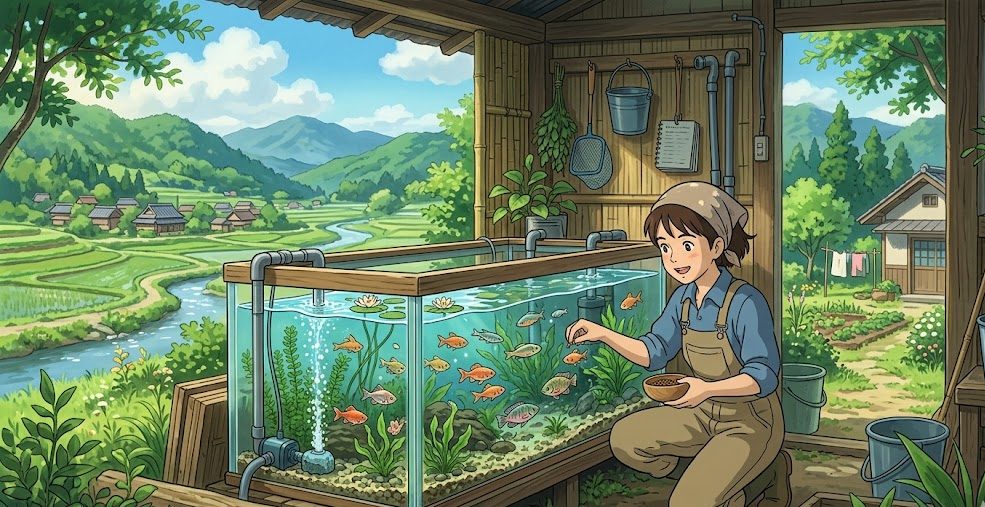
With the global demand for seafood reaching all-time highs while wild fish stocks face severe depletion, aquaculture has shifted from a specialized industry to one of the most lucrative sectors in modern agriculture. Fish farming offers an incredible opportunity for modern entrepreneurs and homesteaders to produce high-quality protein efficiently, predictably, and sustainably.
Unlike traditional agriculture, which demands sprawling open fields, modern aquaculture can thrive in incredibly compact spaces. Thanks to advanced tank designs and water management systems, it is entirely possible to raise thousands of healthy fish in a backyard, a repurposed barn, or a small commercial warehouse.
However, diving into aquaculture without a solid blueprint can be a recipe for disaster. Fish are highly sensitive to their environment; a slight drop in oxygen or a sudden spike in water toxins can wipe out an entire tank overnight.
If you want to build a sustainable, high-yield fish farm, you need a deep understanding of the equipment, species selection, and biological filtration that keep an aquatic ecosystem alive. This comprehensive, step-by-step beginner’s guide will show you exactly how to design, set up, and manage a highly profitable aquaculture tank from scratch.
Phase 1: Choosing Your Fish Farming System
Before buying equipment or sourcing juvenile fish, you must decide on the structural framework of your fish farm. For small-scale, high-yield, and beginner-friendly aquaculture, two primary tank systems dominate the industry.
1. Recirculating Aquaculture Systems (RAS)
If you want to grow the maximum number of fish in the smallest possible footprint, a Recirculating Aquaculture System (RAS) is the undisputed gold standard.
An RAS operates as a closed-loop system. Instead of continuously flushing out dirty water and replacing it with fresh water, an RAS continuously filters, purifies, and aerates the water inside the tank, recycling over 95% of it.
The core benefits of an RAS include:
- Absolute Environmental Control: You can easily manage water temperature and oxygen levels indoors, protecting your fish from unpredictable weather or local water pollution.
- Extreme Water Efficiency: Because water is constantly recycled, you can run a highly productive fish farm even in regions with strict water restrictions or limited access to natural springs.
- High Stocking Density: RAS setups allow you to safely grow a much larger volume of fish per cubic meter compared to open dirt ponds.
2. The Biofloc Technology (BFT) Alternative
Biofloc is a revolutionary, low-cost alternative to traditional RAS. In a Biofloc tank, you intentionally cultivate a rich community of beneficial bacteria directly in the water column.
These bacteria consume the toxic waste produced by the fish and transform it into nutritious microbial flakes (floc). The fish then eat these flakes, creating a beautiful natural cycle that significantly reduces your commercial feed costs while keeping the water clean. However, Biofloc requires constant, non-stop aeration to keep the bacterial flakes suspended in the water, making a reliable backup power supply non-negotiable.
Phase 2: Selecting the Perfect Fish Species
As a beginner, your choice of fish species will directly dictate your learning curve and your initial financial success. You need a hardy fish that grows rapidly, tolerates minor water quality mistakes, and has a strong local market demand.
1. Tilapia: The Beginner’s Best Friend
Tilapia is widely considered the ultimate starter fish for modern aquaculture. They are exceptionally tough, grow to market size in just 6 to 8 months, and can survive a wide range of water temperatures and fluctuating water quality metrics. Furthermore, they are omnivorous, meaning they can thrive on budget-friendly plant-based feeds, which keeps your operational costs low.
2. Catfish: High Yields, Low Fuss
Catfish are bottom-dwelling survivors that can handle incredibly high stocking densities. They possess a specialized breathing organ that allows them to tolerate lower dissolved oxygen levels than most other fish, making them highly resilient against minor equipment failures. They hold excellent commercial value in local wholesale markets.
3. Jade Perch or Barramundi: High-Value Alternatives
If you are targeting premium, high-end culinary markets or local fine-dining restaurants, look into specialized species like Jade Perch or Barramundi. While they require stricter water quality parameters, immaculate temperature control, and a higher upfront investment, their premium retail price per pound can yield massive profit margins.
Phase 3: Anatomy of a Profitable Aquaculture Tank Setup
To build a reliable aquaculture setup, you need to assemble a series of specialized components that mimic a natural, self-purifying ecosystem. Here is the foundational checklist for a professional-grade tank assembly:
1. The Culture Tank
Avoid makeshift containers that can leach harmful chemicals into the water. Instead, utilize heavy-duty fiberglass tanks or durable, food-grade circular PVC-lined pools with structural steel frames. Circular tanks are highly recommended because they allow water to circulate evenly, preventing “dead zones” where fish waste can accumulate and rot.
2. The Mechanical Filter (Swirl Separator)
When water leaves the fish tank, it carries solid waste, including uneaten fish feed and feces. This waste must be removed immediately before it breaks down into toxic chemicals. A swirl separator or settling basin uses simple centrifugal force to spin the water, forcing the heavy solid waste to drop to the bottom for easy draining, while clean water flows out the top.
3. The Biological Filter (The Heart of the System)
This is where the true science of aquaculture happens. Fish continuously excrete Ammonia (NH3) through their gills and waste. Ammonia is highly toxic; even tiny concentrations can cause severe gill damage and sudden death.
Your biofilter is a container packed with high-surface-area plastic media (like K1 or bio-balls) that serves as a home for millions of beneficial, self-colonizing nitrifying bacteria. These invisible workers perform a two-step biological conversion:
Ammonia (NH3)Nitrosomonas bacteriaNitrite (NO2−)
Nitrite (NO2−)Nitrobacter bacteriaNitrate (NO3−)
While Nitrite is still highly dangerous, Nitrate is relatively harmless to fish in low-to-moderate concentrations and can easily be managed with regular, minor water exchanges or utilized to grow plants in a hybrid aquaponics setup.
4. Aeration and Oxygenation Systems
Fish do not breathe water; they breathe the Dissolved Oxygen (DO) suspended within it. High stocking densities consume oxygen rapidly. You must install a commercial-grade regenerative blower paired with high-quality air stones or diffusers to continuously pump microscopic air bubbles into the tank, keeping the dissolved oxygen levels above 5.0 mg/L at all times.
Phase 4: Water Quality Management
You aren’t just a fish farmer; you are primarily a water quality manager. If you take care of the water, the water will take care of the fish. You should invest in a digital water testing kit and monitor these core parameters weekly:
| Water Parameter | Ideal Target Range | Why It Matters |
|---|---|---|
| Temperature | 24°C – 29°C (For warm-water species) | Dictates the fish’s metabolic rate and food digestion speed. |
| pH Level | 6.5 – 8.0 | Drastic pH swings cause extreme biological stress and damage slime coats. |
| Ammonia (NH3) | 0.0 mg/L | Anything above 0.5 mg/L can be fatal; indicates biofilter failure. |
| Dissolved Oxygen | 5.0 mg/L – 8.0 mg/L | Essential for respiration; drops below 3.0 mg/L cause immediate suffocation. |
Phase 5: Feeding Strategies and Economics
Commercial fish feed will represent roughly 50% to 60% of your ongoing operational expenses. Managing your feed strategy is the ultimate secret to unlocking true profitability.
- Avoid Overfeeding: Only feed your fish what they can actively consume within 3 to 5 minutes. Uneaten feed sinks to the bottom, dissolves, clogs your filters, and creates massive ammonia spikes.
- Understand the Feed Conversion Ratio (FCR): FCR measures how efficiently your fish turn feed into body mass. For instance, an FCR of 1.5 means that for every 1.5 kg of commercial pellet feed you throw into the tank, your fish gain 1 kg of body weight. Lowering your FCR through high-quality feed and optimal water temperatures directly boosts your bottom line.
Frequently Asked Questions (FAQs)
Q1: How many fish can I safely stock in a 1,000-liter tank?
For a beginner running a well-aerated RAS setup with a functioning biofilter, a safe conservative target is 25 to 30 kg of mature fish per 1,000 liters of water. For Tilapia, this translates to roughly 40 to 50 fish per tank, assuming an average harvest weight of 600 grams each.
Q2: What should I do if my fish suddenly stop eating?
A sudden loss of appetite is the universal warning sign of environmental stress or disease. Immediately stop feeding them, test your water parameters—especially Ammonia and Dissolved Oxygen—and check your water temperature. Do not add more food until the root water quality issue is fully resolved.
Q3: How do I handle a sudden power outage?
In a high-density aquaculture tank, fish can consume all the dissolved oxygen within 30 to 60 minutes of a pump shutdown. A reliable automatic backup generator or a 12V battery-powered emergency aeration system is absolutely mandatory to prevent catastrophic crop loss during a blackout.
Q4: Is it cheaper to build a dirt pond or an indoor tank system?
While digging a simple dirt pond has lower upfront construction costs, indoor tank systems (RAS) offer much higher long-term profitability. Tank systems protect your fish from natural predators, prevent muddy off-flavors in the meat, allow year-round production, and experience significantly lower disease rates.
Conclusion
Setting up a profitable aquaculture tank is a highly rewarding fusion of biology, engineering, and business acumen. By investing in a robust filtration system, choosing a resilient starter species like Tilapia or Catfish, and maintaining strict control over your daily water quality parameters, you can build a highly productive food system in your own backyard.
Start small, master the biological cycling of your water, find your local wholesale or direct-to-consumer buyers, and gradually scale your infrastructure as your confidence grows. The future of sustainable protein production is unfolding right now—inside high-yield aquaculture tanks!