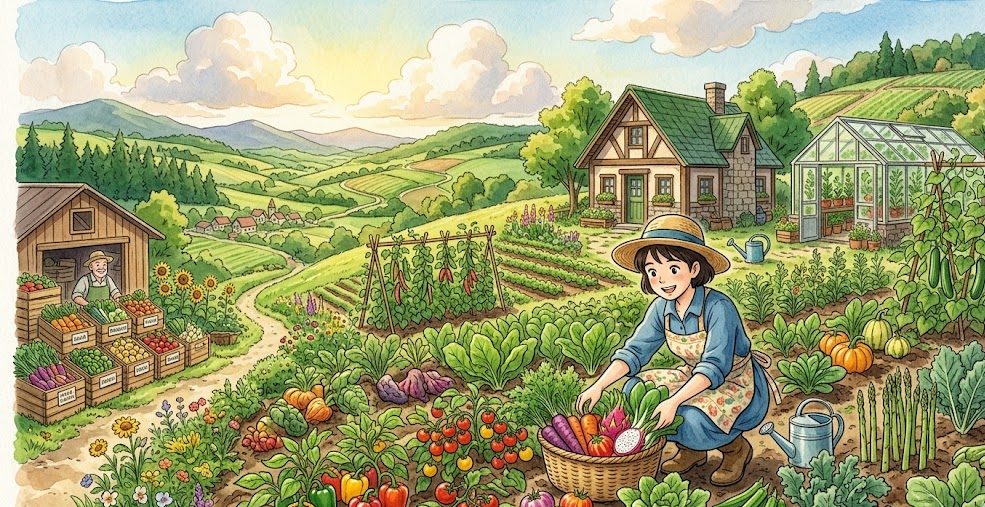
The agricultural landscape is shifting rapidly as consumer palates become more global and health-conscious. Traditional, high-volume crops like potatoes, onions, and tomatoes will always have a place in the market, but their profit margins are continuously squeezed by volatile supply chains and heavy competition. For forward-thinking growers looking to maximize returns on smaller plots of land, the real opportunity lies in exotic vegetable farming.
Exotic vegetables command premium prices in upscale supermarkets, fine-dining restaurants, and urban farmer’s markets. However, transitioning into this niche market requires more than just planting unique seeds and hoping for the best. These high-value crops require precise cultivation, targeted marketing, and strategic post-harvest management. This comprehensive guide breaks down the essential steps to launching and running a highly profitable exotic vegetable farming business from scratch.
The Economics of Exotic vs. Traditional Farming
Why are farmers worldwide converting acreage to exotic varieties? The answer boils down to price premium and land-use efficiency. Traditional crops operate on a high-volume, low-margin model. If a market is flooded with seasonal vegetables, wholesale prices crash, sometimes leaving farmers unable to recover their production costs.
Exotic vegetables operate on the opposite spectrum: low volume, high margin. Because these crops require specialized care or controlled environments, the barrier to entry is higher, which naturally limits the supply. A single square meter of premium cherry tomatoes, colored bell peppers, or gourmet mushrooms can yield several times the revenue of standard field crops.
Furthermore, urban consumer trends indicate that demand for specialty ingredients is no longer seasonal. With the rise of international cuisines and dietary shifts toward plant-based nutrition, high-income households are willing to pay consistently high prices year-round.
High-Value Exotic Varieties to Consider
Choosing the right crop depends heavily on your local climate, available infrastructure, and proximity to your target market. Here are the most lucrative exotic vegetables currently driving high market demand.
+-----------------------------------------------------------------+
|                    TOP EXOTIC CROP CATEGORIES                   |
+-----------------------------------------------------------------+
|  [Gourmet Greens]     -->  Kale, Pak Choy, Arugula, Microgreens |
|  [Premium Vine Crops] -->  Colored Bell Peppers, Cherry Tomatoes|
|  [Specialty Roots]    -->  Zucchini, Asparagus, Broccolini     |
+-----------------------------------------------------------------+
1. Gourmet Greens and Herbs
Salad greens have evolved far beyond basic iceberg lettuce. High-end culinary businesses are constantly sourcing premium, visually striking greens.
- Kale and Arugula: Highly sought after for their nutritional profiles and distinct pepper flavors.
- Pak Choy (Bok Choy): A staple in Asian culinary dishes that grows quickly and handles high-density planting exceptionally well.
- Microgreens: Young vegetable greens harvested just after the first true leaves emerge. They can be grown indoors vertically, have a crop cycle of just 7 to 14 days, and sell at incredibly high per-kilogram rates.
2. Protected Cultivation Specialties
Certain exotic varieties perform best under greenhouse or polyhouse structures where temperature, humidity, and pests can be strictly regulated.
- Colored Bell Peppers (Yellow and Red): These require controlled conditions to mature fully and achieve uniform coloration, commanding triple the price of standard green capsicums.
- Cherry and Heirloom Tomatoes: Known for their exceptional sweetness and unique visual appeal, these are premium retail favorites.
3. Long-Term High-Yielders
If you have patience and stable land ownership, investing in perennial or semi-perennial exotic crops can secure long-term, passive-style agricultural revenue.
- Asparagus: While it takes two to three years to establish a harvestable crown, a healthy asparagus bed can produce high-value spears annually for up to fifteen years.
- Broccolini: A hybrid between standard broccoli and Chinese kale, offering sweet, tender stems that are prized by fine-dining chefs.
Key Strategies for Maximizing Farm Profitability
Growing an exotic vegetable is only half the battle; ensuring it translates into high profits requires operational discipline and smart execution.
Master Controlled Environment Agriculture (CEA)
Many exotic vegetables originate from temperate zones and cannot survive harsh tropical summers or freezing winters. Implementing greenhouse, polyhouse, or net-house structures is vital to de-risk your investment.
Using basic automation—such as shade nets that deploy based on afternoon temperatures or automated misting fans—allows you to extend your growing season or even produce crops completely out of season when market prices peak.
Precision Irrigation and Fertigation
Exotic vegetables are highly sensitive to moisture fluctuations. Overhead sprinklers often invite fungal diseases on delicate leaves.
Implementing drip irrigation systems ensures that water is delivered directly to the root zones, cutting water usage significantly. By pairing drip networks with fertigation—the process of injecting water-soluble organic nutrients directly into the irrigation line—plants receive perfectly calibrated nutrition, leading to uniform growth and flawless cosmetic appearance.
Bypassing the Middlemen: Modern Marketing Tactics
The biggest mistake a niche vegetable farmer can make is taking their premium harvest to a generic wholesale market. Wholesale traders will price your exotic produce alongside standard varieties, destroying your profit margins. To capture true value, you must build direct distribution channels.
+------------------+       +-------------------+       +--------------------+
|  Our Exotic Farm | ----> | Premium Channels  | ----> |   Maximum Profit   |
|   High-Quality   |       | Hotels, Cafes,    |       | High Price Premium |
| Specialty Crops  |       | Elite Supermarkets|       | Retained by Farmer |
+------------------+       +-------------------+       +--------------------+
Direct-to-Chef Sales
Build a portfolio of your produce and visit executive chefs at local high-end boutique hotels, continental cafes, and fine-dining restaurants. Chefs are always looking for reliable, local suppliers who can deliver fresh, unbruised, and uniquely shaped ingredients. Establishing direct weekly delivery contracts ensures a stable price floor for your farm.
Premium Retail and B2C Subscriptions
Partner with elite organic supermarkets or setup a direct-to-consumer (B2C) subscription box model. High-income urban families eagerly subscribe to weekly “gourmet boxes” filled with fresh kale, cherry tomatoes, and exotic herbs delivered straight from the farm. This model provides your business with predictable, upfront cash flow.
Essential Post-Harvest Care and Packaging
Exotic vegetables are highly perishable. A beautifully grown crop can lose 50% of its market value within hours of harvest if handled poorly.
| Crop Category | Optimal Post-Harvest Step | Packaging Strategy |
|---|---|---|
| Gourmet Greens | Pre-cool immediately in a shaded area; wash gently in chilled water. | Breathable, perforated anti-fog pouches to prevent moisture buildup and sweating. |
| Bell Peppers | Sort rigorously by size, weight, and color uniformity. | Corrugated cardboard boxes with individual paper separation wraps to avoid bruising. |
| Microgreens | Harvest using ultra-sharp blades to prevent stem crushing; air-dry completely. | Rigid food-grade clam-shell containers to protect delicate structural integrity during transit. |
Investing in a small on-farm cold storage unit or a cold-chain logistics partner allows you to preserve freshness, extending shelf life by days and giving you leverage to negotiate better prices with premium buyers.
Conclusion: Turning Ecology into Economy
Profitable exotic vegetable farming is a perfect blend of modern horticulture, precise technology, and strategic business management. It transforms agriculture from a low-margin survival game into a highly lucrative, sophisticated enterprise.
By carefully selecting market-driven exotic varieties, protecting them via controlled environment agriculture, and establishing direct-to-market distribution channels, you can generate exceptional returns even on a limited land footprint. The initial learning curve and setup costs may be higher than traditional farming, but for the modern Agripreneur, the rewards—both financial and professional—are undeniably worth the effort.