Modern farming often feels like a constant battle against rising costs. Fertilizer prices fluctuate, water becomes scarce, and unpredictable weather can wipe out a single-crop harvest overnight. For decades, the standard agricultural model has been linear: buy seeds, apply chemical inputs, harvest the crop, and throw away the waste. But relying on this one-way street is becoming too expensive and risky for the independent grower.
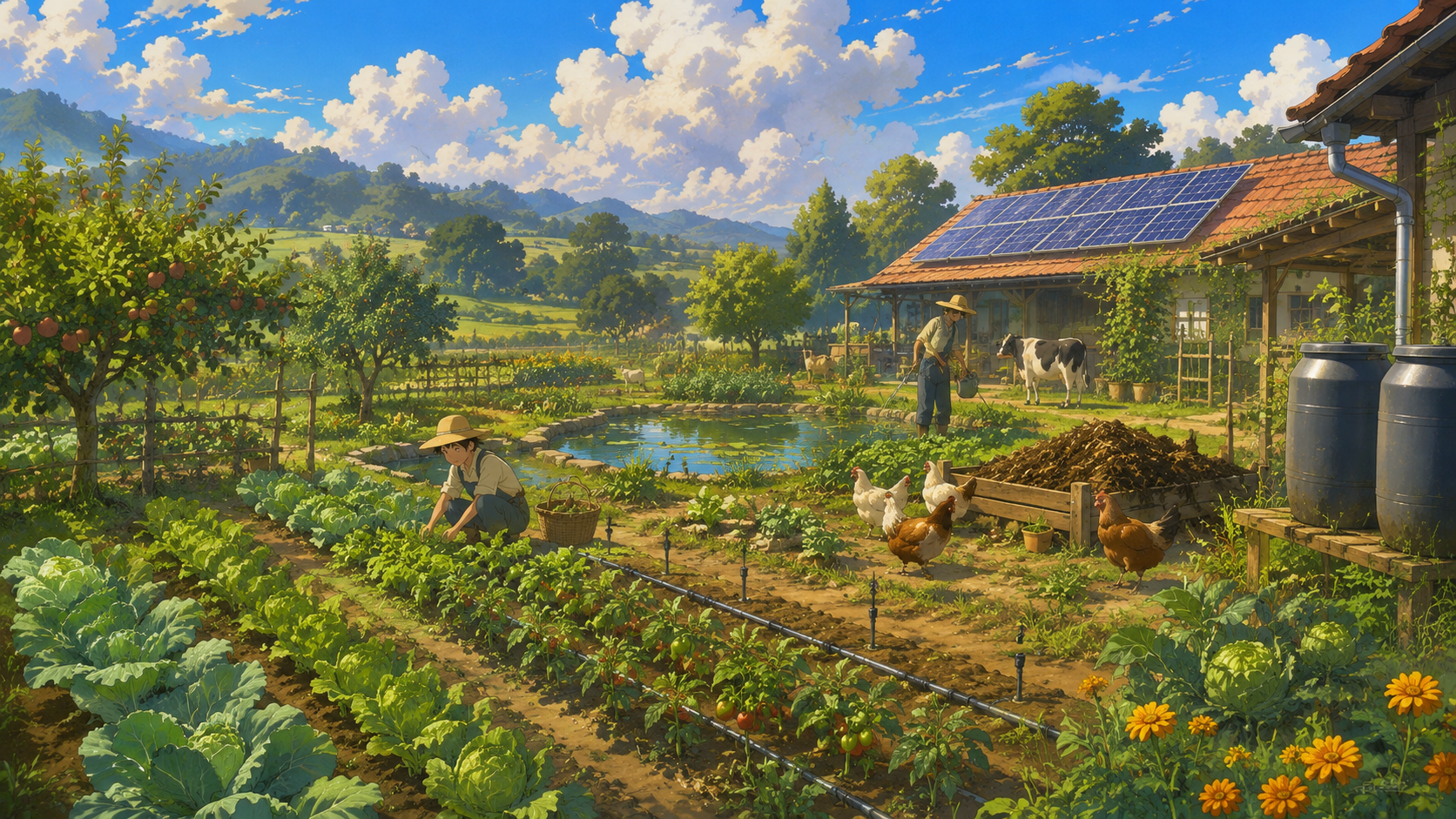
There is a more resilient way to manage land. Integrated Farming Systems (IFS) offer a sustainable alternative that mimics how nature actually works. Instead of growing just one thing in isolation, an integrated farm combines crops, livestock, poultry, and sometimes aquaculture into a single, closed-loop system. The core rule is simple: the waste of one system becomes the food or fertilizer for another. By adopting integrated farming methods, you can drastically cut down your input costs, secure multiple streams of income, and naturally rebuild the health of your soil.
Understanding the Circular Farm
In a standard farm, a grower might spend hundreds of dollars buying synthetic fertilizer for a vegetable field, while simultaneously spending money to safely dispose of animal manure from a separate livestock operation. Integrated farming connects these broken links.
When you integrate different agricultural elements, they support each other. Animals provide natural manure for the crops. Crop residues provide free feed for the animals. This circular approach creates a safety net. If a sudden pest ruins your tomato crop, the income from your poultry or fish harvest keeps the farm financially stable. You stop fighting nature and start letting different biological systems do the heavy lifting for you.
Practical Tips for Integrated Farming
Transitioning to a fully integrated farm takes careful planning, but you can start by combining just two or three elements. Here are some practical ways to blend different farming systems effectively.
Combine Poultry and Orchards
Running chickens, ducks, or guinea fowl through a fruit orchard is a highly effective integration. The birds act as a natural pest control team, scratching the soil to eat harmful insects, larvae, and fallen, rotting fruit that would otherwise harbor diseases. As they roam, they leave behind droppings rich in nitrogen and phosphorus, perfectly fertilizing the fruit trees. You get healthier trees and a steady supply of eggs and meat, all while reducing your feed and fertilizer bills.
Integrate Aquaculture with Hydroponics
Aquaponics is the ultimate modern integrated system for growers with limited space. In this setup, fish are raised in large tanks. The water from the fish tanks, which is rich in nutrient-dense waste, is pumped directly into hydroponic growing beds where leafy greens or vegetables are planted. The plant roots absorb the nutrients, effectively filtering and cleaning the water. The clean water is then returned to the fish tanks. This closed-loop system uses a fraction of the water required by traditional farming and yields two high-value products.
Practice Agroforestry
Agroforestry integrates trees and shrubs into crop and animal farming. Instead of clearing every tree to make room for a pasture, you strategically plant timber trees, nut trees, or fruit-bearing shrubs alongside your main crops. The deep roots of the trees prevent soil erosion and bring water up from deep underground. The tree canopy provides much-needed shade for livestock during hot summers, reducing animal stress and improving weight gain.
A Real-Life Example: The Rice-Fish-Duck System
One of the oldest and most successful examples of integrated farming is the rice-fish-duck system, widely practiced across parts of Asia. A farmer traditionally growing only rice faces high costs for chemical weed killers and fertilizers.
By introducing fish and ducks into the flooded rice paddies, the entire ecosystem changes. The ducks paddle through the water, eating weeds and harmful insects like the rice planthopper. Their swimming movement stirs up the muddy water, which increases oxygen levels and prevents weeds from taking root. The fish eat mosquito larvae and algae. In return, the droppings from both the ducks and the fish provide a constant, natural supply of fertilizer directly to the rice roots. Farmers using this method frequently report higher rice yields, healthier soil, and the added financial bonus of selling fresh fish and duck meat at the end of the season.
Step-by-Step Guide: Setting Up a Basic Crop-Livestock System
If you want to start integrating your farm, it is best to begin with a simple pairing. Here is a practical guide to setting up a basic rotational system using vegetables and a small flock of chickens.
Step 1: Map Out Your Plots. Divide your growing area into at least three distinct, fenced sections. You will rotate your crops and your birds through these sections over the year. Step 2: Plant the First Crop. Plant your heavy-feeding vegetables, like corn, tomatoes, or cabbage, in Plot A. Manage Plot B and Plot C with a simple cover crop or pasture grass. Step 3: Introduce the Birds. While Plot A is growing, place your chickens in Plot B. Let them graze, scratch, and deposit manure for several weeks. Their scratching will naturally till the topsoil. Step 4: Rotate the Flock. Once the chickens have cleared Plot B, move them into Plot C. Step 5: Plant in the Fertilized Soil. Now that Plot B is heavily fertilized with natural manure and cleared of weeds by the birds, immediately plant your next round of vegetable crops there. Step 6: Let the Birds Clean Up. After you harvest the vegetables from Plot A, move the chickens into that freshly harvested area. They will eat the leftover plant stems, rotting vegetables, and hiding insects, cleaning the plot entirely and preparing it for the next season.
Common Mistakes to Avoid
While the benefits are massive, integrated farming requires careful management. Avoid these frequent errors when designing your system:
- Starting Too Big: Trying to combine cattle, poultry, crops, and a fish pond all in your first year is a recipe for disaster. Start by integrating just two components. Once that system runs smoothly, you can introduce a third.
- Ignoring the Balance: If you put too many animals on a small piece of land, their manure will burn the crops rather than fertilize them. Always match the number of animals to the size of the land to maintain a healthy biological balance.
- Overlooking Bio-Security: When different animals share the same general environment, disease can spread if you are not careful. Ensure clean drinking water, proper ventilation in shelters, and regular health checks for all livestock.
The Path to Long-Term Success
Integrated farming is not a quick-fix scheme; it is a smart, long-term business strategy. By mimicking natural ecosystems, you build a farm that is highly productive, deeply resilient, and remarkably cost-efficient. You stop viewing animal waste and crop residue as problems to be solved, and start seeing them as valuable resources to be utilized. As extreme weather and high input prices continue to challenge modern agriculture, the farmers who diversify and integrate their systems will be the ones who thrive.
Frequently Asked Questions (FAQs)
1. Does integrated farming require a lot of land? No. While large farms can integrate cattle and massive timber plots, small-scale growers can integrate intensely on less than an acre. Systems like aquaponics or combining micro-flocks of poultry with raised vegetable beds work beautifully in tight spaces.
2. Is integrated farming more labor-intensive than traditional farming? Initially, the planning and setup require more physical labor and mental effort. You have to learn how multiple systems interact. However, once established, the daily labor often decreases because the animals are doing the weeding and fertilizing for you.
3. Will integrating livestock with crops increase the risk of foodborne illness? It is a valid concern, which is why proper timing is critical. You must allow enough time for raw manure to break down in the soil before harvesting vegetables, especially root crops or leafy greens. Following standard rotational guidelines ensures the food is completely safe.
4. Can an integrated farm be entirely organic? Yes, integrated farming is one of the easiest pathways to achieving organic certification. Because you are using natural animal waste for fertilizer and biological methods (like ducks or predatory insects) for pest control, you naturally eliminate the need for synthetic chemicals.
5. How much money can I save by switching to this method? Savings vary wildly depending on the scale, but many farmers see a 30% to 50% reduction in their fertilizer and feed costs within the first two years. Furthermore, the additional income streams from selling secondary products provide a major financial buffer.