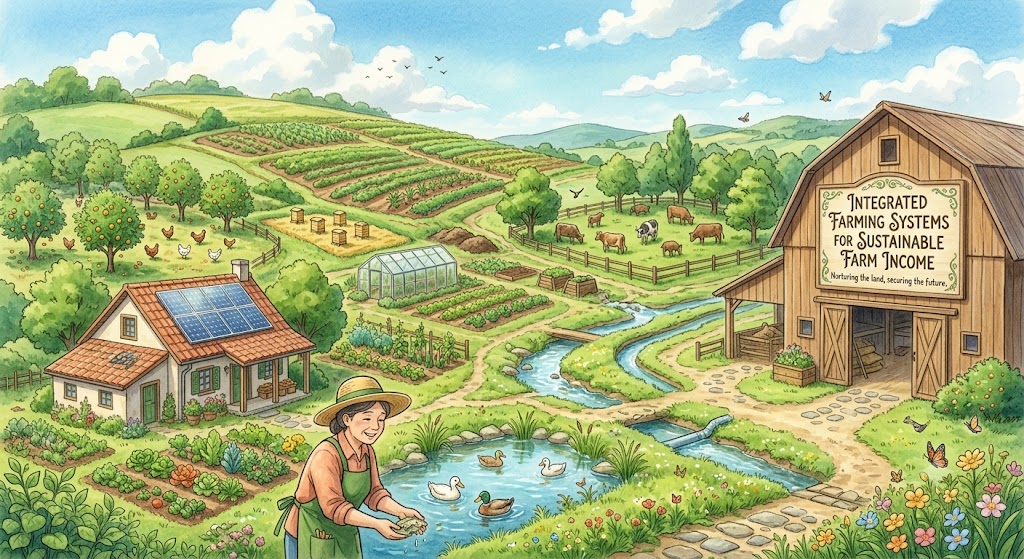
Modern agriculture faces many challenges, including rising production costs, climate uncertainties, declining soil fertility, and fluctuating market prices. As a result, farmers around the world are looking for farming methods that can provide stable income while improving resource efficiency and environmental sustainability. One of the most effective approaches is the Integrated Farming System (IFS).
Integrated farming combines different agricultural enterprises such as crops, livestock, poultry, fish farming, horticulture, and other farm activities into a single, interconnected system. Instead of relying on one source of income, farmers benefit from multiple agricultural components that support each other and create a more productive and sustainable farming operation.
By making efficient use of available resources, reducing waste, and diversifying income streams, integrated farming systems help farmers improve profitability while maintaining long-term farm sustainability.
What Is an Integrated Farming System?
An Integrated Farming System is a farming approach where multiple agricultural activities are combined and managed together to maximize productivity and resource utilization.
Common components may include:
- Crop production
- Dairy farming
- Poultry farming
- Fish farming
- Goat and sheep farming
- Horticulture
- Beekeeping
- Compost production
The key principle is that the output or waste from one enterprise becomes an input for another, creating a more efficient and environmentally friendly farming system.
Why Integrated Farming Is Becoming Popular
Traditional farming often depends on a single crop or enterprise, making farmers vulnerable to market fluctuations and production risks.
Integrated farming offers several advantages:
- Multiple income sources
- Better resource utilization
- Reduced waste
- Improved soil fertility
- Enhanced farm sustainability
- Increased resilience to climate challenges
These benefits make integrated farming an attractive option for both small-scale and commercial farmers.
How Integrated Farming Systems Work
In an integrated farm, various activities support each other naturally.
For example:
- Crop residues can feed livestock.
- Livestock manure can fertilize crops.
- Pond water enriched with nutrients can irrigate fields.
- Poultry waste can be used in fish ponds.
- Compost can improve soil fertility.
This interconnected system reduces dependence on external inputs while increasing overall farm efficiency.
Crop Production as the Foundation
Crop farming often serves as the central component of an integrated system.
Farmers can grow:
- Vegetables
- Fruits
- Cereals
- Pulses
- Oilseed crops
- Fodder crops
Benefits of Crop Production
- Provides food and income
- Supplies fodder for animals
- Produces crop residues for composting
- Supports other farm enterprises
Healthy crop production creates a strong base for the entire farming system.
Dairy Farming Integration
Dairy farming is one of the most common components of integrated agriculture.
Cows and buffaloes provide:
- Milk for sale
- Organic manure
- Additional farm income
Advantages of Dairy Integration
- Daily cash flow
- Valuable organic fertilizer
- Improved nutrient recycling
- Better use of crop residues
Manure from dairy animals helps improve soil fertility and reduce fertilizer costs.
Poultry Farming as an Additional Income Source
Poultry farming requires relatively small space and can generate income throughout the year.
Farmers can raise:
- Chickens
- Ducks
- Quails
- Turkeys
Benefits of Poultry Integration
- Regular egg production
- Meat sales
- Nutrient-rich manure
- Efficient feed conversion
Poultry waste can also contribute to compost production and fish farming systems.
Fish Farming Integration
Fish farming is increasingly being incorporated into integrated agricultural systems.
Fish ponds can serve multiple purposes, including:
- Fish production
- Water storage
- Irrigation support
Benefits of Fish Farming
- Additional farm income
- Efficient land use
- Nutrient recycling
- Diversified production
In some systems, nutrient-rich pond water is used to irrigate crops, improving soil fertility naturally.
Goat and Sheep Farming
Small ruminants are valuable additions to integrated farms.
They can utilize:
- Crop residues
- Natural vegetation
- Farm by-products
Advantages
- Low initial investment
- Strong market demand
- Meat and milk production
- Additional manure for soil improvement
Goats and sheep often perform well in areas where larger livestock may not be practical.
Horticulture and Fruit Production
Fruit trees and horticultural crops can provide long-term income opportunities.
Popular options include:
- Mangoes
- Citrus fruits
- Guava
- Papaya
- Bananas
Benefits
- Diversified income
- Better land utilization
- Improved biodiversity
- Long-term profitability
Fruit trees can also help reduce soil erosion and improve farm ecosystems.
Composting and Organic Matter Recycling
One of the major strengths of integrated farming is efficient waste utilization.
Materials suitable for composting include:
- Crop residues
- Animal manure
- Poultry litter
- Kitchen waste
- Plant materials
Benefits of Compost Production
- Improved soil fertility
- Reduced waste
- Lower fertilizer costs
- Enhanced soil structure
Composting transforms farm waste into valuable resources.
Beekeeping as a Supporting Enterprise
Beekeeping can complement crop production while generating additional income.
Benefits include:
- Honey production
- Beeswax sales
- Improved crop pollination
- Increased biodiversity
Many fruit and vegetable crops benefit from enhanced pollination provided by honeybees.
Environmental Benefits of Integrated Farming
Integrated farming systems contribute significantly to environmental sustainability.
Positive Environmental Impacts
- Reduced waste generation
- Improved nutrient cycling
- Better soil health
- Reduced chemical dependency
- Enhanced biodiversity
- Improved water conservation
These benefits support long-term agricultural productivity while protecting natural resources.
Economic Advantages for Farmers
Integrated farming improves financial stability by creating multiple income streams.
Economic Benefits
- Reduced production risks
- Continuous cash flow
- Better resource efficiency
- Increased farm profitability
- Lower input costs
If one enterprise experiences challenges, income from other activities can help maintain farm stability.
Challenges of Integrated Farming Systems
While highly beneficial, integrated farming requires careful planning and management.
Potential challenges include:
- Increased management complexity
- Higher labor requirements
- Initial investment costs
- Technical knowledge needs
- Market access considerations
However, many farmers find that the long-term benefits outweigh these challenges.
Tips for Successfully Implementing Integrated Farming
Farmers considering integrated farming should:
- Start with a manageable number of enterprises
- Assess available resources
- Focus on efficient resource recycling
- Maintain accurate records
- Seek technical guidance when necessary
- Diversify gradually
Careful planning helps ensure successful implementation and long-term profitability.
Frequently Asked Questions
1. What is an Integrated Farming System?
An Integrated Farming System combines multiple agricultural enterprises such as crops, livestock, poultry, fish farming, and horticulture into a single interconnected operation.
2. How does integrated farming increase income?
Integrated farming provides multiple income sources, reduces waste, improves resource utilization, and lowers production costs.
3. Is integrated farming suitable for small farms?
Yes. Small farms often benefit significantly from integrated systems because they maximize productivity from limited land and resources.
4. What are the environmental benefits of integrated farming?
Integrated farming improves soil health, reduces waste, enhances biodiversity, and promotes efficient use of natural resources.
5. Can integrated farming reduce fertilizer costs?
Yes. Organic manure, compost, and nutrient recycling within the system can significantly reduce dependence on external fertilizers.
Conclusion
Integrated Farming Systems offer a practical and sustainable solution for farmers seeking stable income, improved productivity, and better resource management. By combining crops, livestock, poultry, fish farming, horticulture, and other enterprises into a connected system, farmers can maximize efficiency while reducing waste and production costs.
Beyond economic benefits, integrated farming supports environmental sustainability through improved soil health, nutrient recycling, biodiversity conservation, and reduced dependence on external inputs. As agriculture continues to face modern challenges, integrated farming provides a resilient and profitable approach that can help farmers build stronger and more sustainable agricultural businesses.
Explore more helpful articles on our website for additional farming guides, sustainable agriculture strategies, and practical farm management tips.