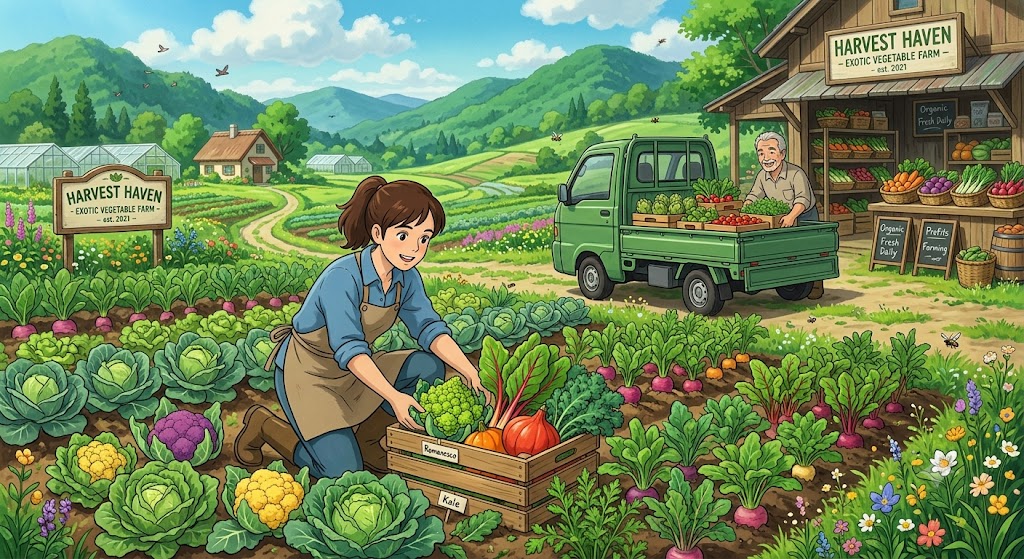
Agriculture is constantly evolving as farmers search for new ways to increase income and meet changing consumer demands. While traditional vegetables remain important in local and international markets, many growers are discovering the profit potential of exotic vegetable farming. These unique crops often command premium prices because they are less common, highly valued by restaurants and specialty markets, and increasingly sought after by health-conscious consumers.
Exotic vegetables offer farmers an opportunity to diversify production, reduce dependence on conventional crops, and access high-value market segments. With growing interest in international cuisines, organic produce, and specialty foods, demand for exotic vegetables continues to rise in many parts of the world.
For modern farmers looking to improve profitability, exotic vegetable farming can be a rewarding option when supported by proper planning, market research, and effective crop management.
What Are Exotic Vegetables?
Exotic vegetables are crops that are not traditionally grown or widely consumed in a particular region. They often originate from different countries or climates and are considered specialty produce in local markets.
Examples include:
- Colored bell peppers
- Zucchini
- Broccoli
- Asparagus
- Bok choy
- Kale
- Artichokes
- Cherry tomatoes
- Purple cabbage
- Baby corn
Because of their unique appearance, flavor, nutritional value, or culinary uses, these vegetables frequently attract higher market prices than common crops.
Why Farmers Are Choosing Exotic Vegetables
Modern consumers are increasingly interested in healthy eating, diverse cuisines, and premium-quality produce.
This trend has created strong demand for specialty vegetables in:
- Supermarkets
- Hotels
- Restaurants
- Organic food stores
- Farmers’ markets
- Export markets
Benefits of Exotic Vegetable Farming
- Higher profit margins
- Growing market demand
- Crop diversification
- Access to premium buyers
- Reduced market competition
For many growers, exotic vegetables provide a valuable opportunity to earn more income from limited farmland.
1. Broccoli
Broccoli is one of the most popular exotic vegetables in many developing agricultural markets.
It is widely valued for its nutritional content, including vitamins, fiber, and antioxidants.
Why Broccoli Is Profitable
- Strong demand in urban markets
- Popular among health-conscious consumers
- Suitable for fresh and processed sales
- Premium pricing compared to many traditional vegetables
With proper management, broccoli can produce attractive returns for commercial farmers.
2. Colored Bell Peppers
Colored bell peppers, including red, yellow, and orange varieties, often sell at higher prices than standard green peppers.
These vegetables are commonly used in:
- Salads
- Gourmet dishes
- Hotel kitchens
- Food processing industries
Advantages
- High market value
- Attractive appearance
- Growing demand worldwide
- Suitable for greenhouse production
Many farmers achieve strong profits by targeting premium retail and restaurant markets.
3. Cherry Tomatoes
Cherry tomatoes have become increasingly popular due to their flavor, convenience, and visual appeal.
Consumers often purchase them for:
- Salads
- Snacks
- Catering services
- Specialty food products
Why Grow Cherry Tomatoes?
- Higher prices than standard tomatoes
- Continuous harvesting period
- Strong market demand
- Excellent greenhouse potential
Well-managed cherry tomato farms can generate impressive income throughout the season.
4. Kale
Kale has gained popularity as a health food and superfood ingredient.
It is rich in vitamins, minerals, and antioxidants, making it attractive to consumers focused on nutrition.
Market Opportunities
- Organic food stores
- Health food retailers
- Restaurants
- Juice and smoothie businesses
As demand for nutritious foods continues to grow, kale remains a promising exotic crop.
5. Bok Choy
Bok choy, also known as Chinese cabbage, is widely used in Asian cuisine and international restaurants.
Benefits of Growing Bok Choy
- Fast growth cycle
- High market demand
- Efficient use of land
- Attractive selling prices
Farmers supplying urban and specialty markets often find bok choy to be a profitable option.
6. Asparagus
Asparagus is considered one of the most valuable vegetable crops in many regions.
Although establishment costs can be higher, asparagus plants can produce for many years after planting.
Advantages
- Premium market prices
- Long production lifespan
- Strong restaurant demand
- Export potential
For growers willing to invest in long-term production, asparagus can provide excellent returns.
7. Zucchini
Zucchini is a versatile vegetable widely used in international cuisines.
Consumers appreciate its:
- Mild flavor
- Nutritional benefits
- Cooking versatility
Why Zucchini Is Profitable
- Fast-growing crop
- High productivity
- Strong consumer demand
- Multiple harvests
Many commercial vegetable growers include zucchini in diversified farming operations.
8. Purple Cabbage
Purple cabbage stands out because of its vibrant color and visual appeal.
It is commonly used in:
- Salads
- Garnishes
- Health-focused recipes
- Specialty food products
Market Benefits
- Unique appearance
- Growing consumer interest
- Higher retail value
- Suitable for local and export markets
Its attractive presentation often helps farmers secure premium pricing.
9. Baby Corn
Baby corn is harvested before corn ears fully mature.
It is commonly used in:
- Stir-fry dishes
- Salads
- Processed foods
- Restaurant menus
Advantages of Baby Corn Farming
- Short production cycle
- Multiple market opportunities
- High-value crop
- Suitable for intensive cultivation
Baby corn offers excellent opportunities for farmers targeting specialty vegetable markets.
10. Artichokes
Artichokes are considered a premium vegetable in many parts of the world.
Their unique flavor and culinary appeal make them highly desirable among chefs and gourmet food enthusiasts.
Profit Potential
- Premium pricing
- Restaurant demand
- Specialty retail opportunities
- Export market access
Although production may require careful management, artichokes can provide substantial returns.
Important Factors for Successful Exotic Vegetable Farming
Before investing in exotic crops, farmers should carefully evaluate several key factors.
Climate Compatibility
Choose vegetables that perform well under local weather conditions.
Soil Quality
Most exotic vegetables require fertile, well-drained soil for optimal growth.
Market Demand
Research local and regional demand before planting large areas.
Irrigation Requirements
Many specialty vegetables perform best with consistent moisture levels.
Pest and Disease Management
Develop preventive management strategies to protect crop quality and productivity.
Proper planning greatly improves the chances of success.
Marketing Strategies for Exotic Vegetables
Growing high-value crops is only part of the equation. Effective marketing is equally important.
Potential Sales Channels
- Farmers’ markets
- Grocery stores
- Restaurants
- Hotels
- Online produce delivery services
- Export companies
Building relationships with buyers can help farmers secure reliable markets and better prices.
Challenges of Exotic Vegetable Farming
Although profitable, exotic vegetable production may present certain challenges.
These can include:
- Limited market awareness
- Specialized growing requirements
- Higher production costs
- Market fluctuations
- Storage and transportation needs
Farmers should start with manageable production areas while gaining experience and understanding market conditions.
Frequently Asked Questions
1. What are exotic vegetables?
Exotic vegetables are specialty crops that are not traditionally grown or commonly consumed in a particular region and often command premium prices.
2. Are exotic vegetables more profitable than traditional crops?
In many cases, yes. Exotic vegetables often sell at higher prices due to strong demand and limited supply.
3. Which exotic vegetable is easiest to grow?
Cherry tomatoes, zucchini, bok choy, and kale are often considered relatively easy options for farmers entering the specialty vegetable market.
4. How can farmers find buyers for exotic vegetables?
Farmers can sell through restaurants, supermarkets, farmers’ markets, specialty stores, online platforms, and wholesale distributors.
5. Is exotic vegetable farming suitable for small farms?
Yes. Many exotic vegetables have high value per acre, making them suitable for small-scale and intensive farming operations.
Conclusion
Exotic vegetable farming offers modern farmers an exciting opportunity to increase income, diversify production, and serve growing consumer demand for unique and nutritious foods. Crops such as broccoli, colored bell peppers, cherry tomatoes, kale, bok choy, asparagus, zucchini, purple cabbage, baby corn, and artichokes can provide attractive profit margins when grown and marketed effectively.
Success in exotic vegetable farming requires careful crop selection, proper management, market research, and strong buyer relationships. By focusing on quality production and understanding market trends, farmers can build profitable and sustainable farming businesses that stand out in today’s competitive agricultural industry.
Explore more helpful articles on our website for additional farming guides, profitable crop ideas, and modern agriculture strategies.