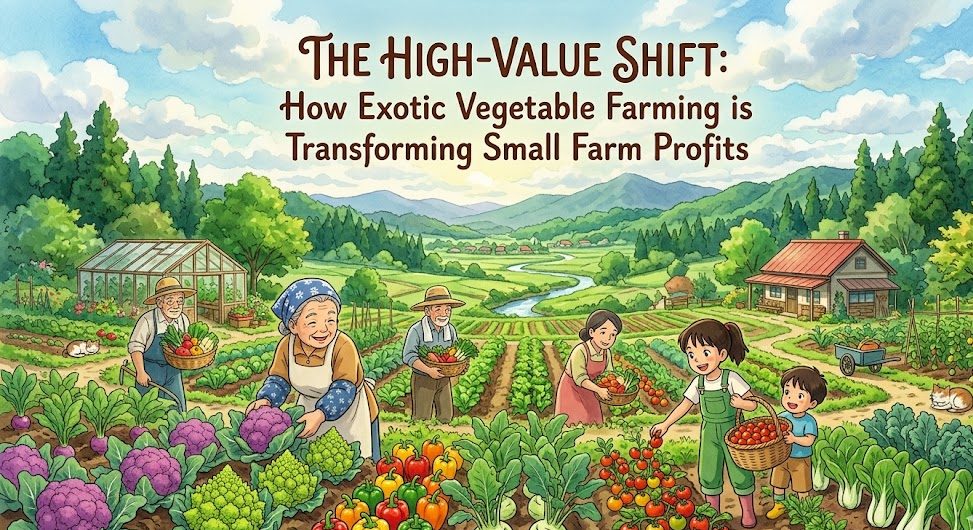
For decades, small-scale farmers have been trapped in a cycle of low-margin commodity crops. Whether it is grains, pulses, or traditional seasonal vegetables, the market is often saturated, prices are volatile, and the return on investment (ROI) remains stubbornly low. However, a quiet revolution is taking place in the fields of forward-thinking agriculturalists. It is the shift toward “Exotic Vegetable Farming”—the cultivation of high-demand, high-value crops that cater to the evolving tastes of the urban middle and upper classes.
This transition is not just about changing what is in the soil; it is about changing the entire business model of the small farm. By focusing on crops that offer premium pricing, farmers are finding that they can generate more revenue from a single acre of “exotic” produce than from ten acres of traditional staples.
Understanding the “Exotic” Advantage
“Exotic vegetables” generally refer to crops that are not native to the local region but have gained popularity due to changes in dietary habits, the growth of the hospitality industry, and the rise of health-conscious consumers. Examples include broccoli, cherry tomatoes, baby corn, iceberg lettuce, zucchini, bell peppers (capsicum), bok choy, and various culinary herbs like basil and parsley.
The core advantage of these crops is Market Exclusivity. While every farmer in the district might be growing potatoes, only a few are supplying high-quality, pesticide-free zucchini or colored bell peppers to the local supermarkets, luxury hotels, and premium restaurant chains. This reduced competition, combined with high demand, gives the farmer significant “price-maker” power instead of being a “price-taker.”
Why Small Farms Are Perfectly Positioned
Contrary to the belief that large-scale industrial farming is the only way to be profitable, exotic vegetable farming actually favors the small-scale operator. Here is why:
- Intensive Management: Exotic vegetables often require specialized care—precise watering schedules, controlled nutrient application, and vigilant pest management. A small farmer, personally overseeing their land, can provide the “tender loving care” that these delicate crops need to maintain premium quality.
- Lower Logistics Overhead: Because these crops are high-value, they can be highly profitable even when grown on smaller land parcels. This reduces the need for expensive heavy machinery and massive labor crews, allowing the farmer to focus on efficiency and quality.
- Direct-to-Consumer Opportunities: The “exotic” label attracts a specific, premium-tier customer. Small farmers can bypass middlemen and sell directly to boutique grocers, high-end farmers’ markets, or through subscription-based “farm-to-table” delivery models, capturing the full retail value of their harvest.
Key Pillars for Success
Transitioning to high-value farming requires a strategic approach. It is not enough to just plant the seeds; you must build the infrastructure to support them.
1. Controlled Environment Agriculture (CEA)
Many exotic vegetables are climate-sensitive. Investing in a low-cost polyhouse or shade-net house can provide the stable environment needed to grow these crops year-round, regardless of external weather fluctuations. This allows the farmer to supply the market during the “off-season” when prices are at their absolute peak.
2. Quality and Consistency
In the premium market, looks matter as much as taste. Appearance, size, and shelf-life are the metrics by which your product is judged. This requires moving away from traditional broadcasting of seeds and toward precise spacing, fertigation (applying fertilizer through irrigation), and standardized harvesting techniques to ensure every crate looks like a professional commercial product.
3. Cold Chain Management
One of the biggest risks with exotic vegetables is spoilage. Unlike grains, which can sit in a warehouse for months, fresh produce has a limited window. Small farmers who invest in simple post-harvest handling—like basic refrigeration or using cool-bags during transport—can drastically reduce their wastage and deliver a fresher product, which commands a higher price.
The Financial Transformation: A Case for Profitability
Let’s consider the math. A traditional cereal crop might provide a profit margin of 10–15% on a good year. Exotic vegetables, if managed correctly, can offer margins of 40–60%.
- The Multiplier Effect: When you grow broccoli or yellow bell peppers, you are not just selling produce; you are selling a “lifestyle” ingredient. Customers are willing to pay a premium for consistent quality.
- The Revenue Stream: By diversifying into a mix of fast-growing herbs (which can be harvested every 30-45 days) and slower-growing vegetables, a small farm can create a steady, recurring cash flow that sustains the business throughout the year.
Navigating the Challenges
The transition to exotic farming is not without its risks. The most significant barrier is Market Access. Before planting a single seed, a farmer must identify their buyers. Partnering with local restaurants, catering businesses, or even high-end grocery chains is essential.
Furthermore, the initial investment for seeds, soil amendments, and potential infrastructure (like irrigation systems) is higher than that of traditional crops. Therefore, a “Phase-In” approach is recommended: start with a small corner of the farm, master the cultivation and the selling process, and scale up only once you have secured reliable buyers.
The Future of the Small Farm
The era of the “subsistence farmer” is giving way to the “agri-entrepreneur.” By embracing the demand for fresh, nutritious, and exotic produce, small farmers can reclaim their profitability and revitalize rural economies.
This is more than just a trend; it is a fundamental correction in how we value food. When a farmer stops competing on volume and starts competing on quality, they transform their farm into a specialized production center. The shift to exotic vegetables is not just about boosting profits; it is about proving that small-scale agriculture can be a high-tech, highly profitable, and deeply rewarding career path in the modern world.
As we look toward the future, the fields that shimmer with the vibrant colors of bell peppers, the deep greens of premium lettuce, and the fresh aroma of culinary herbs will be the ones that sustain the next generation of successful, independent farmers. The high-value shift is here—is your farm ready to take the lead?