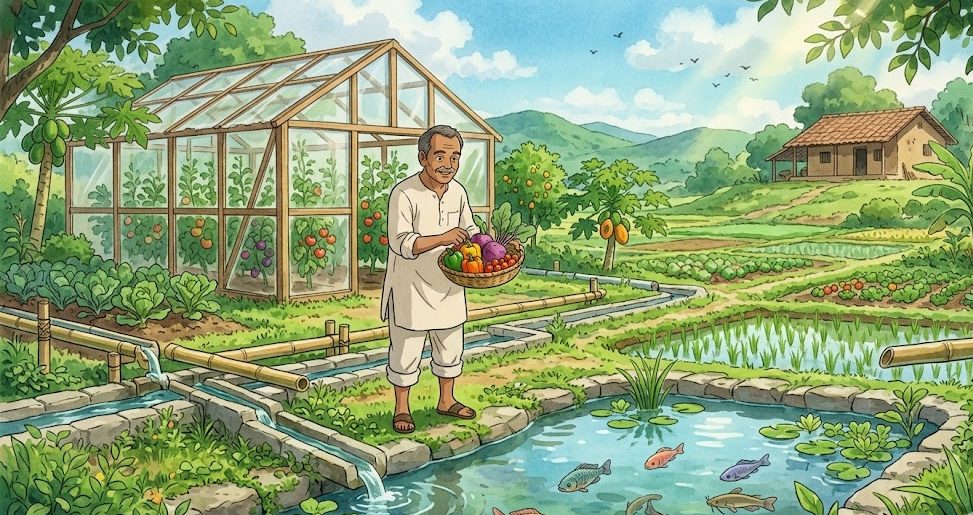
In the modern agricultural landscape, the pursuit of profit requires moving away from traditional, low-margin staple crops toward high-value, diversified production systems. By combining exotic vegetable cultivation with integrated fish farming (Aquaponics/Integrated Aquaculture), you can create a circular ecosystem that maximizes land utility, minimizes input costs, and captures premium market prices.
This guide explores how to build a highly profitable agricultural enterprise through strategic diversification.
1. The Rise of Exotic Vegetable Farming
Exotic vegetables—such as broccoli, kale, bok choy, colored bell peppers, and cherry tomatoes—are in high demand across urban markets, luxury hotels, and upscale restaurants. Unlike commodity staples, these crops offer a higher return per square meter.
Why Exotic Crops?
- Price Premium: These crops fetch prices 3x to 5x higher than local seasonal varieties.
- Consistent Demand: Urban consumers are increasingly health-conscious, driving a year-round demand for nutrient-dense specialty produce.
- Short Crop Cycles: Many exotic varieties can be harvested in shorter timeframes, allowing for faster turnover and better cash flow management.
Strategy for Success: Start by researching the local market gap. Partner with local high-end grocers or farm-to-table delivery services before you plant to ensure your harvest has an immediate home.
2. Integrated Systems: The Circular Economy
The key to long-term profitability is reducing the cost of external inputs. Integrated systems allow the waste of one process to become the fuel for another.
Integrating Livestock and Crops
A common, highly effective method is the “Pond-Dyke System.” By utilizing the banks of a fish pond for vegetable cultivation, you achieve two things:
- Nutrient Recycling: The nutrient-rich water from the fish pond is used to irrigate the vegetables, acting as a natural liquid fertilizer.
- Land Maximization: You produce protein (fish) and plant-based nutrition (vegetables) on the same plot of land, significantly increasing the total revenue potential of your acreage.
3. Fish Farming: The Engine of Integrated Profit
Fish farming (Aquaculture) is one of the fastest-growing food sectors globally. When done as part of an integrated system, it becomes exceptionally profitable.
Species Selection
For high profit, focus on fast-growing species suited to your climate, such as:
- Tilapia: Known for its hardiness, disease resistance, and rapid growth rate.
- Pangasius (Catfish): Highly tolerant of various water conditions and high-density farming.
- Carp: Excellent for traditional integrated ponds due to their ability to feed on natural organisms in the water.
Managing Water Quality
The success of fish farming hinges entirely on water quality.
- Aeration: Investing in paddlewheel aerators or venturi injectors ensures oxygen levels remain high, preventing fish stress and mortality.
- Stocking Density: Don’t overstock. High-density farming requires advanced filtration and monitoring; start at a manageable density to learn the behavior of your species before scaling up.
4. Maximizing Profit Through Synergies
The real “magic” happens when you combine these elements into a closed-loop system:
- Water Usage: The water used for fish farming is rich in ammonia and organic matter. Instead of discharging this “waste,” pump it through your vegetable irrigation lines.
- Disease Suppression: The biological diversity in an integrated system often leads to fewer pest outbreaks. When your soil is fed with organic, fish-derived nutrients, your plants develop stronger cell walls and natural defenses.
- Revenue Streams: By diversifying, you are not dependent on a single harvest. You have daily or weekly income from vegetables and quarterly/biannual income from fish harvests, creating a stable financial buffer.
5. Operational Best Practices
To ensure your integrated farm remains profitable:
- Continuous Monitoring: Use simple water testing kits to monitor pH, ammonia, and dissolved oxygen levels in your ponds.
- Market-Led Planning: Grow what your local market lacks. If your area has an abundance of tomatoes, focus your efforts on bell peppers or specialty herbs.
- Scalable Infrastructure: Build your irrigation and pond systems with expansion in mind. Start with a pilot project to master the biological balance, then scale up your production capacity.
6. Financial Sustainability: The Bottom Line
Profitable agriculture is about managing the ratio between Input Costs and Market Yield.
- Minimize Synthetic Inputs: By using your fish pond water to fertilize, you can cut your fertilizer expenditure by up to 40%.
- Focus on Post-Harvest: Packaging and branding are crucial for exotic produce. Clean, attractive, and eco-friendly packaging can justify a higher price point at the retail level.
Conclusion: Building Your Integrated Future
Combining exotic vegetable farming with integrated aquaculture is a strategy for the modern, tech-forward farmer. By looking at your farm as a single, interconnected ecosystem, you stop fighting against nature and start leveraging its efficiency.
This model not only offers a pathway to higher profit margins but also creates a resilient agricultural business capable of weathering market shifts and supply chain fluctuations. Focus on quality, maintain your system’s biological health, and treat your farm as a professional enterprise.