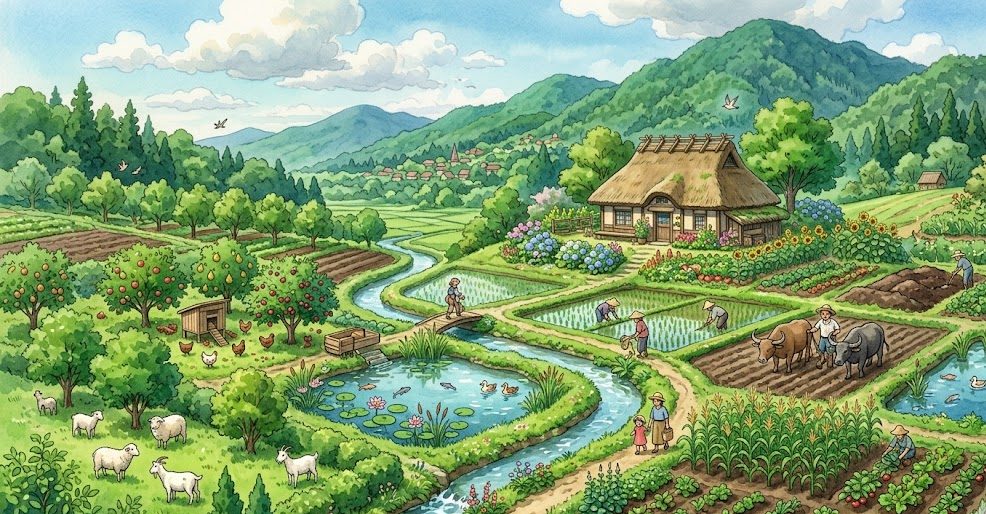
Agriculture is reaching a critical inflection point. As traditional monoculture farming faces increasing pressures from soil degradation, fluctuating market prices, and climate instability, forward-thinking farmers are turning toward a more resilient model: the Integrated Farming System (IFS). Unlike conventional farming, which often treats each enterprise—crops, livestock, or aquaculture—as a separate entity, an Integrated Farming System creates a circular economy right on your land. By linking these components so that the waste of one becomes the input of another, you can drastically reduce your dependency on expensive synthetic fertilizers and pesticides. This guide explores how you can design a self-sustaining system that not only maximizes your resource efficiency but also provides a stable, diversified income, making your farm a model of long-term economic and environmental sustainability.
What is an Integrated Farming System (IFS)?
At its core, an Integrated Farming System is a holistic approach that links multiple agricultural activities to enhance productivity and sustainability. The fundamental goal is to maximize the use of available land, water, and labor by ensuring that no resource is wasted.
Think of it as a biological loop. In a well-designed IFS, you might integrate livestock (like poultry or dairy) with crop cultivation and perhaps a small aquaculture pond. The manure from your livestock acts as organic fertilizer for your crops; the crop residues provide fodder for your animals; and the waste from your pond can be used to enrich the soil for your vegetables. This synergy reduces your production costs and creates a balanced ecosystem that is much harder to break than a single-crop system.
The Core Components of a Balanced IFS
To build an effective system, you must select components that complement each other based on your local climate, available water, and soil type. Here are the most common building blocks:
Crop Diversification and Rotation
Monocropping is a gamble. IFS encourages a diverse range of crops—including cereals, pulses, and oilseeds—rotated throughout the year. This variety disrupts pest life cycles and maintains soil health, as different plants draw different nutrients from varying soil depths.
Livestock Integration
Poultry, goats, or dairy cattle are essential for an IFS. They provide a daily source of income through milk, eggs, or meat. More importantly, they provide a steady supply of high-quality manure. In modern regenerative farming, livestock are often “managed” to graze on cover crops, which accelerates nutrient cycling and reduces the need for heavy machinery.
Aquaculture and Fisheries
If you have access to water, adding a fish pond is one of the most profitable moves you can make. Fish farming does not require significant land area, and the water in the pond—rich in nitrogen and phosphorus from fish waste—is essentially “liquid gold” for irrigation. It can be pumped directly onto your fields to provide a nutrient boost to your crops, effectively turning your irrigation water into a bio-fertilizer.
Designing Your Circular Farm: Practical Implementation
Transitioning to an IFS doesn’t mean you have to change everything overnight. Start small, observe the relationships between your farm elements, and scale up as you see the benefits.
1. Waste-to-Input Management
The key to profitability in IFS is minimizing external purchases. For example, rather than buying synthetic urea, focus on vermicomposting. Use your farm waste—dried leaves, stalks, and animal manure—to create high-quality vermicompost. Research shows that integrating vermicomposting into an IFS can improve soil carbon levels significantly over just three seasons, leading to more robust crop health.
2. Space Optimization (Vertical Farming)
Use verticality to your advantage. If you are growing high-value vegetables, utilize trellises or vertical racks to increase your canopy density. Beneath your fruit trees, consider growing shade-tolerant crops or medicinal herbs. By layering your production, you are effectively “stacking” income on the same square meter of land.
3. The Water Loop
In an integrated system, water is recycled. Use the drainage from your vegetable plots to feed your fish pond, and periodically drain a portion of the nutrient-rich pond water to irrigate your crops. This closed-loop water management is vital for farms in regions prone to drought or high water costs.
The Economic Advantages of IFS
Beyond the environmental benefits, the Integrated Farming System is a powerful business strategy.
Risk Mitigation through Diversification
If a pest outbreak affects your vegetable crop, your livestock and fish pond remain unaffected. This diversity acts as a natural insurance policy. By having three or four different income streams throughout the year, you are protected from the “boom-and-bust” cycle of seasonal commodity prices.
Reduction in Input Costs
Statistics from recent agricultural studies indicate that farmers adopting integrated systems can reduce their spending on synthetic fertilizers and pesticides by 30% to 50%. Because your farm generates its own organic fertilizer and pest management solutions, your profit margins remain protected even when the cost of chemical inputs rises.
Constant Cash Flow
One of the biggest challenges for farmers is waiting for the harvest season to receive a paycheck. IFS solves this by design. Poultry provide daily egg sales, dairy provides daily milk revenue, and crops provide seasonal income. This constant cash flow ensures that you can meet your operational expenses without constantly relying on high-interest credit.
Challenges and How to Overcome Them
While the benefits are clear, an IFS requires more management than a standard farm.
- Complexity: Managing livestock, fish, and crops requires a broader skill set. Solution: Start with two components—such as crops and poultry—and master their interaction before adding a third element.
- Initial Labor: Setting up the infrastructure (like fencing or pond liners) can be labor-intensive. Solution: View these as capital investments. The reduction in recurring fertilizer and feed costs will typically pay for the initial setup within two to three years.
- Market Links: Having more variety means you need diverse markets. Solution: Leverage local farmers’ markets, build direct-to-consumer delivery routes, or form cooperatives with neighbors to bundle your produce for better bargaining power.
Conclusion: Building Resilience for the Long Term
The Integrated Farming System is more than just a technique; it is a philosophy that views the farm as a living, breathing entity. By moving away from extractive practices and toward regenerative, circular processes, you are not just growing food—you are growing the longevity of your farm.
As we look toward the future of agriculture, the most successful operations will be those that can adapt to changing conditions by relying on internal resources rather than external ones. Whether you start by adding a small poultry unit to your crop land or by installing a vermicompost pit to boost your soil health, every step toward an integrated system is a move toward greater independence and profitability. The path to a sustainable farm is built one connection at a time. Start by observing your land, identifying the waste you can turn into an input, and begin building a system that sustains your livelihood for generations to come.