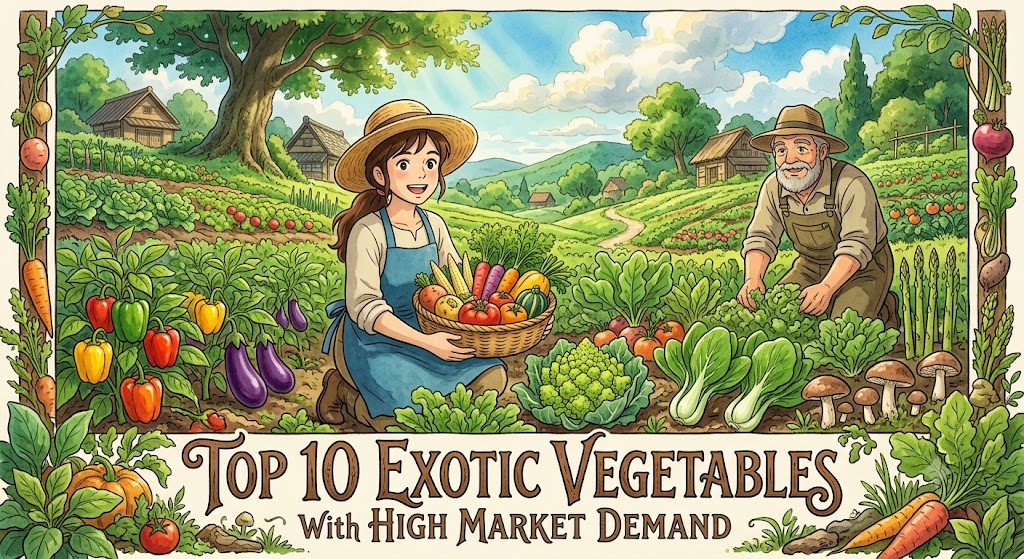
Consumer preferences are changing rapidly, and the vegetable market is evolving along with them. Today, many restaurants, supermarkets, hotels, and health-conscious consumers are searching for vegetables that were once considered rare or available only in specialty stores. This growing demand has opened exciting opportunities for farmers looking to diversify their crops and increase their income.
Exotic vegetables are often sold at premium prices because they offer unique flavors, attractive colors, high nutritional value, and versatility in international cuisines. While they may require careful planning and proper crop management, the financial rewards can be much higher than those of many traditional vegetables.
If you’re planning to enter high-value vegetable farming, understanding which crops have the strongest market demand is the first step toward building a profitable agricultural business.
Why Exotic Vegetables Are Becoming More Popular
Several factors have contributed to the rapid growth of this market.
Consumers today are:
- Eating healthier foods
- Trying international cuisines
- Shopping at premium supermarkets
- Choosing fresh organic produce
- Looking for nutrient-rich vegetables
At the same time, restaurants and food businesses are expanding their menus, increasing the demand for specialty vegetables throughout the year.
1. Broccoli
Broccoli remains one of the most profitable exotic vegetables because of its consistent demand in both domestic and international markets.
Market Advantages
- Popular in healthy diets
- Used by restaurants and hotels
- High nutritional value
- Strong retail demand
Farmers who maintain excellent quality often receive premium prices during peak demand periods.
2. Bell Peppers
Colorful bell peppers are widely used in salads, pizzas, stir-fries, sandwiches, and processed foods.
Their popularity continues to grow due to increasing interest in fresh vegetables.
Why They’re Profitable
- Available in multiple colors
- Attractive appearance
- High consumer demand
- Suitable for greenhouse production
Proper irrigation and disease management help maximize yields.
3. Cherry Tomatoes
Cherry tomatoes have become a favorite ingredient in modern kitchens.
Their sweet flavor and attractive appearance make them popular among consumers.
Major buyers include:
- Restaurants
- Supermarkets
- Salad manufacturers
- Hotels
Harvesting regularly encourages continuous fruit production.
4. Zucchini
Zucchini is widely used in Mediterranean, European, and Asian cuisines.
Its versatility has made it an increasingly profitable vegetable for commercial growers.
Benefits include:
✔ Fast growth
✔ Multiple harvests
✔ Strong culinary demand
✔ Good market value
5. Kale
As health-conscious eating continues to grow, kale has become one of the most recognized leafy vegetables worldwide.
Consumers purchase kale for:
- Salads
- Smoothies
- Soups
- Health food products
Its reputation as a nutrient-rich vegetable supports premium pricing.
6. Bok Choy
Bok choy is commonly used in Asian cuisine but has gained popularity across many international markets.
Advantages include:
- Quick growth
- High productivity
- Excellent restaurant demand
- Suitable for multiple growing seasons
Fresh quality greatly influences selling prices.
7. Asparagus
Asparagus is considered one of the highest-value vegetable crops because consumers are willing to pay premium prices for fresh, tender spears.
Although establishing an asparagus field requires patience, mature plants can produce for many years.
Long-term productivity makes it an attractive investment.
8. Baby Corn
Baby corn is harvested before the ears fully mature, making it a specialty product used in salads, stir-fries, and processed foods.
Major buyers include:
- Food processing companies
- Restaurants
- Hotels
- Supermarkets
Multiple planting cycles help maintain continuous production.
9. Red Cabbage
Red cabbage attracts consumers because of its vibrant color and nutritional value.
It is widely used in:
- Salads
- Sandwiches
- Pickled products
- Fresh vegetable markets
Its relatively long shelf life also benefits farmers and retailers.
10. Artichokes
Artichokes remain a premium vegetable with growing demand among restaurants and gourmet food retailers.
Although production requires suitable climatic conditions, farmers who produce high-quality artichokes often enjoy attractive profit margins.
Quick Comparison of Popular Exotic Vegetables
| Vegetable | Time to Harvest | Market Demand | Profit Potential |
|---|---|---|---|
| Broccoli | Medium | High | High |
| Bell Peppers | Medium | High | High |
| Cherry Tomatoes | Medium | Very High | High |
| Zucchini | Short | High | Good |
| Kale | Short | Growing | High |
| Bok Choy | Short | High | Good |
| Asparagus | Long-Term | Premium | Very High |
| Baby Corn | Short | High | Good |
| Red Cabbage | Medium | High | Good |
| Artichokes | Medium | Premium | High |
What Buyers Look For
Growing an exotic vegetable is only part of the business. Buyers also expect consistent quality.
Most commercial buyers prefer vegetables that are:
- Fresh
- Uniform in size
- Free from pest damage
- Clean and properly packed
- Delivered on time
Maintaining these standards helps farmers secure repeat customers.
Tips for Increasing Profitability
Farmers can earn more from exotic vegetables by focusing on both production and marketing.
Consider these strategies:
- Research market demand before planting.
- Grow varieties suited to your climate.
- Harvest at the correct maturity stage.
- Use attractive packaging.
- Build relationships with restaurants and retailers.
- Diversify vegetable production.
- Explore organic certification if feasible.
Attention to quality often leads to higher selling prices.
Challenges to Consider
Although exotic vegetables offer attractive returns, they also require careful management.
Some common challenges include:
- Higher seed costs
- Specialized cultivation requirements
- Market price fluctuations
- Pest and disease management
- Maintaining consistent quality
Proper planning reduces these risks significantly.
Future Market Outlook
Demand for exotic vegetables is expected to continue increasing as consumer preferences evolve and international cuisines become more popular.
Growth is being driven by:
- Expanding urban populations
- Rising health awareness
- Growth of premium supermarkets
- Increasing restaurant industry demand
- Online grocery services
These trends create long-term opportunities for farmers willing to supply quality produce.
Final Thoughts
Exotic vegetables have become one of the most promising sectors of modern agriculture. Crops such as broccoli, bell peppers, cherry tomatoes, zucchini, kale, bok choy, asparagus, baby corn, red cabbage, and artichokes offer excellent opportunities for farmers seeking higher profits and diversified income.
Success depends on selecting the right crops, maintaining consistent quality, understanding market demand, and developing reliable sales channels. Farmers who combine good cultivation practices with smart marketing strategies can build a profitable business while meeting the growing demand for fresh, premium vegetables.
Frequently Asked Questions
1. What are exotic vegetables?
Exotic vegetables are specialty crops that are less commonly grown in a region but have strong demand in restaurants, supermarkets, and premium food markets.
2. Which exotic vegetable is the most profitable?
Asparagus, cherry tomatoes, broccoli, and bell peppers are among the most profitable because of their premium market demand.
3. Can small farmers grow exotic vegetables?
Yes. Many exotic vegetables are suitable for small farms and can provide high returns when managed properly.
4. Where can farmers sell exotic vegetables?
Farmers can supply restaurants, hotels, supermarkets, wholesale markets, food processors, online grocery businesses, and local farmers’ markets.
5. Is the demand for exotic vegetables increasing?
Yes. Growing interest in healthy eating, international cuisine, and premium food products continues to drive demand in both local and global markets.