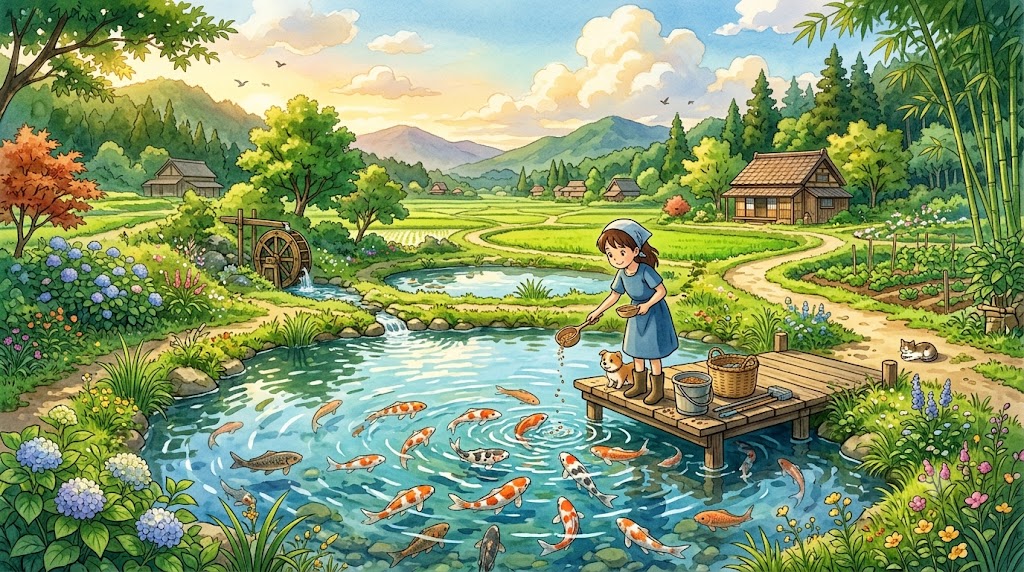
Fish farming has become an important agricultural business because it provides nutritious food, creates employment, and offers farmers an additional source of income. With proper planning and pond management, fish can be raised successfully on both small and large farms.
However, profitable fish farming involves more than simply filling a pond with water and releasing fish into it. Farmers must select the right fish species, prepare the pond correctly, maintain water quality, provide balanced feed, control diseases, and harvest fish at the right time.
A well-managed pond can produce healthy fish while using land and water efficiently. This practical guide explains the essential steps needed to establish and manage a successful fish farming operation.
What Is Fish Farming?
Fish farming, also known as aquaculture, is the controlled raising of fish for food, sale, breeding, or recreational purposes. Fish may be grown in earthen ponds, concrete tanks, cages, raceways, or modern recirculating systems.
Pond-based farming is one of the most common methods because it can be established using locally available land, water, feed, and labour. Farmers can raise a single species or combine several compatible species in the same pond.
Successful fish farming depends on four main factors:
- Suitable pond conditions
- Healthy fish seed
- Proper feeding
- Regular monitoring
When these factors are managed carefully, fish can grow faster, survive in higher numbers, and provide better financial returns.
1. Select a Suitable Location
The first step is choosing land that is suitable for building and maintaining a fish pond. The site should have dependable access to clean water throughout the production period.
Low-lying land may be suitable, but areas that are highly vulnerable to flooding should be avoided. Floodwater can introduce predators, pollutants, unwanted fish, and disease-causing organisms. It may also allow farmed fish to escape.
The soil should contain enough clay to hold water. Very sandy or gravelly soil may allow excessive leakage. A simple soil test or advice from a local aquaculture specialist can help determine whether the site is suitable.
The farm should also have road access, electricity if required, security, labour availability, and reasonable distance from the target market.
2. Choose the Right Pond Type
Fish ponds can be constructed in different ways depending on the land, available budget, fish species, and farming goals.
Earthen ponds
Earthen ponds are commonly used for commercial fish farming. They can support natural fish food such as plankton and may be less expensive to construct where suitable soil is available.
Concrete ponds
Concrete ponds are easier to clean and manage, but their construction cost is usually higher. They are useful in areas with limited land or unsuitable soil.
Lined ponds
Plastic or synthetic liners can be used where the soil does not hold water properly. The liner reduces seepage but must be protected from sharp objects and direct damage.
Regardless of pond type, every pond should have a reliable inlet, outlet, drainage point, and overflow structure.
3. Prepare the Pond Correctly
Proper pond preparation creates a healthy environment before fish are introduced.
Old ponds should be drained and cleared of excessive mud, weeds, unwanted fish, and predators. Cracks, leakage points, damaged banks, inlet pipes, and drainage structures should be repaired.
Liming may be recommended where the soil or water is too acidic. Agricultural lime can help improve pH and support biological activity. The correct amount should be based on soil and water testing rather than guesswork.
Organic or inorganic fertilisers may sometimes be applied to encourage plankton growth. Plankton provides natural food for certain fish species. However, excessive fertilisation can reduce oxygen levels and damage water quality.
After preparation, the pond should be filled gradually with clean water. Screens should be placed over the inlet and outlet to prevent fish from escaping and unwanted animals from entering.
4. Select Suitable Fish Species
Fish species should be selected according to climate, water temperature, market demand, feed availability, growth rate, and local regulations.
Commonly farmed species include:
- Tilapia
- Catfish
- Carp
- Trout
- Rohu
- Mrigal
- Silver carp
- Grass carp
Tilapia and catfish are popular because they can adapt to various farming conditions. Carp species are often raised together in polyculture systems because they feed in different areas of the pond.
Before selecting a species, farmers should study local demand. Producing a fish that grows well but has limited market demand can reduce profitability.
5. Purchase Healthy Fingerlings
Fingerlings are young fish that are stocked in ponds for grow-out production. They should be purchased from a reliable hatchery or certified supplier.
Healthy fingerlings are active, evenly sized, properly shaped, and free from wounds or unusual spots. Weak or infected fingerlings may grow slowly and introduce diseases into the pond.
Transport should be completed carefully to reduce stress. Before releasing the fish, the water temperature inside the transport container should be gradually adjusted to match the pond temperature.
Sudden temperature changes can shock or kill young fish.
6. Use the Correct Stocking Density
Stocking density refers to the number of fish placed in a given pond area or water volume. Overstocking is one of the most common fish farming mistakes.
When too many fish are stocked, competition for oxygen, space, and feed increases. This can lead to poor growth, disease outbreaks, and high mortality.
Very low stocking density may underuse the pond and reduce total production.
The correct density depends on the fish species, pond size, water exchange, aeration, feeding system, and management level. Farmers should follow local expert recommendations instead of using a single density for every pond.
7. Provide Balanced Feed
Feed is often the largest operating expense in fish farming. It also has a major influence on fish growth, health, and harvest size.
Fish should receive feed that contains suitable levels of protein, energy, vitamins, minerals, and essential fats. The nutritional requirement changes according to species, age, and production stage.
Young fish usually require feed with a higher protein content than mature fish.
Feed should be provided at regular times and distributed across several areas of the pond. This allows more fish to access it. Floating feed can help farmers observe feeding behaviour and estimate whether the quantity is appropriate.
Overfeeding wastes money and pollutes the water. Uneaten feed decomposes and consumes oxygen. Underfeeding slows growth and may encourage aggressive behaviour in some species.
8. Maintain Good Water Quality
Water quality is one of the most important parts of pond management. Fish live, eat, breathe, and release waste in the same water.
Important water-quality factors include:
- Dissolved oxygen
- Temperature
- pH level
- Ammonia
- Water clarity
- Salinity, where relevant
Low oxygen can cause fish to gather near the surface, move toward water inlets, stop feeding, or die suddenly. Oxygen problems often occur early in the morning, after heavy feeding, during cloudy weather, or when excessive organic matter is present.
Aerators, pumps, fountains, or fresh water exchange may be used to increase oxygen. Farmers should keep backup equipment available where the risk of oxygen failure is high.
Water should be observed every day and tested regularly.
9. Control Predators and Diseases
Birds, snakes, frogs, wild fish, and certain mammals may attack farmed fish or compete for feed. Nets, fencing, pond-bank maintenance, and inlet screens can reduce predator problems.
Disease prevention is usually more effective than treatment. Farmers should:
- Stock healthy fingerlings
- Avoid overcrowding
- Maintain clean water
- Use good-quality feed
- Remove dead fish quickly
- Disinfect equipment when necessary
- Quarantine new fish where possible
- Keep visitors and animals away from production ponds
Common warning signs include unusual swimming, loss of appetite, skin sores, swollen body parts, discolouration, and sudden deaths.
Medicines should not be used without proper diagnosis. Incorrect treatment can waste money, create residues, and worsen the problem.
10. Keep Farm Records
Accurate records help farmers understand whether the farm is performing profitably.
Useful records include:
- Number of fish stocked
- Fingerling purchase cost
- Daily feed quantity
- Fish mortality
- Water-quality readings
- Labour expenses
- Medicine and electricity costs
- Sample fish weights
- Harvest quantity
- Selling price
Fish should be sampled periodically to measure growth. This information helps farmers adjust feeding rates and estimate the likely harvest date.
Without records, it becomes difficult to identify problems or calculate actual profit.
Harvesting and Marketing Fish
Fish should be harvested when they reach the size preferred by local buyers. Harvesting too early may reduce potential income, while keeping fish for too long increases feed and management costs.
Partial harvesting allows larger fish to be removed while smaller fish continue growing. Complete harvesting is usually carried out by draining the pond or using suitable nets.
Fish should be handled carefully to prevent damage. They must be cleaned, chilled, stored, and transported hygienically.
Farmers should identify buyers before harvest. Potential customers may include wholesalers, restaurants, hotels, local markets, retailers, processors, and direct consumers.
Selling directly may provide higher prices, but it also requires more time, transport, storage, and customer management.
Common Fish Farming Mistakes
Several avoidable mistakes can reduce production and profitability:
- Stocking unhealthy fingerlings
- Overstocking the pond
- Using poor-quality feed
- Ignoring water quality
- Overfeeding fish
- Mixing incompatible species
- Failing to prevent predators
- Starting without a market plan
- Using medicines without diagnosis
- Keeping incomplete records
Beginning with a manageable pond size allows farmers to gain practical experience before expanding.
Conclusion
Fish farming can become a profitable and sustainable agricultural activity when it is supported by proper planning and careful pond management. Selecting a suitable site, preparing the pond, stocking healthy fish, maintaining water quality, using balanced feed, and preventing diseases are essential for success.
Farmers should monitor their ponds daily and respond quickly when fish behaviour or water conditions change. Small improvements in feeding, oxygen management, record keeping, and marketing can significantly improve overall returns.
The most successful fish farms are not always the largest. They are usually the farms where resources are managed carefully, problems are detected early, and production decisions are based on accurate information.
Frequently Asked Questions
1. Which fish is best for beginner farmers?
Tilapia, catfish, and certain carp species are commonly selected by beginners because they can adapt to different production systems. The best choice depends on local climate and market demand.
2. How often should fish be fed?
Fish may be fed once or several times daily depending on species, size, water temperature, and farming method. Feeding should be adjusted according to fish behaviour and growth.
3. Why do fish come to the pond surface?
Fish may gather at the surface because of low dissolved oxygen, poor water quality, high temperature, disease, or sudden environmental changes.
4. How can farmers prevent pond water from becoming polluted?
Avoid overfeeding, remove dead fish, control fertiliser use, monitor stocking density, and maintain proper drainage and aeration.
5. Is fish farming profitable on a small scale?
Yes, small-scale fish farming can be profitable when farmers control feed costs, maintain healthy fish, reduce mortality, and secure a reliable market before harvesting.