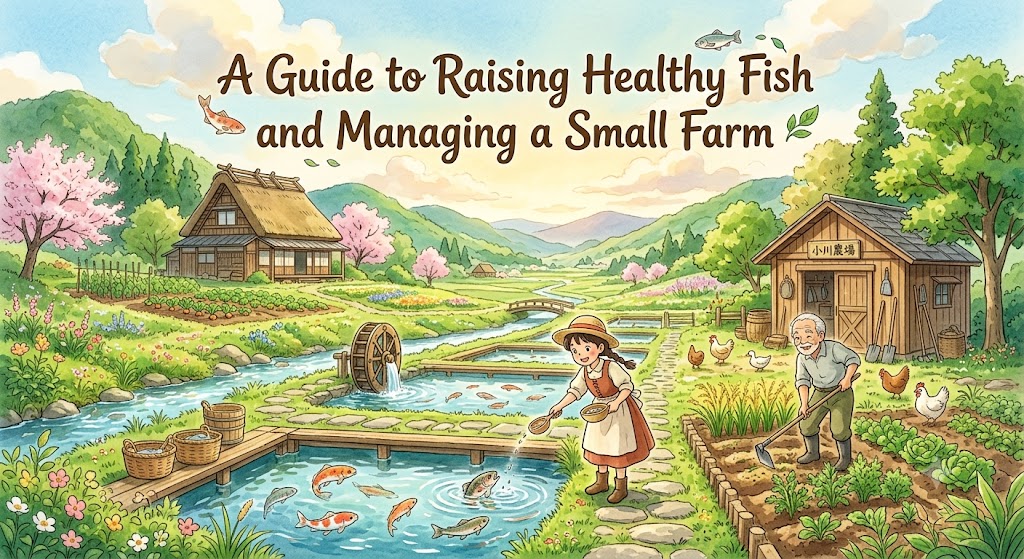
Fish farming can be an interesting addition to a small farm, especially when land and water resources can be managed carefully. A well-planned fish operation can produce food for the household or create an additional farm enterprise, but successful fish farming requires more than simply putting fish into a pond.
Fish depend heavily on their surrounding water. Temperature, oxygen, water quality, stocking density, feed, shelter, and disease management all influence their growth and survival. Even a small pond therefore needs regular observation and sensible management.
For beginners, the best approach is to start with a manageable system, learn how the fish respond to local conditions, and expand only after the basic routine is working consistently.
Understanding the Basics of Fish Farming
Fish farming, also called aquaculture, involves raising fish under managed conditions.
A small operation might use:
- An earthen pond
- A lined pond
- A tank system
- A recirculating aquaculture system
- A suitable existing water body where regulations allow it
The system you choose should match your budget, available water, climate, land, electricity supply, labor, and the type of fish you intend to raise.
For beginners, a simple pond or tank system may be easier to understand than a highly technical commercial setup.
Choose the Fish Before Building the Farm
Fish species have different requirements.
Commonly farmed species around the world include:
- Tilapia
- Carp
- Catfish
- Trout
- Bass
- Perch
The best choice depends heavily on local climate and regulations.
Warm-water species such as tilapia generally require warmer conditions than cold-water species such as trout. Some fish also have specific requirements for oxygen, water quality, feed, and stocking density.
Before purchasing fingerlings, check whether the species is permitted in your area and whether it is appropriate for local environmental conditions.
Avoid choosing a species simply because it grows quickly. A fish that does not match your water temperature or farm infrastructure can create serious management problems.
Select the Right Location
Location can determine how easy a small fish farm is to manage.
A suitable site should provide reliable access to water while also allowing good drainage and convenient daily access.
Consider:
- Water availability
- Flooding risk
- Soil type
- Sun exposure
- Drainage
- Electricity availability
- Road access
- Distance from markets
- Security
- Space for equipment and feed storage
For a pond system, soil that can retain water may be particularly useful. Very sandy or highly permeable soils may require additional construction measures.
Avoid locations where polluted runoff from roads, industrial areas, sewage systems, or heavily contaminated land could enter the fish-growing area.
Design the Pond or Tank Carefully
A fish-growing system should make routine management possible.
For a pond, consider:
- Appropriate depth
- Stable banks
- Reliable water inflow
- Controlled drainage
- Safe access
- Protection from excessive runoff
- An emergency overflow route
The exact dimensions should depend on the fish species, production goal, local climate, and available water.
A pond that is difficult to drain can make harvesting and maintenance much harder.
For tank systems, adequate filtration, aeration, drainage, and water circulation become especially important.
Water Quality Is the Foundation
Fish live in their water, so water quality is one of the most important parts of fish farming.
Important factors include:
- Temperature
- Dissolved oxygen
- pH
- Ammonia
- Nitrite
- Water clarity
- Alkalinity in some systems
- Accumulation of organic material
The ideal values vary between fish species.
For this reason, beginners should learn the basic water-quality requirements of their chosen fish before stocking.
Regular testing is much safer than trying to judge water quality only by appearance.
Oxygen Matters More Than Many Beginners Expect
Fish need dissolved oxygen in the water.
Oxygen levels can become particularly important during:
- Hot weather
- Overcast periods following heavy algal growth
- High stocking densities
- Excessive organic decomposition
- Equipment failures
Aeration systems can help maintain oxygen levels in suitable pond and tank systems.
A sudden change in fish behavior can be an early warning sign.
Fish gathering near the surface, particularly during the early morning, may indicate that oxygen levels need attention.
Do not wait for large numbers of fish to become stressed before investigating the cause.
Stock Fish Gradually
Stocking density should be based on the production system’s actual capacity.
More fish do not automatically mean more profit.
As stocking density increases, the system generally requires stronger management of:
- Oxygen
- Water quality
- Feeding
- Waste
- Disease
- Filtration or aeration
A small farm should generally avoid starting with an aggressive stocking density simply to maximize production.
A lower initial stocking level can provide an opportunity to learn how the system behaves before increasing production.
Purchase Healthy Fingerlings
The quality of young fish has a major influence on future results.
When purchasing fingerlings, use a reputable supplier and ask about:
- Species
- Age or size
- Source
- Health status
- Transport conditions
- Feeding history
- Any relevant disease screening
Healthy fish should generally appear active and respond normally to movement or feeding.
Avoid stocking fish that appear weak, severely injured, or unusually inactive.
Transport should also be handled carefully because temperature and oxygen changes can stress young fish.
Acclimate Fish Before Release
Moving fish from one water environment to another can create stress.
Instead of immediately dumping transported fish into a pond or tank, allow them to gradually adjust to the new conditions according to appropriate aquaculture handling practices.
Sudden differences in temperature or water chemistry can be harmful.
The exact acclimation method depends on the transport system and species, so follow guidance from the hatchery or aquaculture professional supplying the fish.
Feed According to Fish Needs
Feed is often one of the largest operating costs in fish farming.
Good feed management is therefore important for both fish health and farm economics.
Feed should match:
- Fish species
- Fish size
- Growth stage
- Water temperature
- Production system
Young fish may require smaller particles and more frequent feeding than larger fish.
Avoid feeding simply because fish appear eager to eat. Overfeeding can leave uneaten feed in the water, increasing organic waste and potentially damaging water quality.
A practical routine is to observe how quickly fish consume the feed and adjust quantities according to their actual needs.
Don’t Ignore Natural Food
Some pond systems support natural food organisms that fish can consume.
Plankton and other natural food sources may contribute to fish nutrition in certain systems.
However, natural productivity should not be treated as a substitute for proper management.
The contribution of natural food depends on the fish species, pond conditions, water chemistry, and overall production system.
Watch the Water After Feeding
Feeding and water quality are closely connected.
Uneaten feed decomposes and adds organic material to the system. Excessive organic material can contribute to oxygen problems and undesirable water-quality changes.
After feeding, observe:
- Whether fish eat actively
- Whether large amounts of feed remain
- Whether fish behave normally
- Whether the water changes significantly
Small adjustments to feeding practices can prevent larger problems later.
Monitor Fish Health Every Day
Daily observation is one of the simplest management tools available to a small fish farmer.
Look for:
- Normal swimming
- Normal feeding
- Healthy body appearance
- Unusual surface activity
- Injuries
- Changes in growth
- Unexpected deaths
A small notebook or spreadsheet can be used to record observations.
If something changes suddenly, investigate rather than assuming it will correct itself.
Common Signs of Trouble
Changes in fish behavior can have many possible causes.
Fish staying near the surface
Possible causes can include low dissolved oxygen, poor water quality, temperature stress, or other environmental problems.
Reduced feeding
Fish may eat less because of temperature changes, water-quality problems, disease, handling stress, or unsuitable feed.
Sudden deaths
Unexpected mortality should be treated seriously. Possible causes include oxygen depletion, toxic water conditions, disease, contamination, or extreme environmental changes.
Slow growth
Slow growth can result from inadequate nutrition, excessive stocking density, unsuitable temperatures, poor water quality, or other management issues.
Because symptoms can have multiple causes, guessing at a treatment can make the situation worse. Water testing and professional aquaculture advice are useful when problems are persistent or severe.
Manage Fish Diseases Carefully
Disease prevention is generally easier than dealing with a major outbreak.
Important preventive practices include:
- Buying healthy stock
- Avoiding excessive stocking
- Maintaining good water quality
- Removing dead fish promptly
- Keeping equipment clean
- Limiting unnecessary movement between systems
- Monitoring new fish carefully
Do not use medicines, antibiotics, chemicals, or other treatments without understanding the product, species, dosage, legal requirements, and food-safety implications.
For fish intended for human consumption, withdrawal periods and local regulations are particularly important.
Keep the Pond or Tank Clean
Clean does not mean completely sterile.
A healthy pond is a living ecosystem, but excessive accumulation of waste can create problems.
Depending on the system, maintenance may involve:
- Removing excessive debris
- Controlling unwanted vegetation
- Checking screens and drains
- Cleaning filters
- Inspecting aerators
- Managing sludge
- Checking pond banks
Avoid making drastic changes to a pond without understanding how they will affect water chemistry and fish.
Protect Fish From Predators
Small fish can attract predators.
Depending on the location, possible threats can include:
- Birds
- Snakes
- Mammals
- Other predatory fish
Physical barriers, netting, pond design, and habitat management may help reduce losses.
Predator control should be carried out responsibly and according to local wildlife regulations.
Keep Good Farm Records
Records are especially useful when managing a small commercial operation.
Track:
Stocking
- Number of fish
- Species
- Average size
- Date stocked
Feed
- Type
- Quantity
- Cost
- Feeding frequency
Water
- Temperature
- pH
- Oxygen
- Other relevant measurements
Health
- Mortality
- Unusual behavior
- Treatments or professional advice
Production
- Growth
- Harvest weight
- Selling price
- Total revenue
Over time, these records show whether the operation is actually improving.
Plan the Harvest Before the Fish Are Ready
Harvesting should be considered when designing the farm.
Ask:
- What size will the fish be sold at?
- Who will buy them?
- How will they be caught?
- Where will they be temporarily held?
- How will they be transported?
- What food-safety requirements apply?
A farmer may successfully raise healthy fish but still face problems if there is no reliable market or appropriate harvesting and handling system.
Start Small and Learn the System
For beginners, a small trial can be more useful than immediately building a large farm.
A simple progression might be:
Stage 1: Learn the biology and water requirements.
Stage 2: Set up a small growing system.
Stage 3: Stock a manageable number of fish.
Stage 4: Monitor water and feeding regularly.
Stage 5: Record growth and operating costs.
Stage 6: Complete the first harvest and evaluate the results.
Stage 7: Expand only if the system is practical and financially sustainable.
This approach limits the consequences of early mistakes and gives the farmer real experience.
Fish Farming in the USA and UK
Fish farming conditions vary significantly across the USA and UK.
In the United States, temperature, water availability, regulations, and suitable species can differ greatly from state to state. Warm-water pond farming may be appropriate in some regions, while cold-water systems are more suitable elsewhere.
In the UK, cooler temperatures influence which species and production systems are practical. Indoor systems, tanks, and recirculating aquaculture can provide greater environmental control but may require higher investment and technical knowledge.
Anyone planning a commercial operation should check local rules concerning water abstraction, fish movement, stocking, wastewater, construction, animal health, environmental protection, and food sales.
Local aquaculture extension services and fisheries authorities can provide information specific to the region.
A Simple Daily Routine
A small fish farm does not necessarily require complicated daily procedures.
A basic routine might include:
Morning
- Check fish behavior
- Inspect aeration
- Check water conditions
- Remove dead fish if present
Feeding period
- Provide the appropriate amount of feed
- Observe feeding behavior
- Avoid unnecessary overfeeding
Afternoon
- Inspect equipment
- Check pond or tank condition
- Look for unusual water changes
Weekly
- Review records
- Check equipment thoroughly
- Review growth and feed use
- Inspect banks, pipes, screens, and drainage
The exact routine should be adjusted to the species and production system.
Final Thoughts
Successful small-scale fish farming starts with good planning rather than simply adding fish to a pond.
Choose a species suited to the local environment, build an appropriate growing system, maintain good water quality, provide suitable feed, monitor fish behavior, and keep accurate records.
Water quality and oxygen deserve particular attention because problems can develop quickly in intensive systems. At the same time, careful stocking and feeding can help prevent unnecessary stress and operating costs.
For beginners, starting small is often the most practical way to learn. Once the first production cycle has been completed and the results have been evaluated, the system can be improved and expanded gradually.
A well-managed fish farm is ultimately a balance between biology, daily care, water management, economics, and careful observation. When these elements work together, even a small operation can become an organized and productive part of a diversified farm.