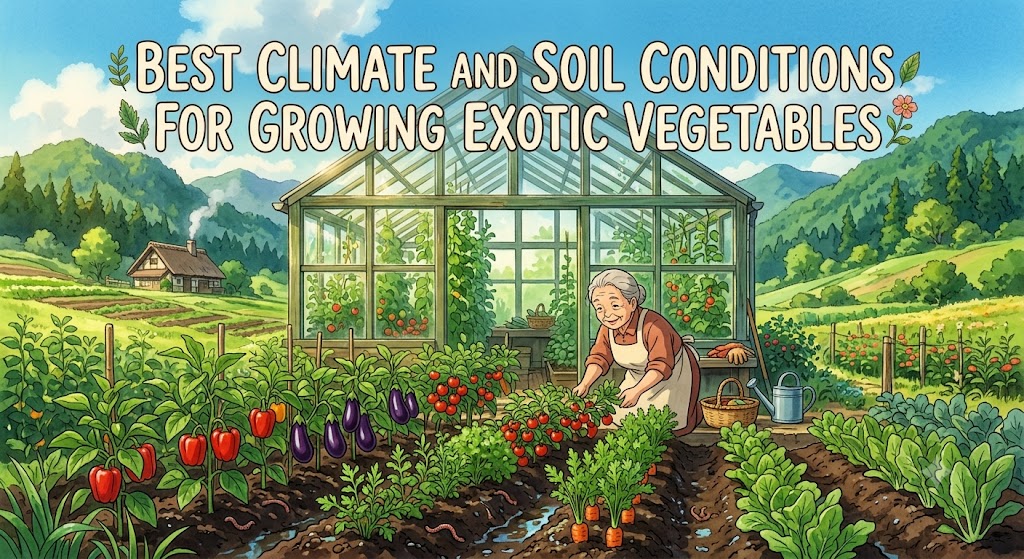
Exotic vegetables have become one of the fastest-growing segments in modern agriculture. As consumers seek healthier diets and restaurants expand their menus with international cuisines, the demand for premium vegetables such as broccoli, kale, zucchini, asparagus, lettuce, bok choy, colored bell peppers, and artichokes continues to rise. While these crops can offer higher profits than many traditional vegetables, their success depends largely on two essential factors: climate and soil conditions.
Many farmers focus on selecting high-quality seeds but overlook whether their land and local weather are suitable for the chosen crop. Even the best seeds cannot produce healthy plants if they are grown under unfavorable environmental conditions. Understanding the ideal climate, soil type, drainage, temperature, and moisture requirements allows farmers to maximize yields while minimizing production risks.
This guide explains the best climate and soil conditions for growing exotic vegetables successfully and provides practical tips that can help both beginners and experienced farmers achieve consistent, high-quality harvests.
Why Climate and Soil Matter
Every vegetable has unique environmental requirements. Some thrive in cool weather, while others need warm temperatures and abundant sunlight. Similarly, different crops prefer different soil textures, nutrient levels, and moisture conditions.
When climate and soil match a crop’s natural requirements, farmers benefit from:
- Better seed germination
- Strong root development
- Faster plant growth
- Higher yields
- Improved vegetable quality
- Better disease resistance
- Longer harvesting periods
- Higher market prices
Proper site selection is often the first step toward profitable exotic vegetable farming.
Understanding Climate Requirements
Climate includes several environmental factors that directly influence crop growth.
Important factors include:
- Temperature
- Rainfall
- Humidity
- Sunlight
- Wind
- Seasonal changes
Understanding these conditions helps farmers select crops that naturally perform well in their region.
Ideal Temperature for Exotic Vegetables
Temperature has one of the greatest impacts on vegetable production.
Cool-Season Vegetables
These crops perform best between 10°C and 22°C.
Examples include:
- Broccoli
- Kale
- Lettuce
- Bok Choy
- Spinach
- Brussels Sprouts
- Celery
- Red Cabbage
Cool weather improves leaf quality, color, and overall flavor.
Warm-Season Vegetables
These vegetables prefer temperatures between 20°C and 30°C.
Popular examples include:
- Colored Bell Peppers
- Zucchini
- Cucumbers
- Baby Corn
- Eggplant
- Okra
Warm conditions encourage faster flowering and fruit development.
Importance of Sunlight
Most exotic vegetables require 6 to 8 hours of direct sunlight each day.
Sunlight supports:
- Photosynthesis
- Strong stems
- Healthy leaves
- Better flowering
- Improved fruit quality
Vegetables grown under excessive shade often produce weak plants and lower yields.
If natural sunlight is limited, greenhouse growers may use supplemental lighting to maintain healthy growth.
Rainfall and Water Requirements
Water availability is essential for producing high-quality vegetables.
Although water needs vary by crop, most exotic vegetables perform best with consistent soil moisture.
Too little water may result in:
- Poor germination
- Slow growth
- Smaller vegetables
- Flower drop
- Reduced yields
Too much water can cause:
- Root rot
- Fungal diseases
- Nutrient loss
- Poor root development
Drip irrigation is one of the most efficient methods for maintaining optimal soil moisture while conserving water.
Managing Humidity
Humidity influences both plant growth and disease development.
Moderate humidity generally benefits leafy vegetables, but excessive humidity can increase the risk of fungal infections such as powdery mildew and downy mildew.
To reduce disease pressure:
- Maintain proper plant spacing
- Improve air circulation
- Avoid overhead irrigation late in the day
- Remove infected leaves promptly
Balanced humidity supports healthy crop development without encouraging disease outbreaks.
Wind Protection
Strong winds can damage delicate vegetable plants, reduce pollination, and increase moisture loss.
Farmers can minimize wind damage by:
- Planting windbreak trees
- Installing protective fencing
- Using greenhouse structures
- Growing taller crops as natural barriers
Reducing wind stress helps plants conserve energy for growth and fruit production.
Best Soil Type for Exotic Vegetables
Healthy soil provides plants with water, oxygen, nutrients, and physical support.
The ideal soil should be:
- Fertile
- Well-drained
- Rich in organic matter
- Loose and friable
- Easy for roots to penetrate
Loamy soil is considered the best choice because it balances sand, silt, and clay while providing excellent drainage and nutrient retention.
Soil Texture
Different soil textures affect plant growth differently.
Sandy Soil
Advantages:
- Excellent drainage
- Faster warming in spring
- Easy root penetration
Disadvantages:
- Poor nutrient retention
- Frequent irrigation required
Clay Soil
Advantages:
- High nutrient-holding capacity
- Better moisture retention
Disadvantages:
- Poor drainage
- Compacted structure
- Difficult root growth
Loamy Soil
Advantages:
- Balanced moisture retention
- Good drainage
- Rich fertility
- Strong root development
Loamy soil is ideal for nearly all exotic vegetable crops.
Soil pH Requirements
Soil pH affects nutrient availability.
Most exotic vegetables prefer a pH between 6.0 and 7.0.
When soil becomes too acidic or too alkaline, plants struggle to absorb essential nutrients even if fertilizers are applied.
Regular soil testing helps farmers identify pH problems before planting.
If needed:
- Agricultural lime can raise soil pH.
- Sulfur can help lower soil pH.
Always make adjustments based on soil test recommendations.
Importance of Organic Matter
Organic matter improves both soil fertility and structure.
Good sources include:
- Compost
- Farmyard manure
- Vermicompost
- Leaf mold
- Green manure
Benefits of organic matter include:
- Better water retention
- Increased microbial activity
- Improved nutrient availability
- Enhanced root growth
- Reduced soil compaction
Adding organic matter before each planting season creates healthier growing conditions.
Essential Soil Nutrients
Exotic vegetables require balanced nutrition throughout their growth cycle.
Nitrogen (N)
Supports vigorous leaf and stem growth.
Phosphorus (P)
Encourages strong roots and early plant establishment.
Potassium (K)
Improves fruit quality, disease resistance, and stress tolerance.
Secondary nutrients such as calcium, magnesium, and sulfur, along with trace elements like zinc, boron, and iron, are also important for healthy crop development.
Regular soil testing helps determine the correct fertilizer program.
Soil Drainage
Proper drainage prevents waterlogging and root diseases.
Poor drainage can lead to:
- Root rot
- Oxygen deficiency
- Stunted growth
- Lower yields
Farmers can improve drainage by:
- Creating raised beds
- Installing drainage channels
- Incorporating organic matter
- Avoiding over-irrigation
Healthy roots require both moisture and oxygen.
Preparing Soil Before Planting
Good land preparation lays the foundation for a productive crop.
Recommended steps include:
- Remove weeds and plant residues.
- Loosen the soil through plowing or tilling.
- Add compost or well-rotted manure.
- Conduct a soil test.
- Correct pH if necessary.
- Form raised beds where drainage is poor.
- Install irrigation before planting.
Well-prepared soil supports faster establishment and stronger early growth.
Matching Crops to Climate
Selecting vegetables suited to your local environment greatly increases the chances of success.
Cool Climate Crops
- Broccoli
- Kale
- Lettuce
- Spinach
- Bok Choy
- Brussels Sprouts
- Celery
Warm Climate Crops
- Bell Peppers
- Zucchini
- Baby Corn
- Cucumbers
- Eggplant
- Okra
Growing crops outside their preferred climate often results in lower yields and poorer quality.
Using Protected Cultivation
In regions with unsuitable weather, protected cultivation offers an excellent solution.
Options include:
- Polyhouses
- Greenhouses
- Shade nets
- Low tunnels
Benefits include:
- Better temperature control
- Reduced pest pressure
- Protection from heavy rain
- Extended growing seasons
- Improved vegetable quality
Although initial investment is higher, protected cultivation often delivers better returns through premium-quality produce.
Common Mistakes to Avoid
Many new growers face avoidable problems that reduce crop performance.
Common mistakes include:
- Ignoring soil testing
- Planting unsuitable crops for the local climate
- Overwatering or underwatering
- Using poor-quality compost
- Neglecting drainage
- Applying excessive fertilizer
- Growing in compacted soil
- Failing to rotate crops
Addressing these issues early helps maintain healthy plants and consistent production.
Conclusion
The success of exotic vegetable farming begins with understanding the relationship between climate and soil. Choosing crops that match local weather conditions, maintaining fertile and well-drained soil, ensuring balanced nutrition, and providing adequate sunlight and water create the ideal environment for healthy plant growth. Whether cultivating leafy greens like kale and lettuce or fruiting vegetables such as colored bell peppers and zucchini, proper site selection and soil preparation are essential for achieving high yields and premium-quality produce.
By investing time in soil testing, improving organic matter, managing irrigation wisely, and selecting climate-appropriate crops, farmers can reduce production risks while maximizing profitability. Strong foundations in climate and soil management not only improve current harvests but also support long-term sustainability and success in exotic vegetable farming.
Frequently Asked Questions (FAQs)
1. Which soil is best for growing exotic vegetables?
Loamy soil rich in organic matter with good drainage and a pH between 6.0 and 7.0 is generally the best choice for most exotic vegetables.
2. Can exotic vegetables be grown in hot climates?
Yes. Warm-season vegetables such as zucchini, colored bell peppers, baby corn, cucumbers, and eggplant grow well in hot climates when provided with adequate irrigation and care.
3. Why is soil testing important before planting?
Soil testing identifies nutrient levels, pH, and potential deficiencies, allowing farmers to make informed decisions about fertilizers and soil amendments.
4. How much sunlight do exotic vegetables need?
Most exotic vegetables require at least 6–8 hours of direct sunlight each day for healthy growth and good yields.
5. Is drip irrigation suitable for exotic vegetable farming?
Yes. Drip irrigation provides consistent moisture directly to the root zone, conserves water, reduces disease risk, and improves fertilizer efficiency, making it an excellent choice for exotic vegetable cultivation.