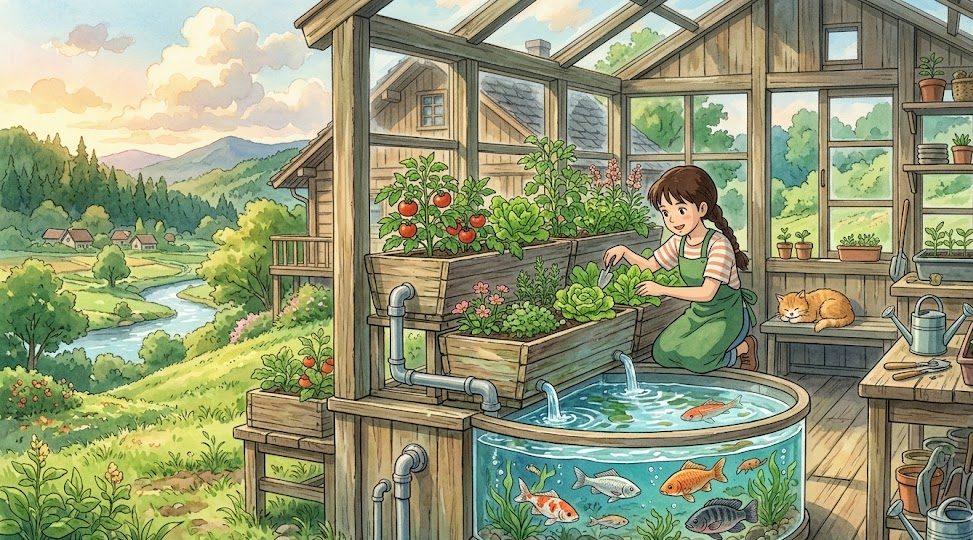
In the world of sustainable agriculture, few innovations are as elegant—or as efficient—as aquaponics. At its simplest, aquaponics is the marriage of aquaculture (raising fish) and hydroponics (growing plants in water) in a single, symbiotic system. It is a closed-loop environment that mimics the natural nutrient cycles found in rivers and lakes, but optimized for your backyard, garage, or greenhouse.
For the modern small-scale farmer, aquaponics represents a massive leap forward. It uses up to 90% less water than traditional soil-based gardening, requires no fertilizers, and eliminates the back-breaking labor of weeding and tilling.
The Science Behind the Symbiosis
The magic of aquaponics lies in the nitrogen cycle. In a traditional garden, you add fertilizer to the soil to provide nutrients for your plants. In aquaponics, the fish do the work for you.
- The Fish: You feed the fish, and they produce waste. This waste is rich in ammonia.
- The Bacteria: Naturally occurring beneficial bacteria (Nitrosomonas and Nitrobacter) colonize the system. They break down the ammonia into nitrites, and then into nitrates.
- The Plants: Plants thrive on these nitrates. They absorb the nutrient-rich water through their roots, effectively “cleaning” the water in the process.
- The Cycle: The now-purified water flows back into the fish tank, ready to begin the cycle again.
It is a perfect loop where the fish provide food for the plants, and the plants provide a clean environment for the fish.
Why Aquaponics is a Game-Changer for Small Farmers
If you are looking to diversify your farm or maximize production in a limited space, aquaponics offers distinct advantages:
1. Unmatched Water Efficiency
In areas where water is scarce or expensive, traditional irrigation is a major cost. Because an aquaponic system is a closed loop, the only water lost is through transpiration from the plants and very minor evaporation. This makes it one of the most drought-resistant farming methods in existence.
2. Doubling Your Revenue
You aren’t just farming one crop; you are farming two. A well-managed aquaponic system produces a steady supply of high-quality protein (fish like Tilapia, Catfish, or Trout) alongside premium greens, herbs, or vegetables. This “stacked” production maximizes your profit per square foot.
3. No Synthetic Chemicals
Because the fish are sensitive to chemicals, you simply cannot use synthetic pesticides or herbicides in an aquaponic system. Everything is grown organically by default. This allows you to market your produce and fish as premium, pesticide-free goods, which often command higher prices at local markets.
Getting Started: Components of a Basic System
You don’t need a massive investment to build your first system. A basic setup consists of four main parts:
- The Fish Tank: This is the heart of the system. It needs to be made of food-grade materials that won’t leach chemicals into the water.
- The Grow Bed: This is where your plants live. It is typically filled with an inert medium like expanded clay pebbles or gravel, which supports the plant roots and provides surface area for the beneficial bacteria to grow.
- A Pump: A simple submersible pump moves the water from the fish tank to the grow bed and back.
- Plumbing: Simple PVC or flexible tubing connects the components, often utilizing a “bell siphon” to create a flood-and-drain cycle that ensures the plant roots get both water and oxygen.
Crops and Fish: Choosing the Right Combination
The “secret sauce” to success is matching your fish species to your climate and choosing plants that thrive in nutrient-rich water.
- Recommended Fish: Tilapia are the gold standard for beginners because they are incredibly hardy, grow quickly, and handle temperature fluctuations well. For colder climates, Trout or Koi are popular alternatives.
- Recommended Plants: Leafy greens are the easiest starting point. Lettuce, kale, spinach, and Swiss chard grow exceptionally well in aquaponic systems. Once you have mastered the cycle, you can branch out to fruiting crops like tomatoes, cucumbers, and peppers, though these require more nutrients and may require “supplementing” if your fish density is low.
The Reality Check: Challenges to Overcome
While aquaponics is rewarding, it is not “set it and forget it.”
- The Learning Curve: You are essentially an amateur water chemist. You must monitor pH levels, ammonia, and nitrate levels regularly. If the water chemistry drifts, your fish and plants will suffer.
- Power Dependency: The system relies on a pump to keep the water moving. If the power goes out, your fish can quickly run out of oxygen. A battery backup or a solar-powered pump is a non-negotiable investment for a serious farmer.
- Initial Setup: Building the frame, plumbing, and getting the biological cycle “cycled” (getting the bacteria established) takes time and patience.
The Path to Profitability
To turn aquaponics from a hobby into a revenue stream, think locally.
Local Restaurants: Chefs love consistent, year-round access to fresh, pesticide-free herbs and greens. An aquaponic system allows you to harvest on demand, 365 days a year, regardless of the season.
Farmers’ Markets: Offering “live” produce—lettuce with the roots still attached—shows customers the freshness of your product, setting you apart from traditional soil-grown vendors.
Educational Tourism: As mentioned earlier, people are hungry for knowledge. Because your system is visually impressive and easy to explain, you can charge for tours or workshops to show others how to set up their own systems.
Final Thoughts
Aquaponics is the future of resilient, hyper-local food production. It requires a shift in mindset—from managing dirt to managing water—but the rewards are significant. You are creating a vibrant, living ecosystem that respects natural resources while producing high-quality food for your community.
Whether you start with a single barrel in your backyard or a full-scale greenhouse operation, the principles remain the same. Start small, monitor your water, and watch your fish and vegetables thrive together.