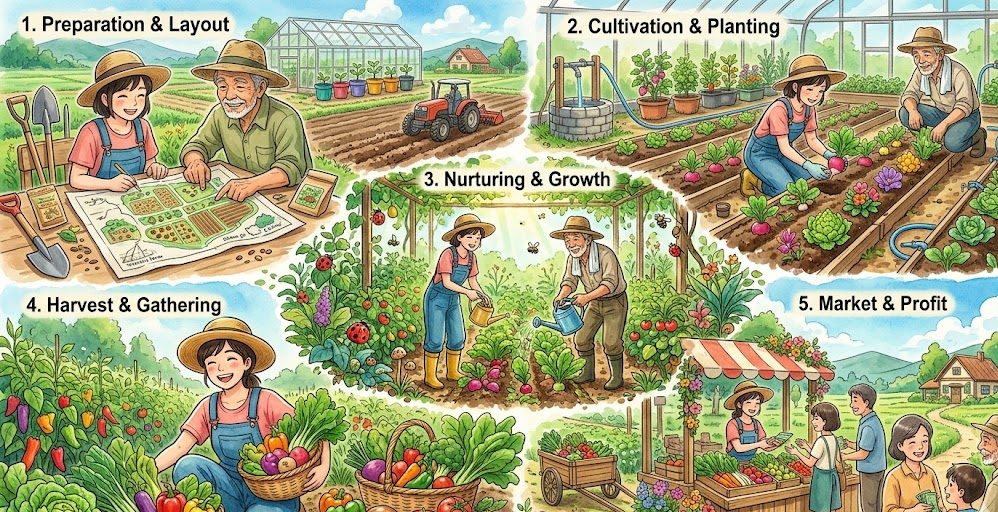
The landscape of agriculture is shifting. While traditional staple crops like wheat, rice, and potatoes remain essential, a new lucrative frontier is opening up for the modern “Agri-preneur”: Exotic Vegetable Farming.
Driven by an increasingly health-conscious population, a booming hospitality industry, and the globalization of food culture, vegetables that were once considered “foreign” are now in high demand. From the vibrant purple of Bell Peppers to the delicate crunch of Pak Choy, exotic vegetables offer significantly higher profit margins than traditional crops.
If you are a beginner looking to turn a small plot of land—or even a greenhouse—into a high-income business, this guide is for you.
1. Why Choose Exotic Vegetables?
Before planting your first seed, it is important to understand the business logic behind this niche. Exotic vegetables are often referred to as “high-value crops” for several reasons:
- Premium Pricing: Because these vegetables are less common, they command a much higher price per kilogram in retail markets and high-end restaurants.
- Growing Demand: The rise of continental, Thai, and Italian cuisines in urban centers has created a year-round demand for fresh, locally grown exotic produce.
- High Density: Many exotic varieties can be grown in smaller spaces using intensive farming techniques or vertical setups, making them perfect for those with limited land.
- Short Harvest Cycles: Many leafy greens and salad vegetables are ready for market within 30 to 45 days, allowing for multiple harvest cycles in a single year.
2. Top Profitable Exotic Vegetables for Beginners
Not all exotic plants are created equal. As a beginner, you want to focus on crops that have a balance of high market demand and manageable growth requirements.
A. Colored Bell Peppers (Capsicum)
Unlike the common green variety, Red and Yellow Bell Peppers are staples in gourmet cooking. They are usually grown in protected structures like polyhouses to maintain their vibrant color and crisp texture.
- Profit Potential: High.
- Market: Supermarkets, pizza chains, and salad bars.
B. Broccoli
Once an outlier, Broccoli is now a mainstream “superfood.” It is relatively hardy and can be grown in cooler climates or during winter months in tropical regions.
- Profit Potential: Moderate to High.
- Market: Health-conscious households and frozen food processors.
C. Zucchini (Courgette)
Available in dark green and bright yellow varieties, Zucchini is a fast-growing summer squash. It is incredibly prolific; a few healthy plants can produce a massive amount of fruit.
- Profit Potential: High (due to high yield).
- Market: Italian restaurants and continental cafes.
D. Cherry Tomatoes
These bite-sized delights come in various colors and shapes. They are easier to package and have a longer shelf life than large, juicy tomatoes, making them a favorite for retail shelves.
- Profit Potential: Very High.
- Market: Premium retail and catering services.
E. Bok Choy and Kale
Leafy greens are the backbone of the “healthy eating” movement. They are perfect for hydroponic setups and have very short growth cycles.
- Profit Potential: High.
- Market: Asian cuisine restaurants and organic food stores.
3. Selecting the Right Farming Method
The “how” is just as important as the “what.” For exotic vegetables, traditional open-field farming can be risky due to pests and weather sensitivity.
Protected Cultivation (Polyhouses/Greenhouses)
Most exotic vegetables thrive in controlled environments. A polyhouse protects plants from extreme heat, heavy rain, and many common pests. This ensures the “A-Grade” visual quality that premium markets demand.
Hydroponics
If you have very little land or want to farm in an urban environment, hydroponics (growing plants in nutrient-rich water without soil) is a game-changer. It allows for 100% control over plant nutrition and can lead to faster growth rates.
4. Market Research: The “Sale First” Strategy
The biggest mistake beginners make is planting a crop and then looking for a buyer. In the world of exotic vegetables, you must work backward.
- Identify Your Buyers: Visit local high-end hotels, restaurants, and premium grocery stores. Ask them what they are currently importing or struggling to find in fresh quality.
- Study the Trends: Look at food delivery apps. Are “Mediterranean Salads” or “Asian Stir-fries” trending in your city? That is your cue for what to grow.
- Check the Competition: See what other local farmers are growing. If everyone is growing Broccoli, perhaps you should focus on Asparagus or Red Cabbage.
5. Smart Crop Management and Quality Control
Exotic vegetables are sold on their appearance and freshness. A bruised Bell Pepper or a wilted bunch of Kale will not fetch a premium price.
- Seed Selection: Only buy “F1 Hybrid” seeds from reputable sources. The quality of your harvest starts with the genetics of the seed.
- Integrated Pest Management (IPM): Use yellow sticky traps, neem oil, and biological controls. Since many of these vegetables are eaten raw in salads, keeping them chemical-free (organic) adds a massive premium to the price.
- Post-Harvest Handling: Invest in basic cold-chain solutions. Pre-cooling your vegetables immediately after harvest can extend their shelf life by several days, giving you more time to negotiate sales.
6. Profitability Estimation Table (Per Acre/Cycle)
| Vegetable | Growth Period | Estimated Yield (Acre) | Market Demand | Difficulty Level |
|---|---|---|---|---|
| Cherry Tomatoes | 60–70 Days | 8,000 – 12,000 kg | Very High | Moderate |
| Colored Peppers | 90–100 Days | 10,000 – 15,000 kg | High | High (Requires Polyhouse) |
| Zucchini | 45–55 Days | 6,000 – 8,000 kg | Moderate | Easy |
| Broccoli | 75–90 Days | 5,000 – 7,000 kg | High | Moderate |
| Pak Choy | 30–40 Days | 4,000 – 5,000 kg | Growing | Easy |
Export to Sheets
7. Overcoming Challenges
Exotic farming is not without its hurdles. Beginners should be prepared for:
- Initial Investment: Setting up greenhouses or hydroponic systems requires upfront capital.
- Technical Knowledge: These plants can be more sensitive to pH levels and specific micronutrient deficiencies.
- Logistics: Because these items are perishable, you need a reliable way to get them to the market quickly.
8. Conclusion: Your Journey Starts Here
Exotic vegetable farming is one of the few sectors in agriculture where a small-scale farmer can out-earn a large-scale traditional farmer. It combines the art of gardening with the science of business.
By starting small, focusing on quality, and building a strong network with local buyers, you can build a sustainable and highly profitable farming enterprise. Remember, you aren’t just growing vegetables; you are growing a high-demand commodity that feeds the health and aspirations of the modern world.
The soil is ready. The market is waiting. Are you ready to grow?