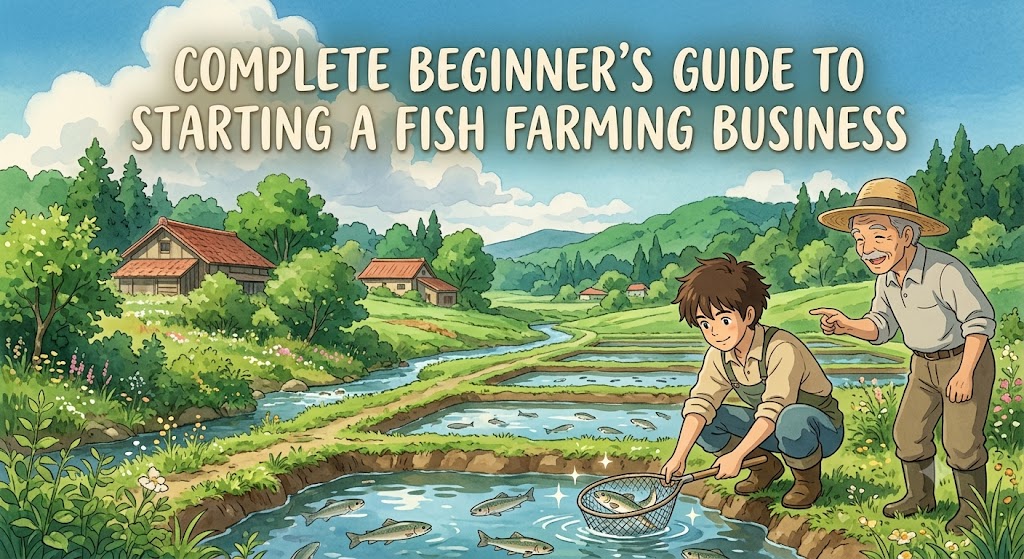
Fish farming has become one of the fastest-growing agricultural businesses in the world. As the demand for fresh, healthy, and affordable protein continues to rise, aquaculture offers an excellent opportunity for entrepreneurs, small farmers, and rural communities to build a profitable and sustainable business.
Unlike traditional fishing, which depends on natural water bodies and unpredictable catches, fish farming allows producers to raise fish in a controlled environment. Farmers can manage feeding, water quality, fish health, and harvesting schedules to produce consistent, high-quality fish throughout the year.
For beginners, fish farming may seem complex at first, but with proper planning and good management, it can become a reliable source of long-term income. This guide explains everything you need to know before starting your first fish farming business.
Why Fish Farming Is a Smart Business Opportunity
The global population continues to grow, and so does the demand for seafood. Wild fish stocks are under pressure due to overfishing, making aquaculture one of the most important sources of future fish production.
Fish farming offers several advantages:
- Strong market demand
- Multiple income opportunities
- Efficient use of land and water
- Faster production cycles for many species
- Suitable for small and large farms
- Opportunity for value-added products
With proper management, fish farming can provide stable returns throughout the year.
Step 1: Learn the Basics Before Investing
Every successful fish farming business starts with knowledge.
Before spending money, understand:
- Fish biology
- Water quality management
- Feeding practices
- Disease prevention
- Market demand
- Production costs
Learning the basics helps avoid costly mistakes during the early stages.
Step 2: Choose the Right Fish Species
The best fish species depends on climate, water availability, local demand, and farming experience.
Some commonly farmed species include:
| Fish Species | Suitable For |
|---|---|
| Tilapia | Warm climates and beginners |
| Catfish | Commercial farming |
| Carp | Freshwater ponds |
| Trout | Cool water regions |
| Pangasius | Large-scale production |
| Barramundi | Brackish and freshwater systems |
Choose species that are already popular in your local market.
Step 3: Select a Suitable Farm Location
The location of your fish farm directly affects production costs and long-term success.
A good site should provide:
- Reliable water supply
- Good drainage
- Easy road access
- Electricity availability
- Protection from flooding
- Security against theft
Being close to local markets also reduces transportation costs.
Step 4: Decide on the Farming System
Fish can be raised using different production systems.
Earthen Ponds
Natural and cost-effective.
Best for beginners with available land.
Concrete Tanks
Easy to clean and manage.
Suitable for intensive production.
Cage Culture
Fish are raised inside cages placed in lakes or reservoirs.
Recirculating Aquaculture Systems (RAS)
Modern indoor systems that recycle water continuously.
Require higher investment but use water efficiently.
Choose a system based on your budget and available resources.
Step 5: Build or Prepare the Pond
If using earthen ponds, proper preparation is essential.
Important tasks include:
- Removing weeds
- Repairing pond banks
- Checking water depth
- Installing inlet and outlet pipes
- Eliminating harmful predators
- Improving pond soil where necessary
A well-prepared pond creates a healthy environment for fish.
Step 6: Maintain Good Water Quality
Water quality is the most important factor in fish farming.
Poor water conditions reduce growth and increase disease risk.
Regularly monitor:
- Temperature
- Dissolved oxygen
- pH level
- Ammonia concentration
- Water clarity
Healthy water leads to healthy fish.
Step 7: Buy Healthy Fingerlings
The quality of fingerlings greatly influences future production.
Purchase fingerlings from trusted hatcheries that provide:
- Healthy fish
- Uniform size
- Disease-free stock
- Good survival rates
Healthy fish grow faster and produce better harvests.
Step 8: Feed Fish Properly
Feed represents one of the largest operating expenses in fish farming.
Efficient feeding improves growth while reducing waste.
Good feeding practices include:
- Feeding according to fish size
- Using balanced commercial feed
- Feeding at regular times
- Avoiding overfeeding
- Monitoring fish behavior during feeding
Proper nutrition increases production efficiency.
Step 9: Prevent Diseases Before They Spread
Disease outbreaks can significantly reduce farm profits.
Preventive management includes:
- Maintaining clean water
- Avoiding overcrowding
- Removing dead fish immediately
- Quarantining new stock
- Monitoring fish daily
Healthy management practices are more effective than treating diseases after they appear.
Step 10: Harvest and Market Efficiently
Fish should be harvested when they reach the preferred market size.
After harvesting:
- Handle fish carefully.
- Keep them fresh using ice or chilled storage.
- Grade fish by size.
- Package attractively.
- Deliver quickly to buyers.
Product quality strongly influences market prices.
Understanding Business Costs
Every fish farming business should maintain accurate financial records.
Common expenses include:
| Cost Category | Examples |
|---|---|
| Pond construction | Excavation and infrastructure |
| Fingerlings | Initial fish stock |
| Fish feed | Daily feeding costs |
| Water management | Pumps and maintenance |
| Labor | Farm operations |
| Equipment | Nets, aerators, testing kits |
Tracking costs helps improve profitability over time.
Marketing Your Fish Successfully
Growing healthy fish is only part of the business.
Finding reliable buyers is equally important.
Potential customers include:
- Local fish markets
- Restaurants
- Hotels
- Supermarkets
- Seafood wholesalers
- Food processors
- Direct consumers
Building long-term relationships with buyers creates more stable income.
Common Beginner Mistakes
Many first-time fish farmers face avoidable problems.
Avoid these mistakes:
- Overstocking ponds
- Ignoring water quality
- Buying poor-quality fingerlings
- Overfeeding fish
- Delaying disease treatment
- Poor financial planning
- Starting with a system that is too large
Beginning on a manageable scale improves learning and reduces financial risk.
Tips for Long-Term Success
Experienced fish farmers often recommend:
- Start with one fish species.
- Learn proper water management.
- Purchase quality feed.
- Maintain accurate production records.
- Visit the farm every day.
- Build relationships with local buyers.
- Expand only after mastering the basics.
Steady growth is usually more successful than rapid expansion.
Future Opportunities in Fish Farming
The aquaculture industry continues to expand due to increasing seafood demand and advances in farming technology.
Future opportunities include:
- Organic fish production
- Biofloc technology
- Recirculating aquaculture systems
- Integrated fish farming
- Value-added seafood products
- Direct online seafood sales
Farmers who embrace innovation can improve both productivity and profitability.
Final Thoughts
Fish farming offers an exciting opportunity for beginners seeking a profitable and sustainable agricultural business. With proper planning, healthy fingerlings, good water management, balanced feeding, and strong marketing strategies, even small-scale farms can develop into successful commercial operations.
Success in aquaculture does not depend on having the largest farm—it depends on understanding fish biology, maintaining excellent water quality, controlling production costs, and consistently delivering high-quality fish to the market. By learning continuously and expanding carefully, beginners can build a thriving fish farming business that generates reliable income for many years.
Frequently Asked Questions
1. Is fish farming profitable for beginners?
Yes. With proper management, suitable fish species, and reliable markets, fish farming can provide excellent long-term profits.
2. Which fish is easiest to farm?
Tilapia, carp, and catfish are among the most beginner-friendly species because they grow well under a wide range of farming conditions.
3. How important is water quality?
Water quality is one of the most important factors affecting fish growth, health, and survival.
4. Can fish farming be started on a small budget?
Yes. Many beginners start with small earthen ponds or tanks and expand gradually as they gain experience.
5. What is the biggest challenge in fish farming?
Maintaining good water quality, preventing diseases, managing feed efficiently, and finding reliable buyers are among the most important challenges for new fish farmers.