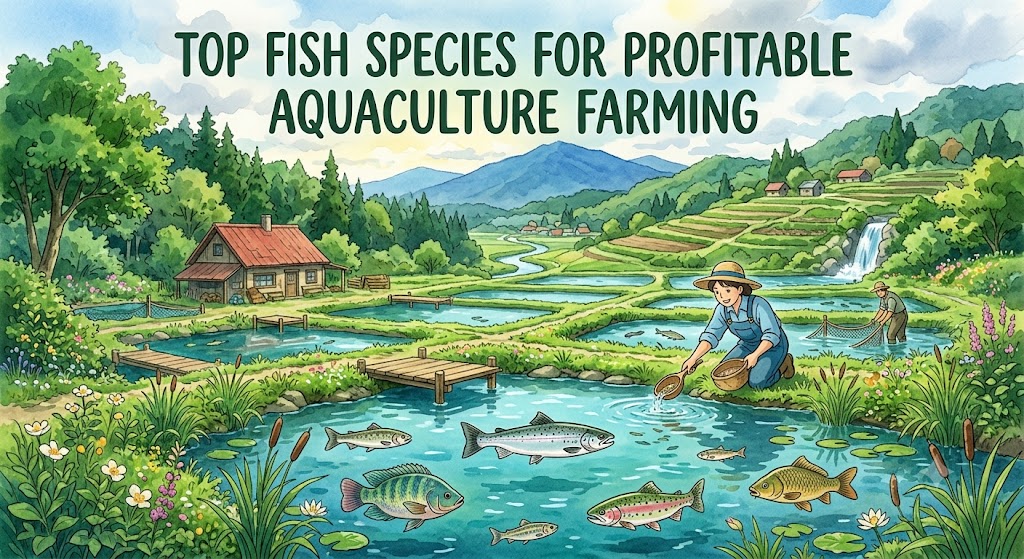
Choosing the right fish species is one of the most important decisions in aquaculture. A well-managed fish farm can only be successful if the species being cultivated matches the local climate, available water resources, production system, and market demand. Many beginners focus only on fast-growing fish, but experienced fish farmers know that long-term profitability depends on balancing growth rate, production costs, disease resistance, and selling price.
Today, aquaculture is one of the fastest-growing food production industries in the world. The increasing demand for healthy protein, expanding seafood markets, and improvements in farming technology have created excellent opportunities for commercial fish production. Whether you’re planning a small backyard fish pond or a large commercial aquaculture business, selecting the right species is the foundation of success.
This guide introduces ten fish species that are widely recognized for their commercial value, production efficiency, and market demand.
What Makes a Fish Species Profitable?
Not every fish generates the same return on investment.
Successful aquaculture species usually share several important characteristics.
A profitable fish should offer:
- Strong consumer demand
- Fast growth
- High survival rate
- Efficient feed conversion
- Disease resistance
- Easy farm management
- Good selling price
Considering these factors before stocking a pond reduces business risk.
1. Tilapia
Tilapia is often recommended as the best fish for beginners because it grows quickly, adapts to different farming conditions, and has consistent market demand.
Why Farmers Choose Tilapia
- Rapid growth
- Hardy nature
- Good feed efficiency
- Suitable for ponds and tanks
- Strong consumer acceptance
Its ability to tolerate varying water conditions makes it one of the world’s most widely farmed fish.
2. Catfish
Catfish farming has expanded rapidly because of its excellent growth rate and commercial value.
Catfish perform well in intensive farming systems and require relatively simple management.
Major Benefits
✔ High survival rates
✔ Good market demand
✔ Fast weight gain
✔ Adaptable to different production systems
3. Common Carp
Common carp has been cultivated for centuries and remains one of the most reliable freshwater aquaculture species.
Advantages include:
- Easy breeding
- Strong disease resistance
- Wide environmental tolerance
- Low production costs
Carp farming is especially popular in regions with traditional earthen ponds.
4. Pangasius
Pangasius, also known as striped catfish, has become an important commercial species because of its rapid growth and efficient feed utilization.
Large processing industries have created strong export demand for this fish.
It is particularly suitable for intensive commercial production.
5. Rainbow Trout
Rainbow trout is highly valued in premium seafood markets.
Although it requires cooler water temperatures, it often commands higher prices than many freshwater species.
Suitable Conditions
- Cold, oxygen-rich water
- Clean flowing water
- Well-managed production systems
Premium pricing often compensates for higher production costs.
6. Barramundi
Barramundi has gained popularity because of its excellent taste and growing international demand.
It can be raised in both freshwater and brackish water systems.
Benefits include:
- High market value
- Rapid growth
- Strong export potential
- Premium restaurant demand
7. Salmon
Salmon remains one of the highest-value fish in commercial aquaculture.
Its popularity continues to grow due to increasing consumer awareness of healthy diets.
Although production requires advanced management, successful farms often generate significant profits.
8. Rohu
Rohu is one of the most widely farmed freshwater fish in many Asian countries.
Its popularity comes from:
- Strong local demand
- Affordable production
- Good growth
- Excellent taste
Rohu is commonly raised alongside other carp species in polyculture systems.
9. Grass Carp
Grass carp offers an additional advantage because it feeds mainly on aquatic vegetation.
This natural feeding behavior reduces feed expenses while helping control excessive aquatic plant growth.
Farmers appreciate:
- Lower feeding costs
- Fast growth
- Efficient pond management
10. Freshwater Prawns
Although technically not fish, freshwater prawns deserve attention because of their outstanding commercial value.
They are often raised alongside fish in integrated aquaculture systems.
Advantages include:
- Premium market prices
- Export opportunities
- Efficient pond utilization
- Additional farm income
Comparing Popular Aquaculture Species
| Species | Growth Rate | Market Demand | Profit Potential |
|---|---|---|---|
| Tilapia | Fast | Very High | High |
| Catfish | Fast | High | High |
| Common Carp | Moderate | High | Good |
| Pangasius | Fast | High | High |
| Rainbow Trout | Moderate | Premium | Very High |
| Barramundi | Fast | Premium | High |
| Salmon | Moderate | Premium | Very High |
| Rohu | Moderate | High | Good |
| Grass Carp | Fast | Moderate | Good |
| Freshwater Prawns | Moderate | Premium | Very High |
Choosing the Right Species for Your Farm
Selecting a fish species should depend on more than profitability alone.
Before making a decision, consider:
- Local climate
- Water availability
- Pond type
- Market demand
- Fingerling availability
- Feed costs
- Farming experience
Matching the species to local conditions usually leads to better long-term success.
Factors That Influence Profitability
Even the best fish species will not produce good returns without proper management.
Important factors include:
- Water quality
- Balanced feeding
- Disease prevention
- Stocking density
- Regular monitoring
- Efficient harvesting
- Reliable marketing
Good farm management often has a greater impact on profits than species selection alone.
Common Mistakes Beginners Should Avoid
New fish farmers sometimes reduce profitability by making avoidable mistakes.
Avoid:
- Overstocking ponds
- Buying unhealthy fingerlings
- Ignoring water quality
- Using poor-quality feed
- Choosing species without market research
- Harvesting too early
Careful planning greatly improves business success.
Future Trends in Aquaculture
The aquaculture industry continues to evolve through innovation and improved management practices.
Emerging trends include:
- Biofloc technology
- Recirculating aquaculture systems (RAS)
- Smart water quality monitoring
- AI-assisted feeding systems
- Sustainable fish nutrition
- Integrated fish farming
These technologies are helping farmers improve productivity while reducing environmental impact.
Final Thoughts
Profitable aquaculture begins with choosing the right species for your farming conditions and business goals. Fish such as tilapia, catfish, carp, pangasius, trout, barramundi, salmon, rohu, and grass carp each offer unique advantages depending on climate, market demand, and production systems. Freshwater prawns can also provide an excellent additional income source for integrated farms.
While selecting the right species is essential, long-term success depends equally on maintaining excellent water quality, providing balanced nutrition, preventing diseases, and building reliable marketing channels. Farmers who combine smart species selection with good management practices are well positioned to build sustainable and profitable aquaculture businesses.
Frequently Asked Questions
1. Which fish species is best for beginners?
Tilapia and catfish are among the best choices because they grow quickly, tolerate a wide range of farming conditions, and have strong market demand.
2. Which fish offers the highest profit?
Species such as salmon, rainbow trout, barramundi, and freshwater prawns often provide premium returns when produced under suitable conditions.
3. Can multiple fish species be raised together?
Yes. Many farmers practice polyculture by raising compatible species together to improve pond productivity and increase total income.
4. How important is market demand when choosing fish?
Market demand is critical because even fast-growing fish may not be profitable if there are limited buyers or low selling prices.
5. What is the most important factor in successful aquaculture?
Maintaining good water quality, providing balanced nutrition, selecting healthy fingerlings, and following proper farm management practices are the keys to long-term success.