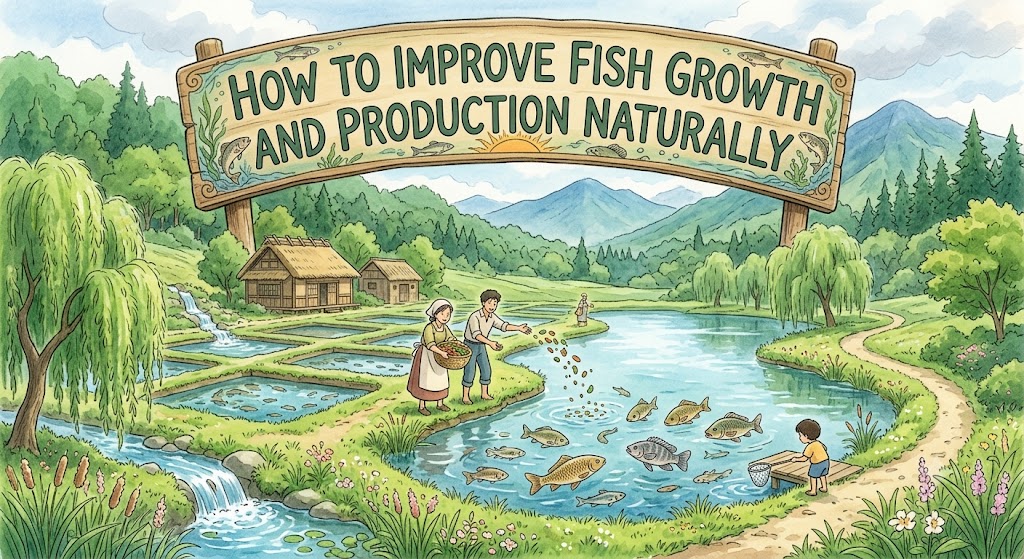
Every fish farmer dreams of harvesting healthy, fast-growing fish while keeping production costs under control. However, many beginners believe that achieving higher production simply means feeding fish more or using expensive commercial products. In reality, healthy fish growth depends on creating the right farming environment rather than relying only on additional feed.
Natural fish farming focuses on improving water quality, maintaining a balanced ecosystem, providing nutritious diets, and reducing stress on fish. When these factors work together, fish grow faster, remain healthier, and convert feed more efficiently. The result is better production, lower operating costs, and a more sustainable aquaculture business.
Whether you manage a small backyard pond or a commercial fish farm, adopting natural management practices can significantly improve fish growth without increasing unnecessary expenses.
Healthy Fish Begin With a Healthy Environment
Fish spend their entire lives in water, which means their surroundings directly affect growth, immunity, and survival.
Poor water conditions often lead to:
- Slow growth
- Low appetite
- Disease outbreaks
- Higher mortality
- Increased production costs
Before looking at feeds or supplements, farmers should focus on creating a healthy aquatic environment.
Maintain Excellent Water Quality
Water quality is the foundation of successful aquaculture.
Fish grow best when water remains clean, well-oxygenated, and free from harmful pollutants.
Farmers should monitor:
- Water temperature
- Dissolved oxygen
- pH level
- Ammonia concentration
- Water clarity
Regular monitoring allows problems to be corrected before they affect fish health.
Avoid Overstocking the Pond
Many beginners believe adding more fish automatically increases profits.
In reality, overcrowding creates competition for food and oxygen while increasing stress and disease risk.
Proper stocking density provides:
✔ Better water quality
✔ Faster growth
✔ Higher survival rates
✔ More efficient feeding
Healthy fish need enough space to swim and feed comfortably.
Feed Fish a Balanced Diet
Nutrition plays a major role in fish production.
Fish require proteins, carbohydrates, fats, vitamins, and minerals in balanced proportions.
Natural feeding strategies include:
- High-quality commercial feed
- Farm-made feed mixtures
- Aquatic plants for herbivorous species
- Insects and worms where appropriate
- Agricultural by-products suitable for the species
Providing the correct amount of feed at the right time is more important than simply feeding more.
Encourage Natural Food Production
One advantage of pond farming is that fish can obtain part of their nutrition from naturally occurring organisms.
Healthy ponds produce:
- Plankton
- Algae
- Zooplankton
- Small aquatic insects
- Beneficial microorganisms
Natural pond fertility can be improved using properly composted organic manure or other approved organic fertilization methods, helping increase the availability of natural food while supporting healthy fish growth.
Keep Dissolved Oxygen at Healthy Levels
Fish require oxygen every minute of the day.
Low oxygen levels reduce feeding activity and slow growth.
Ways to improve oxygen include:
- Avoiding excessive organic waste
- Maintaining proper stocking density
- Using aerators when necessary
- Encouraging water circulation
- Removing decaying vegetation
Good oxygen levels improve feed conversion and overall fish health.
Reduce Stress During Production
Stress weakens fish and limits growth.
Common causes of stress include:
- Poor water quality
- Frequent handling
- Sudden temperature changes
- Excessive noise
- Rough transportation
- Overcrowding
Minimizing stress allows fish to use more energy for growth rather than survival.
Prevent Diseases Naturally
Disease prevention is more effective and less expensive than treatment.
Good preventive practices include:
- Purchasing healthy fingerlings
- Maintaining clean ponds
- Quarantining new fish
- Removing dead fish immediately
- Cleaning equipment regularly
- Monitoring fish behavior every day
Healthy management reduces the need for medical treatments.
Strengthen Pond Ecology
A balanced pond ecosystem supports healthy fish production.
Farmers should aim to maintain harmony between:
- Fish population
- Aquatic plants
- Beneficial microorganisms
- Water quality
- Natural food organisms
An unbalanced ecosystem often results in poor production and higher management costs.
Choose Healthy Fingerlings
Fish can only grow as well as their starting stock.
When buying fingerlings, choose fish that are:
- Active
- Uniform in size
- Free from visible disease
- Purchased from trusted hatcheries
- Appropriate for local climate
Healthy fingerlings usually achieve better survival and faster growth.
Monitor Fish Growth Regularly
Successful fish farmers measure progress instead of relying on assumptions.
Regular monitoring helps determine:
- Growth rate
- Feed efficiency
- Fish health
- Water quality changes
- Harvest planning
Simple sampling every few weeks allows farmers to adjust management practices when necessary.
Integrate Fish Farming With Other Farm Activities
Natural fish production becomes even more efficient when combined with other agricultural enterprises.
Integrated systems may include:
- Vegetable cultivation
- Fruit orchards
- Duck farming
- Rice cultivation
- Compost production
These combinations improve resource use while generating multiple income sources.
Common Mistakes That Slow Fish Growth
Many production problems result from avoidable management errors.
Avoid these common mistakes:
| Mistake | Effect on Production |
|---|---|
| Overstocking ponds | Slower growth and disease |
| Overfeeding | Water pollution |
| Poor water monitoring | Higher mortality |
| Buying unhealthy fingerlings | Reduced productivity |
| Ignoring fish behavior | Delayed problem detection |
| Infrequent pond maintenance | Poor water quality |
Correcting these mistakes often produces immediate improvements.
Signs Your Fish Are Growing Well
Healthy fish usually display several positive characteristics.
Look for:
- Active swimming
- Strong feeding response
- Uniform growth
- Bright body coloration
- Low mortality
- Clean water conditions
Regular observation remains one of the most valuable management tools.
Looking Ahead
Natural fish farming continues gaining popularity because it combines profitability with environmental responsibility.
Future developments are expected to include:
- Improved biological pond management
- Eco-friendly feeding strategies
- Smart water quality monitoring
- Sustainable integrated aquaculture
- Better natural disease prevention methods
These innovations will help farmers produce more fish while protecting aquatic ecosystems.
Final Thoughts
Improving fish growth naturally is not about finding a single secret technique. It is the result of maintaining clean water, providing balanced nutrition, selecting healthy fingerlings, preventing stress, encouraging natural pond productivity, and monitoring fish regularly. Each small improvement contributes to stronger growth, healthier fish, and better overall production.
Farmers who focus on natural management practices often achieve lower operating costs, healthier aquatic environments, and more sustainable long-term profits. By working with nature rather than against it, fish farming can become both economically rewarding and environmentally responsible.
Frequently Asked Questions
1. What is the most important factor for natural fish growth?
Maintaining excellent water quality is the most important factor because it directly affects fish health, feeding behavior, and growth.
2. Can natural pond food improve fish production?
Yes. Plankton, algae, and other natural organisms provide valuable nutrition that supports healthy fish growth and reduces feed costs.
3. Why does overcrowding slow fish growth?
Overcrowding increases competition for food and oxygen, creates stress, and raises the risk of disease outbreaks.
4. How often should fish growth be monitored?
Sampling fish every few weeks helps farmers evaluate growth, adjust feeding programs, and identify potential problems early.
5. Can integrated farming improve fish production?
Yes. Combining fish farming with crops, livestock, composting, or rice cultivation improves resource efficiency and supports sustainable aquaculture.