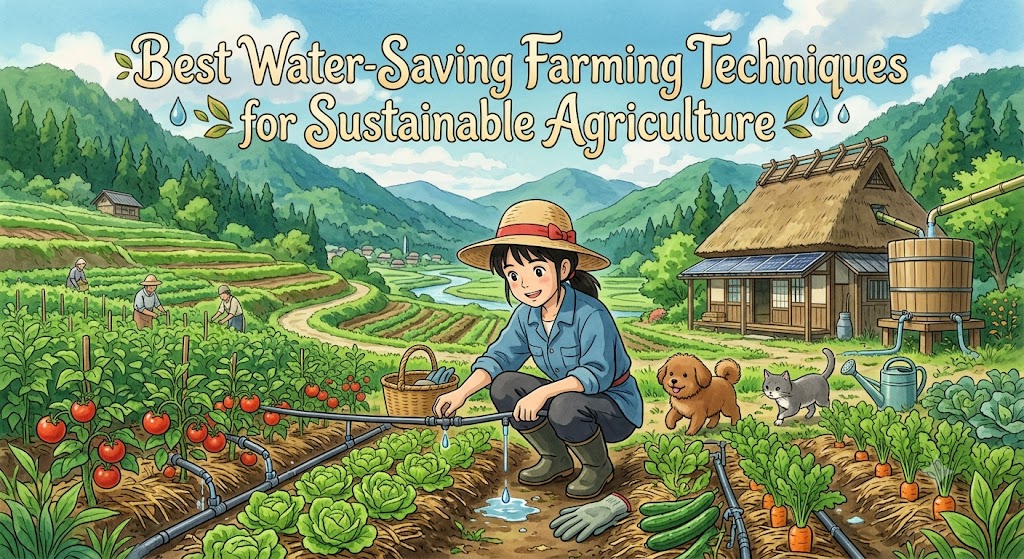
Water is one of the most valuable resources in agriculture. Every crop depends on an adequate water supply to germinate, grow, flower, and produce a healthy harvest. However, increasing droughts, unpredictable rainfall, declining groundwater levels, and rising irrigation costs have made water conservation a top priority for farmers worldwide. Using water efficiently is no longer just an environmental responsibility—it is also essential for maintaining farm profitability and ensuring long-term food production.
Sustainable agriculture encourages farmers to maximize crop production while minimizing water waste. By adopting modern irrigation systems, improving soil health, selecting suitable crops, and applying practical conservation methods, farmers can reduce water consumption without sacrificing yield or quality.
This guide explores the most effective water-saving farming techniques that help improve productivity while protecting valuable water resources.
Why Water Conservation Matters in Agriculture
Agriculture accounts for a large share of global freshwater use. Inefficient irrigation and poor water management can lead to unnecessary losses through evaporation, runoff, and deep drainage.
Efficient water use helps farmers:
- Reduce irrigation costs
- Improve crop yields
- Protect groundwater supplies
- Minimize soil erosion
- Increase drought resilience
- Support long-term farm sustainability
Every drop of water saved contributes to healthier crops and lower production expenses.
Understand Your Crop’s Water Requirements
Different crops need different amounts of water throughout their growth cycle.
Factors affecting water demand include:
- Crop type
- Growth stage
- Climate
- Soil type
- Temperature
- Humidity
Providing water according to actual crop needs prevents both under-irrigation and unnecessary water waste.
Improve Soil Before Improving Irrigation
Healthy soil acts like a natural water reservoir.
Soils rich in organic matter absorb and retain more moisture, reducing the frequency of irrigation.
Natural ways to improve soil include:
- Compost application
- Farmyard manure
- Cover crops
- Crop rotation
- Organic mulch
Healthy soil allows crops to use available water more efficiently.
Install Drip Irrigation Systems
Drip irrigation is one of the most efficient watering methods available today.
Instead of flooding the entire field, water is delivered directly to plant roots through a network of pipes and emitters.
Benefits include:
- Reduced evaporation
- Lower water consumption
- Better nutrient absorption
- Less weed growth
- Improved crop health
Drip irrigation is especially useful for vegetables, fruit trees, and high-value crops.
Use Sprinkler Irrigation Wisely
Sprinkler systems distribute water more evenly than traditional surface irrigation when properly managed.
To improve efficiency:
- Operate during calm weather
- Avoid watering during the hottest part of the day
- Maintain proper pressure
- Repair leaks promptly
Efficient sprinkler management reduces water loss caused by wind and evaporation.
Harvest Rainwater
Rainwater harvesting provides an additional water source during dry periods.
Farmers can collect rainwater through:
- Farm ponds
- Storage tanks
- Rooftop collection systems
- Small reservoirs
Stored rainwater can later be used for irrigation, livestock, or nursery production, reducing dependence on groundwater.
Apply Organic Mulch
Mulching protects the soil surface and slows evaporation.
Suitable mulch materials include:
- Straw
- Dry leaves
- Grass clippings
- Wood chips
- Crop residues
Mulch also:
- Reduces weeds
- Moderates soil temperature
- Improves soil structure
- Adds organic matter as it decomposes
Fields with mulch generally require less frequent irrigation.
Irrigate at the Right Time of Day
The timing of irrigation has a major impact on water efficiency.
The best times are:
- Early morning
- Late afternoon or evening (where appropriate)
Avoid watering during the hottest hours because evaporation losses increase significantly.
Proper scheduling ensures more water reaches plant roots.
Monitor Soil Moisture
Applying water without checking soil conditions often leads to over-irrigation.
Farmers can monitor moisture using:
- Soil moisture sensors
- Tensiometers
- Manual soil inspection
- Digital moisture meters
Irrigating only when necessary conserves water and supports healthier root systems.
Grow Drought-Tolerant Crop Varieties
Modern crop varieties are increasingly bred to perform well under limited water conditions.
These varieties often provide:
- Better drought resistance
- Stable yields
- Improved water-use efficiency
- Greater climate resilience
Choosing suitable varieties reduces irrigation requirements while maintaining productivity.
Reduce Water Loss Through Land Leveling
Uneven fields often cause water to collect in low areas while leaving higher areas too dry.
Proper land leveling improves:
- Uniform water distribution
- Irrigation efficiency
- Crop establishment
- Reduced runoff
Well-prepared fields make better use of every irrigation cycle.
Practice Crop Rotation
Crop rotation contributes to better water management by improving soil structure and increasing organic matter.
Benefits include:
- Better moisture retention
- Improved root development
- Reduced soil compaction
- Increased biological activity
Healthy soils absorb rainfall more effectively and require less supplemental irrigation.
Prevent Soil Erosion
Erosion removes nutrient-rich topsoil and reduces the soil’s ability to retain water.
Effective erosion control methods include:
- Contour farming
- Terracing
- Cover crops
- Windbreaks
- Permanent vegetation
Protecting topsoil improves long-term water efficiency.
Grow Cover Crops
Cover crops help conserve soil moisture even when commercial crops are not growing.
Popular options include:
- Clover
- Rye
- Cowpea
- Oats
- Mustard
Cover crops:
- Reduce evaporation
- Improve soil structure
- Increase organic matter
- Reduce runoff
- Enhance water infiltration
These benefits continue into the following cropping season.
Reduce Soil Compaction
Compacted soil prevents water from soaking into the ground effectively.
Ways to reduce compaction include:
- Limiting heavy machinery
- Avoiding field operations on wet soil
- Growing deep-rooted crops
- Applying organic matter
Improved soil structure allows rainwater to penetrate more efficiently.
Use Precision Irrigation Technology
Modern irrigation systems increasingly rely on digital tools that improve water management.
Examples include:
- Smart irrigation controllers
- Weather-based irrigation scheduling
- GPS-guided irrigation
- Automated irrigation systems
These technologies apply water only where and when crops need it.
Maintain Irrigation Equipment Regularly
Leaking pipes, blocked emitters, and damaged sprinklers waste significant amounts of water.
Routine maintenance should include:
- Inspecting pipelines
- Cleaning filters
- Repairing leaks
- Checking water pressure
- Replacing worn components
Well-maintained equipment improves irrigation efficiency and reduces operating costs.
Plan Cropping Seasons Carefully
Scheduling crops to match natural rainfall reduces irrigation needs.
Farmers should consider:
- Local climate patterns
- Rainfall distribution
- Crop duration
- Water availability
Good seasonal planning helps conserve irrigation resources.
Benefits of Water-Saving Farming Practices
Efficient water management provides long-term advantages, including:
- Lower irrigation expenses
- Improved crop yields
- Better produce quality
- Stronger drought resistance
- Healthier soil
- Reduced groundwater depletion
- Greater environmental sustainability
Water conservation strengthens both farm profitability and natural resource protection.
Conclusion
Saving water is one of the most important steps farmers can take toward building a sustainable and profitable agricultural system. Practices such as drip irrigation, rainwater harvesting, mulching, healthy soil management, moisture monitoring, crop rotation, cover cropping, precision irrigation, and efficient equipment maintenance help farmers use every drop of water more effectively. These methods reduce production costs while supporting healthier crops and long-term farm resilience.
As climate conditions continue to change and freshwater resources become increasingly valuable, adopting water-saving farming techniques will play a critical role in the future of agriculture. Farmers who combine smart water management with sustainable farming practices will be better prepared to achieve consistent harvests, protect the environment, and maintain productive farms for generations to come.
Frequently Asked Questions
1. What is the most efficient irrigation method for saving water?
Drip irrigation is considered one of the most water-efficient systems because it delivers water directly to plant roots while minimizing evaporation and runoff.
2. How does mulching help conserve water?
Mulch reduces soil evaporation, moderates soil temperature, suppresses weeds, and improves moisture retention, allowing crops to require less frequent irrigation.
3. Why is soil health important for water conservation?
Healthy soil rich in organic matter stores more moisture, improves infiltration, and supports stronger root systems, reducing irrigation requirements.
4. Can rainwater harvesting benefit small farms?
Yes. Rainwater harvesting provides an affordable supplementary water source that can reduce dependence on groundwater and lower irrigation costs.
5. How can farmers reduce irrigation costs without affecting crop yields?
By improving soil health, using drip irrigation, monitoring soil moisture, maintaining irrigation equipment, selecting drought-tolerant varieties, and scheduling irrigation efficiently, farmers can save water while maintaining healthy crop production.