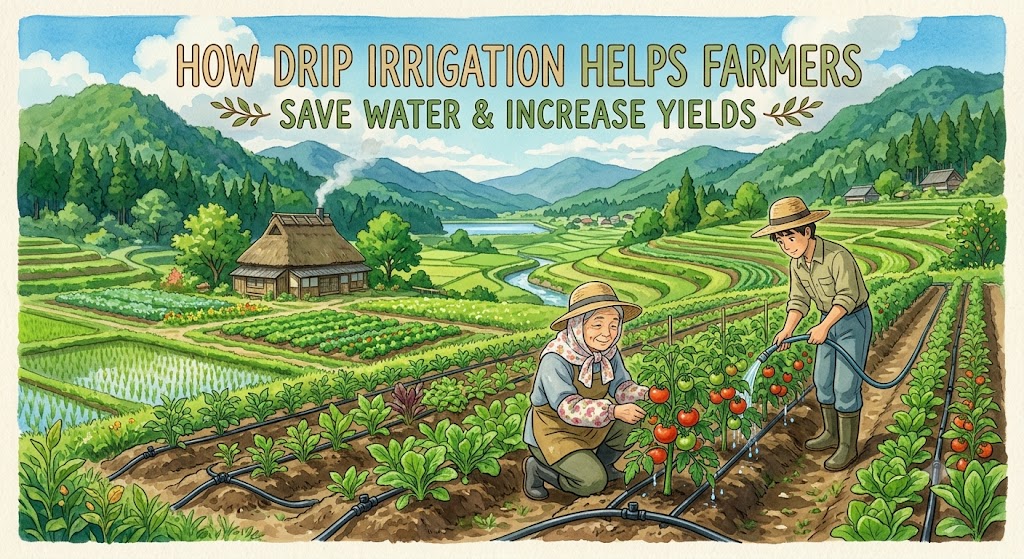
Water is one of the most valuable resources in agriculture. As climate change, irregular rainfall, and increasing water shortages continue to affect farming worldwide, efficient irrigation has become more important than ever. Traditional irrigation methods often waste a significant amount of water through evaporation, runoff, and deep percolation. This not only increases production costs but also reduces the long-term sustainability of farming.
Drip irrigation has emerged as one of the most effective solutions for modern agriculture. By delivering water directly to the root zone of plants in controlled amounts, this irrigation method helps farmers use every drop wisely while improving crop growth and overall productivity.
Whether you manage a small vegetable farm or a large commercial plantation, drip irrigation offers practical benefits that can improve profitability, conserve water, and support healthier crops.
What Is Drip Irrigation?
Drip irrigation, also known as trickle irrigation, is a watering system that slowly delivers water through a network of pipes, tubing, valves, and emitters directly to the roots of plants.
Unlike flood or sprinkler irrigation, drip irrigation applies water only where it is needed. This targeted approach minimizes water loss and provides crops with consistent moisture throughout the growing season.
The basic components of a drip irrigation system include:
- Water source
- Pump (if required)
- Main pipeline
- Sub-main pipes
- Drip lines
- Emitters
- Filters
- Pressure regulators
- Fertilizer injector (optional)
Each component works together to ensure efficient water distribution across the field.
Why Water Efficiency Matters in Modern Farming
Agriculture accounts for the largest share of freshwater use worldwide. Unfortunately, a significant portion of irrigation water is wasted before reaching plant roots.
Water scarcity creates several challenges for farmers:
- Reduced crop production
- Rising irrigation costs
- Soil degradation
- Lower farm profitability
- Increased dependence on rainfall
Efficient irrigation systems like drip irrigation help solve these problems by maximizing water use efficiency while maintaining healthy crop growth.
How Drip Irrigation Saves Water
1. Direct Root Zone Watering
Water is delivered exactly where plants need it.
Instead of soaking the entire field, drip emitters supply moisture directly to the root area, reducing unnecessary water loss.
2. Reduced Evaporation
Traditional irrigation leaves large amounts of water exposed to sunlight.
Drip irrigation keeps water close to the soil surface and root zone, significantly reducing evaporation losses.
3. Minimal Runoff
Flood irrigation often causes water to flow away from fields before it can be absorbed.
Because drip irrigation applies water slowly, the soil has enough time to absorb moisture effectively.
4. Lower Deep Percolation Losses
Applying excessive water causes nutrients to move below the root zone.
Drip irrigation delivers controlled amounts that match crop requirements, preventing water from draining too deeply.
5. Better Irrigation Scheduling
Modern drip systems can be automated using timers or soil moisture sensors.
Farmers can irrigate at the right time and for the correct duration, eliminating unnecessary watering.
Increased Crop Yields Through Better Water Management
Healthy crops require consistent moisture.
When plants experience cycles of drought followed by excessive watering, growth becomes uneven, reducing productivity.
Drip irrigation maintains stable soil moisture, allowing crops to grow under optimal conditions throughout the season.
Benefits include:
- Faster plant growth
- Better flowering
- Improved fruit development
- Uniform crop maturity
- Higher harvest quality
Many farmers report noticeable yield improvements after switching from traditional irrigation methods.
Improved Fertilizer Efficiency
One of the biggest advantages of drip irrigation is fertigation—the application of fertilizers through the irrigation system.
This method offers several benefits:
- Nutrients reach plant roots immediately.
- Less fertilizer is wasted.
- Uniform nutrient distribution.
- Reduced labor requirements.
- Better nutrient absorption.
Plants receive small, frequent nutrient doses, improving overall efficiency.
Better Weed Control
Traditional irrigation wets the entire field, encouraging weed growth between crop rows.
Drip irrigation only moistens the area surrounding crop roots.
As a result:
- Fewer weeds germinate.
- Weed competition decreases.
- Herbicide use may be reduced.
- Labor for weed removal becomes lower.
This helps improve crop performance while reducing production costs.
Reduced Plant Diseases
Excess moisture on leaves creates favorable conditions for fungal and bacterial diseases.
Drip irrigation keeps plant foliage dry because water is delivered directly to the soil.
This reduces the risk of diseases such as:
- Powdery mildew
- Leaf spot
- Early blight
- Downy mildew
Healthier plants often require fewer pesticide applications.
Better Soil Health
Heavy irrigation can damage soil structure over time.
Drip irrigation helps maintain healthier soils by:
- Preventing erosion
- Reducing nutrient leaching
- Preserving soil microorganisms
- Improving soil aeration
- Minimizing compaction
Healthy soil supports stronger root development and long-term productivity.
Suitable Crops for Drip Irrigation
Drip irrigation works well for a wide variety of crops, including:
Vegetables
- Tomato
- Onion
- Chili
- Cucumber
- Capsicum
- Eggplant
- Cabbage
Fruit Crops
- Mango
- Citrus
- Grapes
- Banana
- Pomegranate
- Apple
- Guava
Field Crops
- Cotton
- Sugarcane
- Maize
- Groundnut
Plantation Crops
- Coffee
- Tea
- Coconut
- Cocoa
Greenhouse Crops
Protected cultivation benefits greatly from precise irrigation control.
Economic Benefits for Farmers
Although installing a drip irrigation system requires an initial investment, it provides long-term financial benefits.
Farmers often save money through:
- Lower water bills
- Reduced electricity usage
- Less fertilizer waste
- Reduced labor costs
- Lower pesticide expenses
- Higher crop yields
- Better produce quality
- Increased market value
Over time, these savings often offset installation costs.
Environmental Benefits
Drip irrigation supports sustainable agriculture by conserving natural resources.
Environmental advantages include:
- Reduced groundwater extraction
- Lower soil erosion
- Less fertilizer runoff
- Improved water conservation
- Reduced energy consumption
- Better ecosystem protection
As water resources become increasingly limited, efficient irrigation plays a critical role in protecting the environment.
Challenges of Drip Irrigation
Despite its many benefits, farmers should also understand its limitations.
Some common challenges include:
Initial Installation Cost
The system requires investment in pipes, filters, pumps, and emitters.
Government subsidies in many regions can help reduce these costs.
Maintenance Requirements
Filters and emitters need regular cleaning to prevent clogging.
Routine maintenance ensures long-term performance.
Water Quality
Water containing excessive sediment or minerals may clog emitters.
Proper filtration is essential.
Technical Knowledge
Farmers must understand irrigation scheduling, pressure management, and system maintenance to maximize efficiency.
Tips for Successful Drip Irrigation
To get the best results:
- Choose a high-quality irrigation system.
- Install proper filtration equipment.
- Regularly inspect pipes and emitters.
- Flush irrigation lines periodically.
- Monitor soil moisture levels.
- Adjust watering schedules according to crop growth stages.
- Repair leaks immediately.
- Use fertigation carefully for balanced nutrition.
Regular monitoring helps maintain consistent system performance.
Future of Drip Irrigation
Modern agriculture is becoming increasingly technology-driven.
Today’s advanced drip irrigation systems can integrate with:
- Soil moisture sensors
- Weather stations
- Mobile applications
- Smart controllers
- Automated irrigation schedules
- Artificial intelligence for irrigation planning
These technologies allow farmers to make data-driven decisions that improve efficiency while reducing resource use.
As climate conditions become more unpredictable, precision irrigation will play an even greater role in sustainable food production.
Conclusion
Drip irrigation is one of the most effective innovations in modern agriculture. By delivering water directly to plant roots, it minimizes waste, conserves valuable water resources, and creates ideal growing conditions for crops. Farmers benefit from healthier plants, improved fertilizer efficiency, fewer weeds and diseases, lower production costs, and higher yields.
Although the initial investment may seem significant, the long-term economic and environmental benefits make drip irrigation a worthwhile choice for farms of all sizes. As agriculture continues to adapt to changing climate conditions and increasing water scarcity, adopting efficient irrigation systems will be essential for ensuring sustainable food production and long-term farm profitability.
Frequently Asked Questions (FAQs)
1. How much water can drip irrigation save?
Drip irrigation can reduce water usage by 30% to 70% compared to traditional irrigation methods, depending on the crop and field conditions.
2. Is drip irrigation suitable for small farms?
Yes. Drip irrigation is highly effective for small farms, kitchen gardens, orchards, and commercial agricultural operations.
3. Does drip irrigation increase crop yields?
Yes. By providing consistent moisture and efficient nutrient delivery, drip irrigation often improves crop yield, quality, and uniformity.
4. Can fertilizers be applied through drip irrigation?
Yes. Fertigation allows water-soluble fertilizers to be delivered directly through the irrigation system, improving nutrient efficiency.
5. What maintenance does a drip irrigation system require?
Regular cleaning of filters, flushing irrigation lines, checking emitters for blockages, and repairing leaks help keep the system operating efficiently.