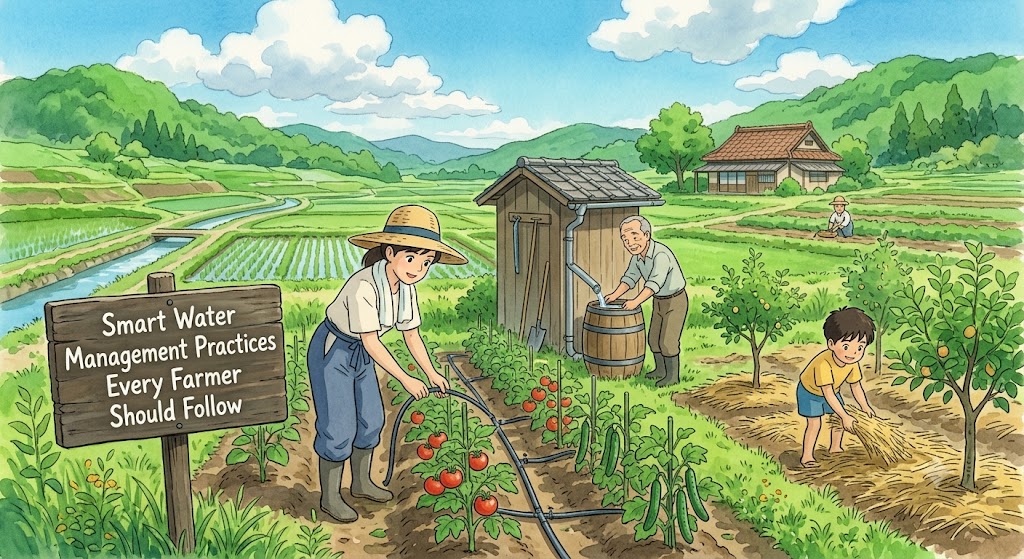
Water is the foundation of successful agriculture. Every crop, from cereals and vegetables to fruit trees and cash crops, depends on a reliable water supply to grow, flower, and produce quality yields. Yet, water has become one of the most limited resources in farming due to climate change, declining groundwater levels, irregular rainfall, and increasing demand from growing populations.
For today’s farmers, simply applying more water is no longer the solution. The key to sustainable and profitable farming lies in managing water wisely. Smart water management focuses on delivering the right amount of water at the right time while minimizing waste and protecting natural resources. Farmers who adopt efficient irrigation techniques, conserve rainwater, improve soil health, and monitor crop water needs can increase productivity while reducing costs.
This guide explores practical and proven water management practices that every farmer should consider to improve efficiency, protect the environment, and achieve better harvests.
Why Smart Water Management Is Important
Water directly influences plant growth, nutrient absorption, photosynthesis, and crop development. Poor water management can lead to several problems, including waterlogging, drought stress, soil erosion, nutrient loss, and lower crop yields.
Effective water management helps farmers:
- Improve crop productivity.
- Reduce irrigation expenses.
- Prevent unnecessary water loss.
- Maintain healthy soil.
- Increase fertilizer efficiency.
- Protect groundwater resources.
- Build resilience against changing weather conditions.
Every drop of water saved today contributes to the long-term sustainability of agriculture.
1. Understand Your Crop’s Water Requirements
Different crops require different amounts of water throughout their growth cycle. Even the same crop may need varying levels of irrigation during germination, flowering, fruit development, and maturity.
Before creating an irrigation schedule, farmers should understand:
- Crop type
- Growth stage
- Root depth
- Climate conditions
- Soil moisture level
- Rainfall patterns
Supplying water according to crop demand prevents both under-irrigation and over-irrigation, ensuring healthy plant development and reducing unnecessary water consumption.
2. Choose the Most Efficient Irrigation System
Traditional flood irrigation often wastes a large amount of water through runoff and evaporation. Modern irrigation systems deliver water more accurately and efficiently.
Drip Irrigation
Drip irrigation applies water directly to the root zone through emitters, reducing evaporation and minimizing water loss. It is especially suitable for vegetables, orchards, vineyards, and high-value crops.
Sprinkler Irrigation
Sprinkler systems distribute water evenly across fields and work well for many field crops and pastures. Proper pressure management helps improve efficiency.
Micro-Sprinklers
These systems provide gentle irrigation around fruit trees and plantation crops while using less water than conventional sprinklers.
Selecting the right irrigation system based on crop type and field conditions significantly improves water-use efficiency.
3. Monitor Soil Moisture Regularly
Applying water without checking soil moisture often leads to unnecessary irrigation.
Farmers can monitor moisture using:
- Soil moisture sensors
- Tensiometers
- Digital moisture meters
- Manual soil inspection
- Weather-based irrigation tools
Knowing when the soil actually needs water helps avoid overwatering and reduces irrigation costs.
4. Harvest Rainwater Whenever Possible
Rainwater harvesting provides an additional water source during dry periods while reducing dependence on groundwater.
Common rainwater harvesting methods include:
- Farm ponds
- Storage tanks
- Check dams
- Percolation pits
- Contour bunds
- Small reservoirs
Stored rainwater can later be used for irrigation, livestock, or emergency water supply during drought.
5. Improve Soil Organic Matter
Healthy soil naturally stores more water.
Adding organic materials such as compost, farmyard manure, green manure, crop residues, and biofertilizers improves soil structure and increases its water-holding capacity.
Benefits include:
- Better moisture retention
- Improved root development
- Enhanced microbial activity
- Reduced irrigation frequency
- Healthier crops
Organic-rich soil acts like a sponge, storing moisture for longer periods.
6. Apply Mulching Around Crops
Mulching is one of the simplest ways to conserve soil moisture.
Organic mulch materials include:
- Straw
- Dry leaves
- Grass clippings
- Wood chips
- Crop residues
- Coconut husk
Plastic mulch is also commonly used in commercial vegetable production.
Mulching helps:
- Reduce evaporation
- Suppress weeds
- Maintain soil temperature
- Prevent erosion
- Improve soil fertility over time
Fields covered with mulch often require fewer irrigation cycles.
7. Irrigate at the Right Time of Day
Timing plays an important role in water conservation.
Early morning is generally considered the best time for irrigation because:
- Temperatures are lower.
- Wind speed is reduced.
- Less water evaporates.
- Plants absorb moisture more efficiently.
Late evening irrigation can also be suitable in some situations, but excessive nighttime moisture may encourage fungal diseases in humid climates.
Avoid irrigating during the hottest hours of the day whenever possible.
8. Prevent Water Loss Through Field Maintenance
Even the best irrigation system cannot perform efficiently if water leaks or escapes before reaching crops.
Farmers should regularly inspect:
- Pipes
- Valves
- Pumps
- Channels
- Emitters
- Sprinklers
Repairing leaks immediately helps conserve both water and energy.
Maintaining field leveling also ensures even water distribution across the entire farm.
9. Reduce Weed Growth
Weeds compete with crops for water, nutrients, and sunlight.
Effective weed management allows more moisture to remain available for crop roots.
Common weed control methods include:
- Mulching
- Manual weeding
- Mechanical cultivation
- Crop rotation
- Cover cropping
Reducing weed pressure improves overall water-use efficiency.
10. Practice Crop Rotation
Growing the same crop repeatedly can reduce soil quality and increase water demand.
Crop rotation offers several advantages:
- Improves soil fertility
- Reduces pests and diseases
- Enhances water infiltration
- Improves soil structure
- Supports healthier root systems
Including legumes in crop rotations also helps improve soil nitrogen naturally.
11. Select Drought-Tolerant Crop Varieties
Plant breeders have developed many crop varieties that perform well under limited water conditions.
Drought-tolerant varieties typically:
- Require less irrigation
- Develop deeper roots
- Use water more efficiently
- Maintain yields during dry conditions
Choosing suitable varieties can significantly reduce irrigation needs in water-scarce regions.
12. Use Precision Agriculture Technologies
Modern technology is helping farmers make smarter irrigation decisions.
Useful tools include:
- GPS-guided irrigation
- Soil moisture sensors
- Satellite imagery
- Drone monitoring
- Smart irrigation controllers
- Weather forecasting software
These technologies provide accurate field data that helps farmers irrigate only when necessary.
As a result, both water consumption and production costs decrease.
13. Fertigate Efficiently
Fertigation combines irrigation and fertilizer application.
Instead of broadcasting fertilizer across the field, nutrients are delivered directly through irrigation systems.
Advantages include:
- Better nutrient uptake
- Reduced fertilizer waste
- Lower labor costs
- Uniform crop growth
- Reduced nutrient leaching
Efficient fertigation improves both water and fertilizer management.
14. Prevent Soil Erosion
Erosion removes fertile topsoil and reduces the soil’s ability to absorb water.
Conservation practices include:
- Contour farming
- Terracing
- Cover crops
- Windbreaks
- Conservation tillage
- Grass waterways
Healthy soil absorbs rainfall more effectively and stores moisture for longer periods.
15. Keep Accurate Irrigation Records
Successful farmers treat irrigation like any other important farm operation by maintaining detailed records.
Useful information includes:
- Irrigation dates
- Water volume applied
- Rainfall received
- Soil moisture readings
- Crop growth stage
- Fertigation schedule
These records help identify patterns and improve future irrigation planning.
Common Water Management Mistakes Farmers Should Avoid
Even experienced farmers sometimes waste water through avoidable mistakes.
Common errors include:
- Irrigating without checking soil moisture.
- Applying excessive water.
- Ignoring weather forecasts.
- Allowing irrigation leaks to continue.
- Using poor-quality irrigation equipment.
- Neglecting filter maintenance.
- Watering during peak afternoon heat.
- Failing to improve soil organic matter.
- Overlooking rainwater harvesting opportunities.
Avoiding these mistakes can significantly improve water efficiency and crop performance.
Building a Long-Term Water Management Strategy
Water conservation should not be viewed as a one-time improvement but as an ongoing farming strategy.
An effective long-term plan should include:
- Annual soil testing.
- Regular irrigation system maintenance.
- Rainwater storage expansion.
- Continuous soil improvement.
- Adoption of precision farming tools.
- Farmer training and education.
- Periodic review of irrigation schedules.
- Monitoring groundwater usage.
Small improvements made consistently over several seasons often produce significant long-term benefits.
The Future of Water Management in Agriculture
Agriculture is rapidly embracing digital technologies to optimize water use. Artificial intelligence, remote sensing, weather-based irrigation models, and automated irrigation systems are making farming more efficient than ever before.
Future farms will increasingly rely on:
- AI-powered irrigation scheduling
- Internet of Things (IoT) sensors
- Drone-based crop monitoring
- Satellite field mapping
- Automated drip irrigation
- Climate forecasting tools
These innovations will help farmers produce more food while using fewer natural resources, making agriculture both profitable and environmentally sustainable.
Conclusion
Smart water management is no longer optional—it is essential for the future of farming. By understanding crop water requirements, adopting efficient irrigation systems, improving soil health, harvesting rainwater, reducing evaporation, and using modern technologies, farmers can make every drop of water count.
The benefits extend far beyond water conservation. Better water management leads to healthier crops, improved soil fertility, lower production costs, higher yields, and greater resilience against climate uncertainty. Whether managing a small family farm or a large commercial operation, investing in efficient water practices today will create a stronger, more sustainable agricultural future for generations to come.
Frequently Asked Questions (FAQs)
1. What is smart water management in agriculture?
Smart water management involves using efficient irrigation methods, soil conservation practices, weather data, and modern technologies to reduce water waste while meeting crop needs.
2. Which irrigation system saves the most water?
Drip irrigation is generally the most water-efficient system because it delivers water directly to the plant’s root zone with minimal evaporation and runoff.
3. How can farmers naturally improve soil water retention?
Adding compost, farmyard manure, crop residues, and other organic matter improves soil structure and helps it retain moisture for longer periods.
4. Why is rainwater harvesting important for farms?
Rainwater harvesting stores excess rainfall for later use, reducing dependence on groundwater and providing a reliable irrigation source during dry seasons.
5. Can technology help reduce irrigation costs?
Yes. Soil moisture sensors, weather forecasting tools, automated irrigation systems, drones, and precision agriculture technologies help farmers apply water more accurately, reducing both water use and operational costs.