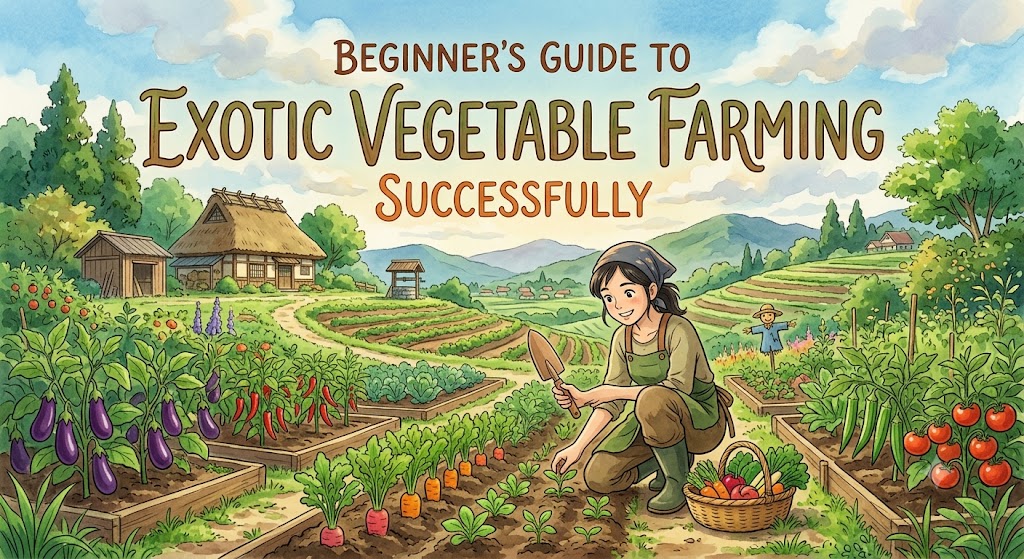
Exotic vegetable farming is becoming one of the most promising opportunities for modern farmers. As consumers become more interested in healthy eating, international cuisines, and premium-quality produce, the demand for vegetables such as zucchini, lettuce, kale, broccoli, bok choy, asparagus, and colored bell peppers continues to grow. Restaurants, supermarkets, luxury hotels, and organic food stores are willing to pay higher prices for fresh, high-quality exotic vegetables, making them an attractive option for beginners who want to earn better profits.
Unlike traditional farming, exotic vegetable cultivation requires careful planning, quality seeds, proper irrigation, and consistent crop management. However, with the right approach, even a small piece of land can become a profitable farming business.
This guide explains everything beginners need to know before starting exotic vegetable farming, from selecting crops and preparing the land to harvesting and marketing the produce successfully.
Why Choose Exotic Vegetable Farming?
Traditional vegetables often face intense competition, resulting in lower market prices. Exotic vegetables, on the other hand, cater to premium markets where buyers value freshness, appearance, and nutritional quality.
Some major advantages include:
- Higher selling prices
- Growing demand in urban markets
- Better income from smaller land areas
- Opportunities for direct sales
- Suitable for greenhouse and open-field cultivation
- Increasing export potential
As awareness about healthy eating grows worldwide, exotic vegetables are becoming a profitable long-term investment.
Understanding Exotic Vegetables
Exotic vegetables are crops that are less commonly grown in a particular region but are widely used in international cuisines and modern diets. They often require slightly different growing techniques compared to local vegetables.
Popular examples include:
- Zucchini
- Kale
- Bok Choy
- Lettuce
- Red Cabbage
- Colored Bell Peppers
- Broccoli
- Asparagus
- Celery
- Artichokes
- Baby Corn
- Brussels Sprouts
Before planting, learn about the climate and growing requirements of each vegetable to ensure successful production.
Step 1: Research Your Local Market
One of the biggest mistakes beginners make is growing vegetables without checking market demand.
Ask yourself:
- Which exotic vegetables are already being sold locally?
- Which restaurants use these vegetables?
- Are supermarkets importing these vegetables?
- What prices are buyers currently paying?
- Is there year-round demand?
Visit local vegetable markets, grocery stores, hotels, and restaurants to identify opportunities before planting.
Growing vegetables with confirmed buyers significantly reduces financial risk.
Step 2: Select the Right Crops
Not every exotic vegetable grows well in every climate. Choose crops that match your local weather conditions.
Warm Climate Crops
- Colored Bell Peppers
- Zucchini
- Baby Corn
- Okra
- Cucumbers
Cool Climate Crops
- Broccoli
- Kale
- Lettuce
- Bok Choy
- Brussels Sprouts
- Spinach
Beginners should start with two or three vegetables rather than planting many different crops at once. This makes management easier and reduces production risks.
Step 3: Choose a Suitable Location
The success of any vegetable farm begins with selecting the right site.
A good farm should have:
- Plenty of sunlight (6–8 hours daily)
- Fertile soil
- Reliable water supply
- Proper drainage
- Easy transportation access
- Protection from flooding
Avoid low-lying areas where water can accumulate after heavy rainfall.
Step 4: Test and Prepare the Soil
Healthy soil is the foundation of successful vegetable farming.
Before planting:
- Conduct a soil test
- Measure soil pH
- Check nutrient levels
- Identify drainage problems
Most exotic vegetables prefer slightly acidic to neutral soil with a pH between 6.0 and 7.0.
Improve soil quality by adding:
- Well-decomposed compost
- Farmyard manure
- Organic matter
- Vermicompost
Good soil structure encourages stronger root development and healthier plants.
Step 5: Buy High-Quality Seeds
Seed quality directly affects crop performance.
Purchase seeds from certified suppliers that offer:
- High germination rates
- Disease resistance
- Uniform growth
- Better yields
Although quality seeds may cost more, they usually produce healthier crops and better profits.
Avoid using unknown or low-quality seeds simply because they are cheaper.
Step 6: Plan Your Irrigation System
Water management plays a major role in vegetable farming.
Many exotic vegetables require consistent moisture but cannot tolerate waterlogging.
Popular irrigation systems include:
Drip Irrigation
- Saves water
- Delivers moisture directly to roots
- Reduces disease
- Improves fertilizer efficiency
Sprinkler Irrigation
- Suitable for leafy vegetables
- Covers large areas evenly
- Easy installation
Drip irrigation is generally recommended because it conserves water and promotes healthier crop growth.
Step 7: Use Proper Plant Spacing
Overcrowded plants compete for sunlight, nutrients, and airflow.
Correct spacing helps:
- Reduce disease spread
- Improve sunlight penetration
- Increase vegetable size
- Enhance air circulation
- Simplify harvesting
Always follow the recommended spacing guidelines for each crop.
Step 8: Apply Balanced Fertilization
Plants require nutrients throughout their growth cycle.
Essential nutrients include:
Nitrogen
Supports leaf development.
Phosphorus
Promotes strong roots.
Potassium
Improves fruit quality and disease resistance.
Organic fertilizers such as compost, poultry manure, and vermicompost improve soil health while supporting sustainable farming.
Balanced fertilization prevents nutrient deficiencies without encouraging excessive vegetative growth.
Step 9: Control Weeds Efficiently
Weeds compete with crops for water, nutrients, and sunlight.
Effective weed control methods include:
- Mulching
- Hand weeding
- Mechanical cultivation
- Crop rotation
- Organic weed barriers
Regular weed removal improves overall crop performance.
Step 10: Protect Crops from Pests and Diseases
Exotic vegetables are valuable crops, making effective pest management essential.
Common pests include:
- Aphids
- Whiteflies
- Caterpillars
- Thrips
- Leaf miners
Preventive practices include:
- Crop rotation
- Field sanitation
- Sticky traps
- Biological pest control
- Neem-based sprays
- Healthy seedlings
Inspect crops regularly so problems can be managed before they spread.
Step 11: Harvest at the Right Time
Harvest timing greatly affects product quality.
General guidelines include:
- Harvest early in the morning
- Use clean, sharp tools
- Avoid damaging vegetables
- Handle produce carefully
- Cool vegetables immediately after harvest
Freshness is one of the most important factors influencing selling price.
Post-Harvest Handling Matters
Good harvesting practices must be followed by proper post-harvest management.
Important steps include:
- Washing produce with clean water
- Removing damaged vegetables
- Sorting by size and quality
- Packing carefully
- Storing at appropriate temperatures
- Transporting quickly
Premium buyers prefer vegetables that are clean, fresh, and attractively packaged.
Marketing Your Exotic Vegetables
Finding buyers before harvest is one of the smartest business strategies.
Potential customers include:
- Supermarkets
- Organic grocery stores
- Hotels
- Restaurants
- Food distributors
- Online grocery platforms
- Farmers’ markets
- Catering companies
Building long-term relationships with buyers ensures stable income throughout the growing season.
Keep Production Records
Many beginners overlook record keeping, but it is essential for improving profitability.
Track details such as:
- Seed purchases
- Fertilizer applications
- Irrigation schedules
- Pest management activities
- Harvest quantities
- Sales
- Expenses
- Customer information
Good records help identify what works best and make future planning more efficient.
Common Mistakes Beginners Should Avoid
Learning from common mistakes can save both time and money.
Avoid these errors:
- Starting with too many crops
- Ignoring market research
- Buying poor-quality seeds
- Overwatering plants
- Using excessive fertilizer
- Delaying pest control
- Harvesting too late
- Neglecting post-harvest handling
- Depending on a single buyer
- Failing to maintain production records
Small improvements in management often lead to significant increases in yield and profitability.
Future Opportunities in Exotic Vegetable Farming
The market for exotic vegetables is expected to expand as consumers continue to seek healthier diets and premium food experiences. Advances in protected cultivation, drip irrigation, hydroponics, precision farming, and organic production methods are making exotic vegetable farming more accessible and efficient than ever before.
Farmers who invest in quality production, sustainable practices, and strong marketing networks will be well-positioned to benefit from this growing demand. Diversifying into value-added products, such as pre-cut salad mixes or packaged vegetable boxes, can further increase income and attract loyal customers.
Conclusion
Exotic vegetable farming offers beginners an excellent opportunity to enter a growing and profitable agricultural sector. Success depends on careful planning, choosing the right crops, preparing fertile soil, using quality seeds, adopting efficient irrigation systems, and maintaining healthy crops through proper management. Equally important are post-harvest handling and building reliable marketing channels to ensure premium prices.
Starting on a small scale allows new farmers to gain practical experience while minimizing risks. With dedication, continuous learning, and a focus on quality, exotic vegetable farming can develop into a sustainable and rewarding business that meets the rising demand for fresh, nutritious, and high-value produce.
Frequently Asked Questions (FAQs)
1. Which exotic vegetable is easiest for beginners to grow?
Lettuce, zucchini, baby corn, kale, and bok choy are generally considered beginner-friendly because they grow relatively quickly and are easier to manage.
2. Do I need a greenhouse to grow exotic vegetables?
No. Many exotic vegetables can be successfully grown in open fields if the local climate is suitable. Greenhouses are beneficial for extending seasons and protecting crops but are not always necessary.
3. How much land is required to start exotic vegetable farming?
You can begin with as little as a quarter acre or even a well-managed kitchen garden. Small-scale production is a practical way to gain experience before expanding.
4. How can I sell exotic vegetables at better prices?
Directly supplying restaurants, supermarkets, organic stores, farmers’ markets, and online grocery platforms often provides higher returns than selling through intermediaries.
5. Is exotic vegetable farming profitable?
Yes. When farmers choose crops with strong market demand, maintain high quality, and establish reliable buyers, exotic vegetable farming can generate significantly higher profits than many conventional vegetable crops.