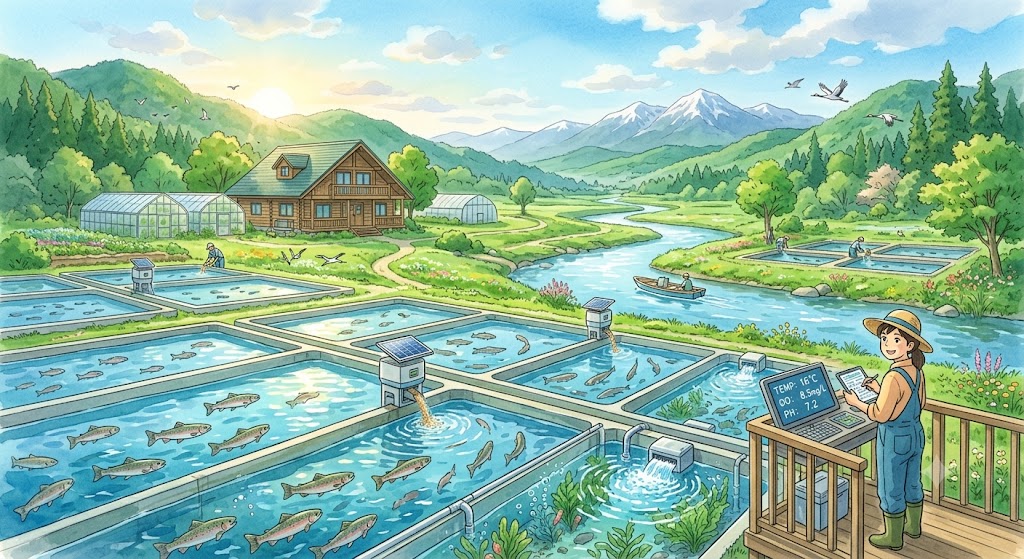
Fish farming has become an important part of modern agriculture and food production. As demand for fish continues to increase, farmers are looking for practical ways to improve productivity while managing water, feed, labor, and operating costs more efficiently.
Modern aquaculture is no longer limited to simply stocking fish in a pond and waiting for harvest. Farmers can now use improved pond preparation, water-quality monitoring, better feeding practices, aeration, disease prevention, and record keeping to create healthier and more manageable production systems.
The most suitable technique depends on the fish species, farm size, climate, available water, budget, and local market. A successful fish farm does not necessarily require expensive technology. Often, consistent management and good daily practices make the biggest difference.
Start With Proper Farm Planning
Good fish farming begins before the first fish enters the pond.
Farmers should evaluate water availability, soil characteristics, drainage, pond location, electricity access, transportation, and nearby markets. The pond should ideally be located where water can be managed easily without creating unnecessary environmental problems.
The production target should also be decided in advance. Farmers need to estimate the expected stocking level, feed requirements, labor, equipment, and potential harvest volume.
Starting with realistic production goals can help prevent overcrowding and excessive investment.
Choose Fish Species Carefully
Species selection is one of the most important decisions in aquaculture.
Farmers should consider species that are suitable for the local climate and water conditions while also having established market demand. Growth rate, feeding habits, disease resistance, availability of quality fingerlings, and consumer preferences should all be considered.
Commonly farmed species differ from region to region. Depending on local conditions, farmers may work with species such as tilapia, carp, catfish, trout, or other commercially suitable fish.
The best species is not always the one with the highest selling price. A species that grows reliably and has dependable buyers may provide better long-term results.
Prepare Ponds Before Stocking
Pond preparation plays an important role in fish health.
Farmers should remove unwanted debris, repair damaged embankments, control excessive aquatic vegetation, and make sure drainage and water-entry systems are functioning properly.
The pond environment should be checked before stocking. Poor preparation can create water-quality problems later, making management more difficult.
Farmers should also purchase healthy fingerlings from reliable suppliers. Weak or damaged fingerlings can lead to poor survival and uneven growth.
Maintain Good Water Quality
Water is effectively the living environment of farmed fish, making water quality one of the most important management factors.
Temperature, dissolved oxygen, pH, ammonia, and other water-quality parameters can influence fish health and growth.
Regular monitoring allows farmers to identify changes before they become serious problems. Sudden changes in water quality can cause stress, reduce feeding activity, and increase disease risk.
Testing frequency depends on the farming system and local conditions, but farmers should establish a consistent monitoring routine rather than checking water only after fish begin showing problems.
Use Aeration When Appropriate
Aeration can help maintain adequate dissolved oxygen, especially in intensive systems or during periods when oxygen levels may fall.
Mechanical aerators can circulate water and increase oxygen transfer. Their use should be based on farm requirements rather than simply running equipment continuously without monitoring.
Oxygen problems can become particularly serious during the night or early morning in some pond systems. Farmers should understand the warning signs of oxygen stress and establish appropriate emergency procedures.
For larger operations, automated monitoring and aeration systems can help improve response times.
Improve Feeding Practices
Feed is often one of the largest operating expenses in fish farming.
Overfeeding wastes money and can also deteriorate water quality as uneaten feed decomposes. Underfeeding, on the other hand, can slow growth and reduce production.
Modern feeding management focuses on giving fish the appropriate amount of nutritionally balanced feed according to species, size, water temperature, and production conditions.
Farmers should monitor feeding response and adjust quantities when necessary. Keeping records of feed consumption can also help identify unusual changes in fish behavior.
Consider Automatic Feeding Systems
Automatic feeders can be useful for farms where feeding consistency is difficult to maintain manually.
These systems can distribute predetermined amounts of feed at scheduled intervals. Some advanced systems can be connected with sensors or farm-management software.
However, automation should support good management rather than replace observation. Farmers still need to inspect fish behavior, water conditions, equipment, and overall pond health.
For small farms, simple manual feeding combined with accurate record keeping may remain the most economical option.
Practice Responsible Stocking
Stocking density should match the production system’s capacity.
Overstocking can increase competition for food and oxygen, create greater waste loads, and make disease management more difficult. Farmers should follow species-specific recommendations and consider the pond’s water exchange, aeration, filtration, and management capacity.
It is generally better to maintain a manageable stocking level than to maximize the number of fish without sufficient resources to support them.
Prevent Disease Through Good Management
Disease prevention is usually more effective than dealing with a major outbreak after it occurs.
Farmers should obtain healthy stock, maintain good water quality, avoid unnecessary stress, remove dead fish promptly, and keep equipment clean.
New fish may require appropriate quarantine procedures depending on the production system and local biosecurity recommendations.
If unusual mortality or disease symptoms appear, farmers should seek advice from qualified aquatic animal health professionals rather than relying on unverified treatments.
Use Technology for Farm Monitoring
Digital tools are becoming increasingly useful in modern aquaculture.
Water-quality sensors can monitor parameters such as temperature and dissolved oxygen. Some systems can send alerts when conditions move outside predetermined ranges.
Farm-management software can also help track feed usage, stocking information, growth rates, mortality, expenses, and harvest data.
Technology does not need to be complicated. Even a spreadsheet or mobile record-keeping application can help farmers make better decisions by turning daily observations into useful production information.
Manage Waste and Water Carefully
Responsible waste management is essential for sustainable aquaculture.
Excess feed, fish waste, and poor water management can affect pond conditions and surrounding environments. Farmers should avoid unnecessary discharge and manage sludge and organic material appropriately.
Integrated systems may also connect fish farming with other agricultural activities where suitable. For example, nutrient-rich water from certain systems may be reused for crop irrigation when it is safe and appropriate.
Such approaches should be designed carefully to avoid spreading disease or creating environmental problems.
Keep Detailed Farm Records
Record keeping allows farmers to understand what is actually happening on the farm.
Useful records include stocking dates, fingerling quantities, feed consumption, water-quality readings, mortality, treatments, labor expenses, electricity costs, harvest weight, and selling prices.
Over time, these records can reveal which production cycles performed well and where money was being lost.
This information can help farmers improve future stocking plans, feeding schedules, equipment use, and financial decisions.
Final Thoughts
Modern fish farming is increasingly focused on efficient management rather than simply increasing the number of fish produced. Proper pond preparation, suitable species selection, responsible stocking, water-quality monitoring, efficient feeding, aeration, disease prevention, and accurate record keeping can all contribute to healthier aquaculture operations.
Farmers do not have to adopt every modern technology at once. A better approach is to identify the farm’s biggest challenges and introduce practical improvements step by step.
With consistent monitoring and responsible management, modern aquaculture techniques can help farmers improve productivity, reduce avoidable losses, and build fish-farming systems that are healthier, more efficient, and better prepared for long-term growth.