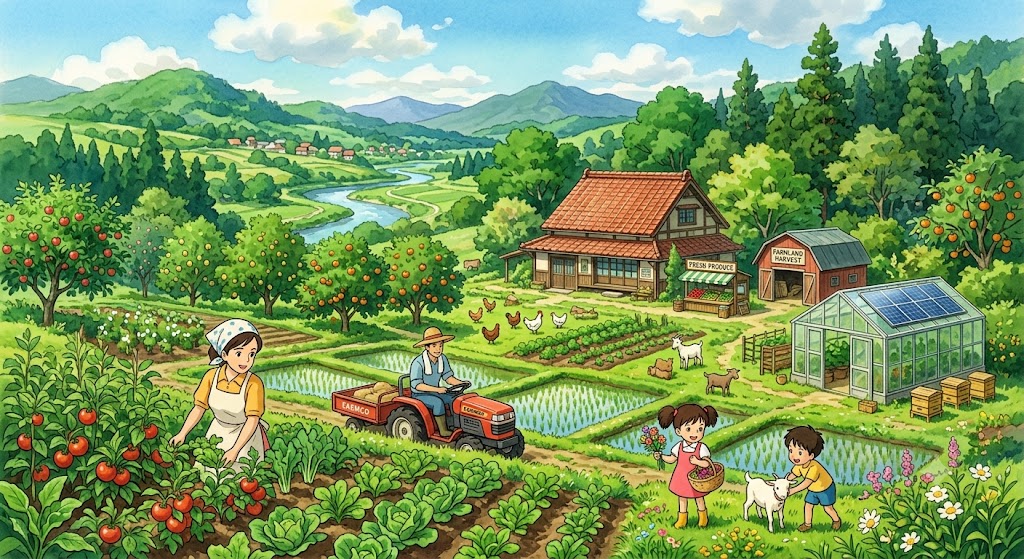
Modern agriculture faces numerous challenges, including fluctuating market prices, rising input costs, unpredictable weather conditions, pest outbreaks, and changing consumer demands. Farmers who rely on a single crop or enterprise often face greater financial risks when these challenges occur. As a result, many successful producers are turning to diversified farming systems to improve stability, increase income opportunities, and strengthen long-term profitability.
Diversified farming involves integrating multiple agricultural enterprises within the same farming operation. Instead of depending on a single source of revenue, farmers combine crops, livestock, aquaculture, horticulture, or other complementary activities to create a more resilient and productive system.
This approach not only improves farm income but also supports better resource utilization, environmental sustainability, and risk management.
What Is a Diversified Farming System?
A diversified farming system combines two or more agricultural activities on the same farm.
Examples include:
- Crop and livestock integration
- Vegetable and fruit production
- Fish farming with crop cultivation
- Poultry and vegetable farming
- Agroforestry systems
- Dairy and fodder production
The goal is to create multiple income streams while maximizing the efficient use of available resources.
Diversification allows different enterprises to support one another, improving overall farm productivity.
Why Diversification Matters
Agricultural production is influenced by many unpredictable factors.
These include:
- Weather conditions
- Market fluctuations
- Pest infestations
- Disease outbreaks
- Input price increases
When a farm depends on a single crop, any negative event can significantly impact income.
Diversification helps reduce these risks by spreading income sources across multiple enterprises.
Benefits include:
- Increased profitability
- Better risk management
- Improved resource efficiency
- Greater financial stability
- Enhanced sustainability
Diversified farms are often more resilient during challenging economic and environmental conditions.
Creating Multiple Income Streams
One of the primary advantages of diversified farming is the ability to generate revenue from several sources.
Examples include:
Crop Production
Provides seasonal income through grain, vegetable, fruit, or specialty crop sales.
Livestock Enterprises
Generate revenue from meat, milk, eggs, breeding stock, or animal products.
Aquaculture
Fish farming creates additional market opportunities.
Agroforestry
Trees may provide timber, fruits, fuelwood, or environmental benefits.
Multiple income streams help stabilize cash flow throughout the year.
Improving Resource Utilization
Diversified systems often make better use of farm resources.
Examples include:
- Livestock manure enriching crop fields
- Crop residues feeding animals
- Trees providing shade and wind protection
- Fish ponds supplying irrigation water
These interactions improve efficiency and reduce waste.
Resources that might otherwise be unused can contribute to overall farm productivity.
Enhancing Soil Fertility
Diversified farming supports healthier soils through natural nutrient cycling.
Practices may include:
- Crop rotation
- Legume cultivation
- Organic matter recycling
- Integrated livestock systems
Benefits include:
- Improved soil structure
- Increased organic matter
- Better nutrient availability
- Enhanced microbial activity
Healthy soil supports stronger crop growth and long-term productivity.
Reducing Pest and Disease Pressure
Monoculture systems often create favorable conditions for pests and diseases.
Diversification helps break pest cycles by:
- Introducing different crops
- Increasing biodiversity
- Supporting beneficial insects
- Reducing host plant concentration
As a result, diversified farms may experience lower pest pressure and reduced dependence on chemical controls.
This contributes to both economic and environmental benefits.
Crop Diversification Strategies
Growing multiple crop types provides numerous advantages.
Examples include:
Cereals
Such as wheat, maize, rice, and barley.
Legumes
Such as beans, peas, chickpeas, and lentils.
Vegetables
High-value crops that often generate strong returns.
Fruits
Provide additional revenue opportunities.
Specialty Crops
Target niche markets with premium pricing.
Combining different crop categories improves resilience and profitability.
Integrating Livestock into Farming Systems
Livestock can play a valuable role in diversified operations.
Common options include:
- Dairy cattle
- Beef cattle
- Goats
- Sheep
- Poultry
- Pigs
Benefits include:
- Additional income
- Nutrient recycling
- Improved resource efficiency
- Reduced waste
Livestock integration often creates valuable synergies with crop production.
Fish Farming and Aquaculture Opportunities
Aquaculture can complement traditional farming systems.
Fish farming provides:
- Additional revenue
- Protein production
- Efficient water utilization
Integrated fish farming systems may combine:
- Fish ponds
- Vegetable cultivation
- Livestock enterprises
These systems can improve resource efficiency while creating multiple market opportunities.
Agroforestry Systems
Agroforestry integrates trees with crops and livestock.
Benefits include:
- Soil conservation
- Biodiversity enhancement
- Carbon storage
- Additional income sources
Common agroforestry products include:
- Fruits
- Timber
- Nuts
- Medicinal plants
Trees also improve farm resilience by protecting soil and moderating environmental conditions.
Improving Water Efficiency
Diversified systems often support better water management.
Examples include:
- Rainwater harvesting
- Fish pond irrigation
- Mulching practices
- Agroforestry systems
Improved water efficiency contributes to sustainability and profitability.
This is especially important in regions facing water scarcity.
Increasing Market Opportunities
Diversification allows farmers to access multiple markets.
Potential outlets include:
- Wholesale buyers
- Farmers markets
- Retail stores
- Restaurants
- Export markets
Different enterprises may perform well under different market conditions.
This flexibility helps farmers adapt to changing consumer demand.
Supporting Climate Resilience
Climate variability is becoming an increasingly important challenge for agriculture.
Diversified farms often demonstrate greater resilience because:
- Different crops respond differently to weather conditions.
- Livestock can provide income when crops underperform.
- Trees help protect soil and conserve moisture.
Diversification reduces dependence on any single production system.
Reducing Financial Risk
Financial stability is one of the strongest arguments for diversification.
Risk reduction occurs because:
- Income sources are spread across multiple enterprises.
- Market fluctuations affect products differently.
- Crop failures do not eliminate all revenue opportunities.
This balanced approach strengthens long-term farm sustainability.
Building an Effective Diversified Farming Plan
Successful diversification requires careful planning.
Farmers should evaluate:
- Available land
- Climate conditions
- Water resources
- Labor availability
- Market opportunities
- Production expertise
Enterprises should complement one another rather than compete for resources.
Strategic planning improves efficiency and profitability.
Common Diversified Farming Models
Examples of successful systems include:
Crop-Livestock Systems
Combining field crops with animal production.
Vegetable and Poultry Farms
Producing vegetables alongside egg or meat enterprises.
Fish and Vegetable Systems
Integrating aquaculture with crop cultivation.
Agroforestry Farms
Combining trees, crops, and livestock.
Mixed Horticulture Operations
Producing fruits, vegetables, and specialty crops.
These systems demonstrate how diversification can strengthen agricultural businesses.
Long-Term Benefits of Diversified Farming
Farmers who successfully diversify often experience:
- More stable income
- Improved soil health
- Better resource efficiency
- Reduced production risks
- Enhanced environmental sustainability
- Greater market flexibility
These advantages contribute to stronger and more profitable farming operations.
Conclusion
Diversified farming systems offer a practical and effective approach to strengthening farm profitability in today’s challenging agricultural environment. By integrating multiple enterprises such as crops, livestock, aquaculture, horticulture, and agroforestry, farmers can create resilient operations that generate multiple income streams while improving resource efficiency and sustainability.
As agriculture continues to face economic and environmental uncertainties, diversification provides a valuable strategy for managing risk and achieving long-term success. Farmers who embrace diversified systems are often better positioned to increase profitability, protect natural resources, and build stronger agricultural businesses for the future.