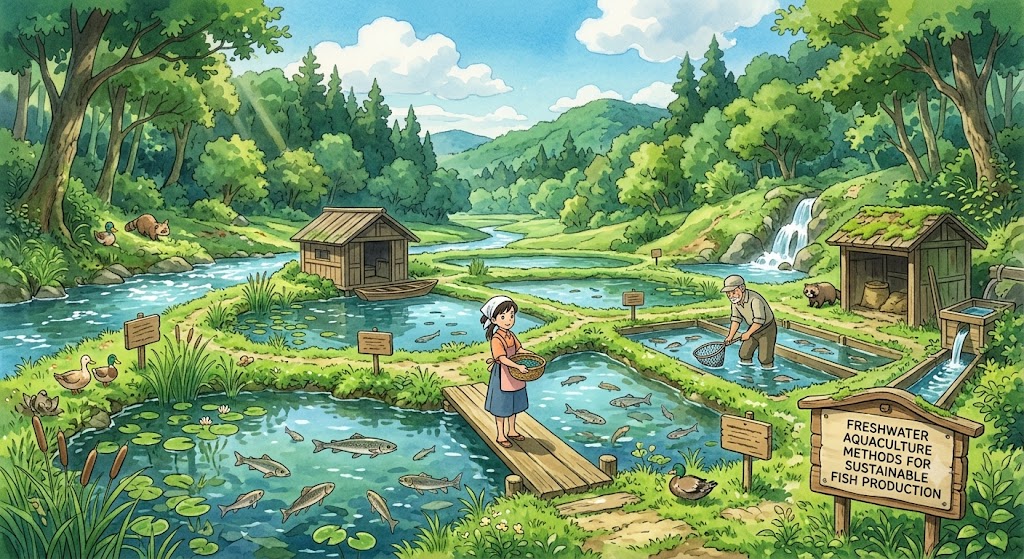
As global demand for seafood continues to rise, freshwater aquaculture has emerged as one of the fastest-growing sectors in agriculture and food production. Aquaculture, commonly known as fish farming, provides an efficient way to produce high-quality protein while reducing pressure on wild fish populations. With proper management, freshwater fish farming can become a profitable and environmentally sustainable enterprise that supports food security and rural economic development.
Freshwater aquaculture involves raising fish in controlled environments such as ponds, tanks, reservoirs, and recirculating systems. By utilizing sustainable production methods, farmers can improve fish health, maximize yields, conserve resources, and maintain long-term profitability.
This guide explores the most effective freshwater aquaculture methods that support sustainable fish production.
Understanding Freshwater Aquaculture
Freshwater aquaculture refers to the cultivation of aquatic organisms in freshwater environments.
Common farmed species include:
- Tilapia
- Catfish
- Carp
- Trout
- Freshwater prawns
- Barramundi
- Perch
Fish are raised under managed conditions where farmers control feeding, water quality, stocking density, and overall production systems.
Sustainable aquaculture focuses on balancing productivity with environmental responsibility.
Why Sustainable Fish Production Matters
The growing global population continues to increase demand for affordable protein sources.
Sustainable freshwater aquaculture offers several benefits:
- Reliable food production
- Reduced pressure on wild fisheries
- Job creation
- Rural economic development
- Efficient land use
- Improved food security
However, poor management can lead to water pollution, disease outbreaks, and environmental degradation.
Sustainable practices help prevent these problems while ensuring long-term production success.
Selecting the Right Fish Species
Successful fish farming begins with choosing species that match local environmental conditions and market demand.
Important factors to consider include:
- Water temperature
- Growth rates
- Feed requirements
- Disease resistance
- Market value
- Consumer preferences
Popular freshwater species such as tilapia, carp, and catfish are widely farmed because of their adaptability and strong market demand.
Proper species selection improves survival rates and profitability.
Pond-Based Aquaculture Systems
Earthen ponds remain one of the most common freshwater aquaculture methods worldwide.
Advantages include:
- Relatively low construction costs
- Natural food production
- Easy management
- Scalability
Well-designed ponds should provide:
- Adequate water depth
- Proper drainage systems
- Reliable water supply
- Good sunlight exposure
Pond systems are particularly suitable for small and medium-scale fish farming operations.
Cage Culture Systems
Cage culture involves raising fish in floating cages placed within lakes, reservoirs, or other water bodies.
Benefits include:
- Efficient use of existing water resources
- Lower land requirements
- Easy monitoring and harvesting
- High production potential
Proper site selection is critical to ensure:
- Good water circulation
- Adequate oxygen levels
- Protection from extreme weather
Cage systems are increasingly popular in commercial aquaculture operations.
Tank-Based Production Systems
Fish can also be raised in tanks constructed from:
- Concrete
- Fiberglass
- Plastic materials
Tank systems offer greater control over:
- Water quality
- Feeding
- Disease management
- Stocking density
Advantages include:
- Improved biosecurity
- Efficient space utilization
- Easier monitoring
Tank-based aquaculture is often used for high-value species and intensive production systems.
Recirculating Aquaculture Systems (RAS)
Recirculating Aquaculture Systems represent one of the most advanced forms of fish farming.
These systems continuously filter and reuse water through specialized treatment units.
Benefits include:
- Reduced water consumption
- Improved environmental control
- High stocking densities
- Year-round production
Although initial investment costs can be higher, RAS technology offers excellent sustainability and production efficiency.
Maintaining Water Quality
Water quality is one of the most important factors in successful fish farming.
Key parameters include:
Dissolved Oxygen
Fish require adequate oxygen levels for growth and survival.
Temperature
Different species have specific temperature requirements.
pH Levels
Maintaining proper pH helps support fish health.
Ammonia and Nitrite Levels
Excessive waste accumulation can harm fish and reduce productivity.
Regular monitoring helps prevent water quality problems before they become serious.
Sustainable Feeding Practices
Feed represents one of the largest costs in aquaculture production.
Efficient feeding strategies help:
- Improve growth rates
- Reduce waste
- Lower production costs
- Improve water quality
Best practices include:
- Providing balanced nutrition
- Avoiding overfeeding
- Monitoring feed conversion efficiency
- Using quality feed products
Responsible feeding supports both profitability and environmental sustainability.
Proper Stocking Density Management
Overcrowding can create numerous production challenges.
High stocking densities may result in:
- Increased disease risk
- Reduced growth rates
- Poor water quality
- Elevated stress levels
Farmers should maintain stocking rates appropriate for their production systems and species.
Balanced stocking densities support healthier fish and improved yields.
Disease Prevention and Biosecurity
Disease outbreaks can significantly impact fish production.
Preventive measures include:
- Purchasing healthy fingerlings
- Maintaining water quality
- Quarantining new stock
- Cleaning equipment regularly
- Limiting unnecessary farm access
Strong biosecurity programs reduce disease risks and improve long-term farm performance.
Prevention is generally more effective and economical than treatment.
Integrated Aquaculture Systems
Integrated farming combines fish production with other agricultural activities.
Examples include:
- Fish and vegetable production
- Fish and rice farming
- Fish and livestock systems
Benefits include:
- Improved resource efficiency
- Nutrient recycling
- Multiple income streams
- Reduced waste
Integrated systems support sustainability while increasing overall farm profitability.
Environmental Management Practices
Sustainable aquaculture requires careful environmental stewardship.
Important practices include:
- Waste management
- Water conservation
- Responsible feed use
- Habitat protection
- Efficient resource utilization
Minimizing environmental impacts helps ensure long-term viability and community acceptance.
Monitoring Fish Health and Growth
Regular monitoring allows farmers to identify problems early.
Areas to evaluate include:
- Growth performance
- Feeding behavior
- Physical appearance
- Water quality conditions
- Mortality rates
Accurate records help farmers optimize management practices and improve productivity.
Harvesting and Post-Harvest Handling
Proper harvesting techniques help maintain fish quality and market value.
Best practices include:
- Harvesting during cooler periods
- Minimizing fish stress
- Using clean equipment
- Rapid cooling after harvest
- Proper transportation
Good post-harvest management improves product quality and customer satisfaction.
Economic Benefits of Sustainable Aquaculture
Sustainable fish farming can provide:
- Consistent income
- Market diversification
- Employment opportunities
- Food security benefits
- Long-term profitability
As seafood demand continues to grow, freshwater aquaculture offers significant business opportunities for farmers and investors.
Building a Sustainable Aquaculture Operation
Successful fish farmers often focus on:
- Species selection
- Water quality management
- Efficient feeding programs
- Disease prevention
- Environmental stewardship
- Accurate record keeping
- Continuous improvement
Combining these practices supports both productivity and sustainability.
Future Trends in Freshwater Aquaculture
Emerging developments include:
- Smart monitoring systems
- Automated feeding technologies
- Improved genetics
- Advanced filtration systems
- Data-driven management tools
These innovations are expected to further improve efficiency and sustainability within the aquaculture industry.
Conclusion
Freshwater aquaculture provides a practical and sustainable solution for meeting the growing global demand for fish and seafood products. Through methods such as pond culture, cage farming, tank systems, and recirculating aquaculture technologies, farmers can produce high-quality fish while minimizing environmental impacts.
By focusing on water quality, responsible feeding, disease prevention, resource efficiency, and environmental stewardship, fish producers can build profitable operations that support long-term sustainability. As aquaculture continues to expand worldwide, sustainable freshwater fish farming will play an increasingly important role in global food production and agricultural development.