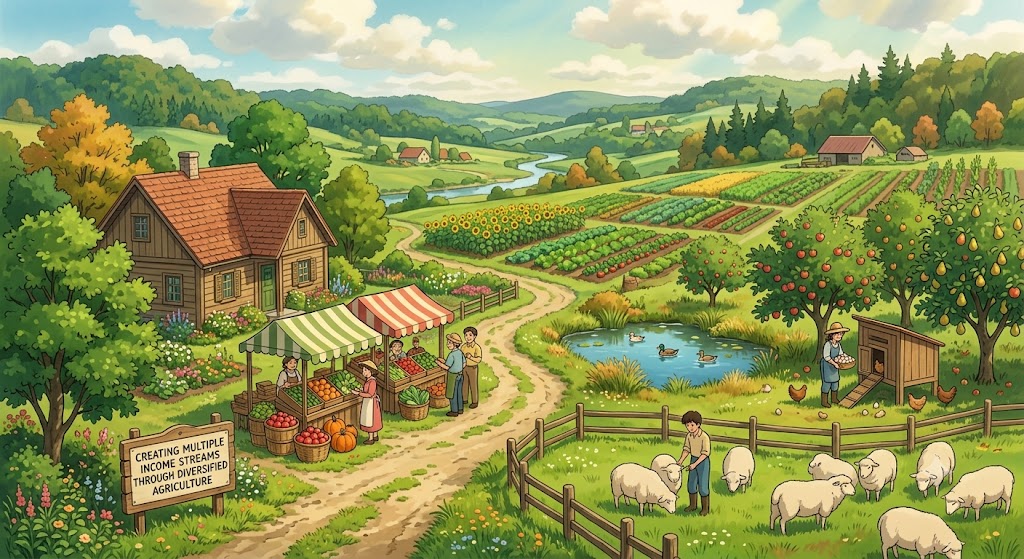
Agricultural success is no longer measured solely by the productivity of a single crop or livestock enterprise. In today’s rapidly changing agricultural environment, many farmers are discovering the benefits of diversification as a strategy for improving profitability, reducing risk, and creating long-term financial stability. Diversified agriculture involves integrating multiple farming activities that complement one another while generating several sources of income from the same operation.
Relying on a single commodity can expose farmers to market fluctuations, weather-related losses, pest outbreaks, and other unexpected challenges. By creating multiple income streams, agricultural businesses become more resilient and better equipped to adapt to changing conditions. Diversification also allows farmers to make better use of available land, labor, equipment, and natural resources.
This guide explores how diversified agriculture can help farmers build stronger, more profitable operations while supporting sustainability and long-term growth.
Understanding Diversified Agriculture
Diversified agriculture refers to the practice of operating multiple agricultural enterprises within a single farming system.
These enterprises may include:
- Crop production
- Livestock farming
- Aquaculture
- Horticulture
- Agroforestry
- Value-added processing
- Agritourism
Rather than depending on a single source of revenue, diversified farms generate income from several activities throughout the year.
This approach improves financial stability and creates greater flexibility in farm management.
Why Diversification Matters
Agriculture involves many uncertainties.
Farmers often face risks related to:
- Weather conditions
- Market price fluctuations
- Pest and disease outbreaks
- Rising production costs
- Labor shortages
Diversification helps reduce these risks by spreading income across multiple enterprises.
When one activity performs poorly, other enterprises may help offset losses.
This balanced approach improves overall business resilience.
Economic Benefits of Multiple Income Streams
Creating several revenue sources provides numerous financial advantages.
Benefits include:
- More stable cash flow
- Reduced financial risk
- Improved resource utilization
- Greater profitability
- Increased business flexibility
Multiple income streams often allow farmers to generate revenue throughout the year rather than relying on a single harvest season.
Consistent income supports better financial planning and long-term growth.
Diversifying Through Crop Production
One of the simplest forms of diversification involves growing multiple crop types.
Examples include:
- Grains
- Vegetables
- Fruits
- Legumes
- Herbs
- Specialty crops
Benefits include:
- Reduced market risk
- Improved soil health
- Better resource utilization
- Greater production flexibility
Crop diversification also supports more effective rotation systems.
Integrating Livestock Enterprises
Livestock can complement crop production in many ways.
Common livestock enterprises include:
- Cattle
- Sheep
- Goats
- Poultry
- Dairy operations
Benefits include:
- Additional income
- Nutrient recycling
- Improved land utilization
- Greater enterprise diversity
Livestock integration often creates synergies that improve overall farm efficiency.
Poultry Production Opportunities
Poultry farming remains one of the most accessible diversification options.
Potential enterprises include:
- Broiler production
- Egg production
- Specialty poultry breeds
Advantages include:
- Relatively quick returns
- Strong market demand
- Flexible production scales
Poultry can provide consistent income throughout the year.
Fish Farming and Aquaculture
Aquaculture offers another valuable income opportunity.
Popular species include:
- Tilapia
- Catfish
- Trout
- Carp
Benefits include:
- Efficient protein production
- Growing consumer demand
- Resource diversification
Fish farming can be integrated with crop systems to improve resource efficiency.
Agroforestry Systems
Agroforestry combines trees with agricultural production.
Potential products include:
- Fruits
- Nuts
- Timber
- Medicinal plants
Benefits include:
- Long-term income opportunities
- Soil conservation
- Improved biodiversity
- Climate resilience
Agroforestry creates multiple revenue streams while enhancing environmental sustainability.
Specialty Crop Production
High-value specialty crops often generate greater income per acre than traditional commodities.
Examples include:
- Microgreens
- Mushrooms
- Herbs
- Medicinal plants
- Exotic vegetables
Benefits include:
- Premium pricing
- Niche markets
- Efficient land use
Specialty crops are particularly attractive for small and medium-sized farms.
Greenhouse and Protected Cultivation
Protected cultivation extends growing seasons and increases production flexibility.
Examples include:
- Greenhouses
- High tunnels
- Vertical farming systems
Benefits include:
- Year-round production
- Improved crop quality
- Higher market prices
Protected cultivation can create additional income opportunities during off-seasons.
Value-Added Agricultural Products
Processing agricultural products can significantly increase profitability.
Examples include:
- Jams
- Honey products
- Dried fruits
- Herbal teas
- Essential oils
- Dairy products
Value addition allows farmers to capture more of the final product value.
Processing often improves profit margins compared to selling raw products alone.
Beekeeping as a Diversification Strategy
Beekeeping offers both direct and indirect economic benefits.
Potential products include:
- Honey
- Beeswax
- Pollen
- Propolis
Additional advantages include:
- Pollination services
- Improved crop productivity
Beekeeping requires relatively little land and can complement many farming systems.
Agritourism Opportunities
Agritourism creates income through visitor experiences.
Examples include:
- Farm tours
- Educational workshops
- Seasonal events
- Pick-your-own operations
Benefits include:
- Additional revenue
- Brand development
- Direct consumer engagement
Agritourism continues to grow as consumers seek connections with food production.
Direct Marketing Strategies
Selling directly to consumers can increase profitability.
Popular channels include:
- Farmers markets
- Community-supported agriculture programs
- Online sales
- Farm stores
Benefits include:
- Better pricing
- Stronger customer relationships
- Greater control over marketing
Direct sales often improve income potential while reducing dependence on intermediaries.
Efficient Resource Utilization
Diversified farms often use resources more effectively.
Examples include:
- Crop residues used as livestock feed
- Animal manure used as fertilizer
- Shared equipment across enterprises
- Labor utilization throughout the year
Resource integration improves efficiency and reduces waste.
Well-designed systems create benefits across multiple enterprises.
Building Climate Resilience
Diversification helps farms adapt to changing environmental conditions.
Benefits include:
- Reduced dependence on single crops
- Greater flexibility during adverse weather
- Improved risk management
Climate resilience is becoming increasingly important for long-term agricultural success.
Diversified operations are often better prepared for unexpected challenges.
Financial Planning for Diversification
Before adding new enterprises, farmers should evaluate:
- Startup costs
- Market demand
- Labor requirements
- Resource availability
- Expected profitability
Careful planning helps ensure diversification contributes positively to overall business performance.
Gradual expansion often reduces financial risk.
Technology and Diversified Agriculture
Modern technologies can support multiple farm enterprises.
Useful tools include:
- Farm management software
- Precision agriculture systems
- Automated monitoring equipment
- Digital marketing platforms
Technology helps improve efficiency while simplifying complex farm operations.
Data-driven management supports better decision-making.
Creating a Diversification Strategy
Successful diversification often follows several key steps:
- Assess available resources
- Identify market opportunities
- Select complementary enterprises
- Evaluate financial requirements
- Implement gradually
- Monitor performance regularly
Strategic planning increases the likelihood of long-term success.
Long-Term Benefits of Diversified Farming
Diversified farms often experience:
- Greater income stability
- Improved resilience
- Better resource utilization
- Enhanced sustainability
- Increased profitability
Multiple revenue streams create stronger agricultural businesses capable of adapting to changing market and environmental conditions.
Conclusion
Creating multiple income streams through diversified agriculture is one of the most effective strategies for improving farm profitability and long-term stability. By integrating crops, livestock, aquaculture, agroforestry, specialty products, agritourism, and value-added enterprises, farmers can reduce risk while maximizing the productivity of their available resources.
Diversification allows agricultural businesses to remain flexible, resilient, and competitive in an increasingly complex industry. Farmers who carefully plan and implement diversified systems are better positioned to achieve sustainable growth, consistent income, and long-term success for years to come.