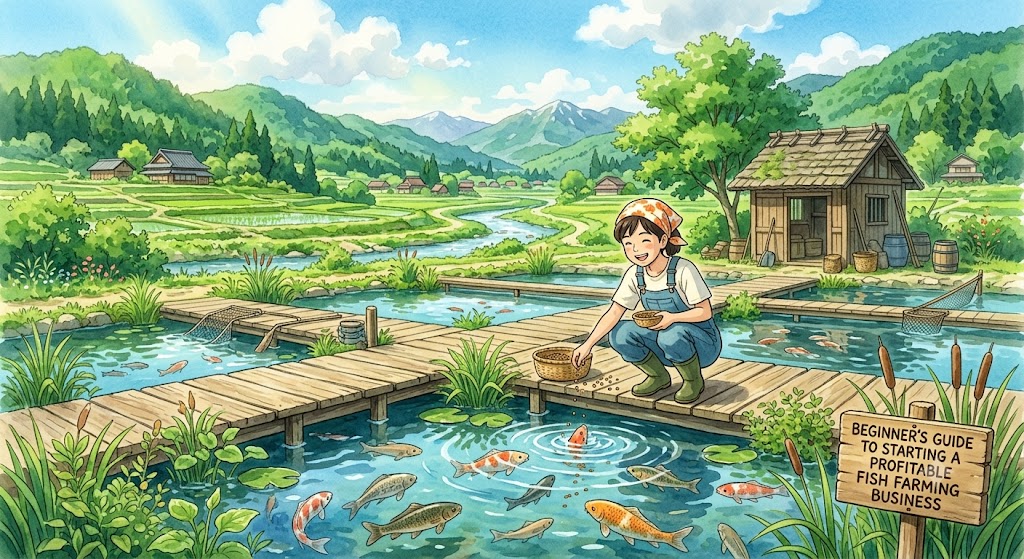
Fish farming, also known as aquaculture, has become one of the fastest-growing sectors of modern agriculture. As global demand for fish and seafood continues to increase, fish farming offers entrepreneurs and farmers an attractive opportunity to generate income while contributing to food production. Compared to many traditional farming enterprises, fish farming can provide efficient feed conversion, relatively fast production cycles, and strong market demand.
For beginners, entering the aquaculture industry may seem complex at first. However, with proper planning, suitable species selection, effective management, and a clear understanding of local market conditions, fish farming can become a profitable and sustainable business.
This guide explores the essential steps involved in starting a successful fish farming operation and building a profitable aquaculture enterprise.
Understanding Fish Farming
Fish farming involves raising fish under controlled conditions for commercial purposes.
Production systems may include:
- Earthen ponds
- Concrete tanks
- Cage systems
- Recirculating aquaculture systems
- Integrated farming systems
Farmed fish are produced for:
- Food markets
- Recreational fishing
- Ornamental fish industries
- Stock enhancement programs
Commercial fish farming aims to maximize production while maintaining fish health and environmental sustainability.
Why Fish Farming Is Growing
Several factors are driving the expansion of aquaculture worldwide.
These include:
- Increasing seafood demand
- Declining wild fish stocks
- Population growth
- Improved farming technologies
- Rising consumer awareness of healthy protein sources
Fish farming helps meet growing food needs while reducing pressure on natural fisheries.
As demand continues to increase, opportunities for aquaculture businesses are expected to expand.
Evaluate Market Demand
Before starting a fish farming business, it is important to understand the local market.
Research should focus on:
- Consumer preferences
- Fish prices
- Competitor activities
- Distribution channels
- Seasonal demand patterns
Understanding market opportunities helps farmers select suitable species and production systems.
Strong market demand is essential for long-term profitability.
Choose the Right Fish Species
Species selection is one of the most important decisions in fish farming.
Factors to consider include:
- Local climate conditions
- Water availability
- Market demand
- Growth rates
- Disease resistance
- Feed requirements
Popular commercial species include:
Tilapia
Fast-growing and widely accepted in many markets.
Catfish
Adaptable and relatively easy to manage.
Carp
Suitable for various production systems.
Trout
Popular in cooler climates.
Choosing species well-suited to local conditions improves production success.
Select a Suitable Farming System
Different production systems offer varying advantages.
Earthen Ponds
Common and relatively affordable.
Benefits include:
- Natural food production
- Lower operating costs
- Established management practices
Tank Systems
Allow greater control over production conditions.
Cage Culture
Utilizes existing water bodies such as lakes and reservoirs.
Recirculating Aquaculture Systems
Offer high production efficiency but require greater investment.
The choice of system should align with available resources and business goals.
Secure Reliable Water Sources
Water quality directly affects fish health and growth.
Important considerations include:
- Water availability
- Water quality
- Oxygen levels
- Temperature
- pH balance
Reliable water supplies are essential for successful aquaculture operations.
Poor water quality can lead to reduced growth and increased disease risks.
Develop a Business Plan
A detailed business plan helps guide decision-making and improve financial management.
The plan should include:
- Production goals
- Budget estimates
- Market analysis
- Risk management strategies
- Marketing plans
Planning helps identify potential challenges before significant investments are made.
A clear strategy improves the chances of long-term success.
Understand Legal and Regulatory Requirements
Fish farming may require compliance with local regulations.
Requirements can include:
- Business licenses
- Water-use permits
- Environmental approvals
- Biosecurity standards
Understanding legal obligations helps avoid future complications and supports responsible business operations.
Prepare Production Facilities
Production facilities should be designed to support efficient management and fish welfare.
Key considerations include:
- Pond construction
- Water circulation
- Drainage systems
- Security measures
- Feed storage facilities
Well-designed infrastructure supports healthy fish growth and efficient farm operations.
Source Quality Fingerlings
Fingerlings are young fish used to establish production stocks.
Farmers should purchase fingerlings from reputable suppliers that provide:
- Healthy fish
- Reliable genetics
- Disease-free stock
High-quality fingerlings improve survival rates and production performance.
Strong beginnings often lead to better harvest results.
Focus on Proper Feeding Programs
Feed represents one of the largest operating costs in fish farming.
Successful feeding programs should provide:
- Balanced nutrition
- Appropriate feeding schedules
- High-quality feed ingredients
Proper feeding supports:
- Faster growth
- Better feed conversion
- Improved fish health
Efficient feeding directly influences profitability.
Monitor Water Quality Regularly
Water quality management is one of the most important responsibilities in aquaculture.
Parameters that should be monitored include:
- Dissolved oxygen
- Temperature
- pH
- Ammonia levels
- Water clarity
Regular monitoring helps prevent problems before they affect fish performance.
Healthy water supports healthy fish.
Implement Biosecurity Measures
Disease prevention is essential for profitable fish farming.
Biosecurity practices may include:
- Controlling farm access
- Quarantining new stock
- Sanitizing equipment
- Monitoring fish health
Preventing disease outbreaks is generally more effective and less expensive than treatment.
Strong biosecurity protects both fish and farm profitability.
Manage Fish Health Proactively
Healthy fish grow faster and convert feed more efficiently.
Farmers should watch for:
- Unusual behavior
- Reduced feeding activity
- Visible injuries
- Disease symptoms
Early detection allows prompt intervention and minimizes losses.
Regular health monitoring should become part of daily management routines.
Optimize Stocking Density
Stocking density influences growth rates and water quality.
Overcrowding can lead to:
- Reduced growth
- Increased disease risks
- Poor water conditions
Maintaining appropriate stocking levels supports better performance and profitability.
Balanced stocking improves overall production efficiency.
Keep Accurate Production Records
Record keeping helps farmers evaluate performance and make informed decisions.
Important records include:
- Stocking dates
- Feed usage
- Growth rates
- Mortality levels
- Water quality data
- Harvest information
Reliable records support continuous improvement and better business management.
Develop Marketing Strategies
Marketing is essential for business success.
Potential sales channels include:
- Local markets
- Restaurants
- Retail stores
- Wholesalers
- Direct-to-consumer sales
Strong marketing helps ensure harvested fish are sold efficiently and profitably.
Market planning should begin well before harvest.
Consider Value-Added Opportunities
Additional income may be generated through:
- Fish processing
- Packaging
- Smoking
- Filleting
- Branded products
Value-added products often command higher prices and improve profit margins.
Processing opportunities can strengthen business growth.
Build Sustainability Into the Business
Sustainable fish farming practices support long-term success.
Examples include:
- Efficient water use
- Responsible feeding
- Waste management
- Environmental protection
Sustainability helps maintain productivity while protecting natural resources.
Responsible practices also improve public perception and market opportunities.
Common Challenges for Beginners
New fish farmers may encounter challenges such as:
- Water quality issues
- Disease outbreaks
- Feed management problems
- Market fluctuations
Continuous learning and careful management help overcome these obstacles.
Experience and knowledge become valuable assets over time.
Building a Successful Fish Farming Enterprise
Successful aquaculture operations typically focus on:
- Market research
- Suitable species selection
- Water quality management
- Efficient feeding
- Fish health monitoring
- Biosecurity practices
- Financial planning
Combining these factors creates a strong foundation for profitability.
Conclusion
Fish farming offers excellent opportunities for beginners seeking to build profitable agricultural businesses. With growing global demand for seafood, efficient production systems, and increasing technological support, aquaculture continues to be one of the most promising sectors in modern agriculture.
Success depends on careful planning, appropriate species selection, effective management, and strong marketing strategies. Farmers who prioritize fish health, water quality, resource efficiency, and continuous learning are well-positioned to build sustainable aquaculture enterprises that remain profitable for years to come.