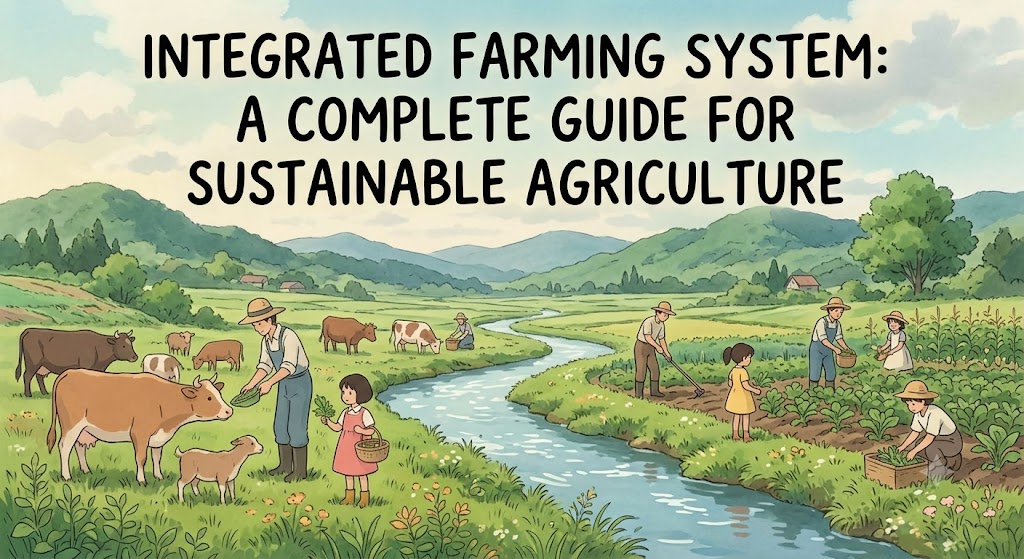
Agriculture is changing rapidly as farmers face rising production costs, unpredictable weather, declining soil fertility, and increasing pressure to produce more food using fewer resources. In response to these challenges, many farmers are adopting the Integrated Farming System (IFS)—a practical and sustainable approach that combines different agricultural enterprises into one well-managed farming system.
Instead of relying on a single crop for income, integrated farming brings together activities such as crop cultivation, livestock rearing, poultry farming, fish farming, beekeeping, compost production, and horticulture. These enterprises support one another, reducing waste and creating multiple sources of income throughout the year.
Whether you own a small family farm or manage a larger agricultural operation, an integrated farming system can improve productivity, reduce production costs, protect natural resources, and increase long-term profitability. This guide explains how integrated farming works, its key components, benefits, challenges, and practical steps to implement it successfully.
What Is an Integrated Farming System?
An Integrated Farming System (IFS) is a farming method where different agricultural enterprises are combined on the same farm so that the output or waste from one enterprise becomes an input for another. The goal is to maximize resource use, minimize waste, and create a balanced farming ecosystem.
For example:
- Crop residues can be used as livestock feed.
- Livestock manure can be converted into organic fertilizer.
- Pond water enriched with fish waste can irrigate crops.
- Crop by-products can be composted and returned to the soil.
- Bees improve pollination while producing honey.
This interconnected approach improves farm efficiency and sustainability while reducing dependence on external inputs.
Why Integrated Farming Is Becoming Popular
Modern farming often depends heavily on chemical fertilizers, pesticides, and purchased feed, which can increase costs and impact the environment. Integrated farming offers a more balanced solution by making better use of on-farm resources.
Key reasons for its growing popularity include:
- Multiple income sources
- Lower production costs
- Improved soil fertility
- Reduced waste
- Better risk management
- Efficient use of water and land
- Greater environmental sustainability
Farmers are also less vulnerable to market fluctuations because they are not dependent on a single crop or enterprise.
Major Components of an Integrated Farming System
The design of an integrated farm depends on local climate, available land, water resources, and market demand. However, most successful systems include several complementary enterprises.
1. Crop Production
Crop cultivation is the foundation of most integrated farms. Farmers grow cereals, vegetables, fruits, pulses, oilseeds, or fodder crops based on local conditions.
Practices such as crop rotation, intercropping, and cover cropping help improve soil fertility, reduce pests, and maintain productivity.
2. Livestock Farming
Cattle, goats, sheep, buffaloes, and other livestock contribute significantly to integrated farming.
Benefits include:
- Milk and meat production
- Farmyard manure
- Draft power (where applicable)
- Additional farm income
Animal manure can replace a large portion of chemical fertilizers, improving soil health over time.
3. Poultry Farming
Poultry integrates well with crop and livestock systems.
Advantages include:
- Egg production
- Meat production
- Organic manure
- Quick financial returns
Poultry manure is rich in nutrients and can be composted or applied to fields after proper treatment.
4. Fish Farming
Where water resources are available, fish farming adds another profitable enterprise.
Fish ponds can:
- Produce nutritious food
- Generate additional income
- Store irrigation water
- Support duck farming
- Recycle nutrients through pond water
Integrated fish farming makes efficient use of available water resources.
5. Horticulture
Fruit trees and vegetable gardens provide regular income while improving farm biodiversity.
Common options include:
- Mango
- Guava
- Papaya
- Banana
- Citrus fruits
- Leafy vegetables
- Tomatoes
- Chilies
Horticulture also improves land use efficiency and creates employment opportunities.
6. Beekeeping
Beekeeping requires relatively little land but offers several important benefits.
Advantages include:
- Honey production
- Beeswax
- Improved crop pollination
- Higher fruit and vegetable yields
Healthy bee populations play a vital role in maintaining agricultural biodiversity.
7. Composting and Vermicomposting
Organic waste generated from crops and livestock should never be discarded.
Instead, farmers can produce:
- Compost
- Vermicompost
- Organic manure
These products enrich the soil, reduce fertilizer costs, and improve water retention.
Resource Recycling in Integrated Farming
One of the greatest strengths of an integrated farming system is efficient resource recycling.
Examples include:
- Crop residues → Livestock feed
- Livestock manure → Compost
- Compost → Crop fertilizer
- Crop waste → Mulch
- Pond sludge → Soil amendment
- Poultry litter → Organic fertilizer
- Kitchen waste → Composting
This cycle minimizes waste while reducing input costs and improving environmental sustainability.
Benefits of an Integrated Farming System
Higher Farm Income
With multiple enterprises operating simultaneously, farmers can generate income throughout the year rather than depending on a single harvest.
Better Resource Utilization
Every available resource—land, water, labor, and organic waste—is used more efficiently.
Reduced Production Costs
Using farm-produced compost, livestock manure, and recycled materials reduces spending on chemical fertilizers and external inputs.
Improved Soil Health
Continuous addition of organic matter enhances:
- Soil structure
- Water retention
- Microbial activity
- Nutrient availability
Healthy soils support stronger crops and better yields.
Lower Environmental Impact
Integrated farming reduces pollution by recycling waste and decreasing reliance on synthetic chemicals.
It also supports biodiversity through the cultivation of diverse crops and the integration of livestock and beneficial insects.
Better Risk Management
If one enterprise performs poorly due to weather, pests, or market prices, other enterprises can continue generating income.
This diversification makes farming more resilient.
Water Management in Integrated Farming
Water conservation is a critical part of sustainable agriculture.
Effective strategies include:
- Drip irrigation
- Rainwater harvesting
- Farm ponds
- Mulching
- Efficient drainage systems
- Reuse of nutrient-rich pond water
These practices help maintain crop productivity while reducing water waste.
Choosing the Right Combination of Enterprises
Every farm is unique, so the best integrated farming model depends on available resources.
For example:
Small Farms
- Vegetables
- Poultry
- Goats
- Composting
- Beekeeping
Medium Farms
- Crops
- Dairy cattle
- Fish ponds
- Fruit orchards
- Poultry
Large Farms
- Field crops
- Dairy
- Fisheries
- Horticulture
- Biogas production
- Vermicomposting
- Agroforestry
Selecting enterprises that complement one another improves efficiency and profitability.
Common Challenges
Despite its many benefits, integrated farming requires careful planning and management.
Common challenges include:
- Initial investment
- Need for technical knowledge
- Labor management
- Disease control
- Market access
- Record keeping
- Water availability
With proper training and gradual expansion, these challenges can be managed successfully.
Practical Tips for Success
To build a productive integrated farming system:
- Start with a manageable number of enterprises.
- Conduct soil and water testing before planning.
- Use quality seeds and healthy livestock.
- Practice crop rotation.
- Compost all organic waste.
- Monitor pests regularly.
- Maintain detailed farm records.
- Adopt water-saving irrigation methods.
- Diversify income sources.
- Build relationships with reliable buyers.
Consistent management is more important than rapid expansion.
Future of Integrated Farming
As agriculture moves toward greater sustainability, integrated farming is expected to play an increasingly important role. Climate change, rising input costs, and consumer demand for environmentally responsible food production are encouraging farmers to adopt systems that conserve resources while maintaining profitability.
Technologies such as precision agriculture, solar-powered irrigation, smart irrigation controllers, biogas units, and digital farm management tools are making integrated farming even more efficient. Farmers who combine traditional knowledge with modern innovations will be better equipped to meet future challenges while protecting natural resources.
Conclusion
An Integrated Farming System is more than a collection of different agricultural activities—it is a holistic approach that creates a productive, self-sustaining farm ecosystem. By integrating crops, livestock, poultry, fisheries, horticulture, beekeeping, and composting, farmers can recycle resources efficiently, reduce production costs, and generate multiple streams of income throughout the year.
Although establishing an integrated farm requires planning and commitment, the long-term benefits include healthier soils, improved biodiversity, greater resilience to climate and market uncertainties, and stronger financial stability. For farmers seeking a sustainable path to higher productivity and long-term success, integrated farming offers a practical and rewarding solution.
Frequently Asked Questions (FAQs)
1. What is the main purpose of an Integrated Farming System?
The main purpose is to combine different farming enterprises so they support one another, reduce waste, improve resource efficiency, and increase farm profitability.
2. Is integrated farming suitable for small farmers?
Yes. Small farmers can successfully integrate activities such as vegetable cultivation, poultry, goats, composting, and beekeeping to improve income and sustainability.
3. How does integrated farming improve soil fertility?
It promotes the use of compost, livestock manure, crop residues, and organic recycling, which increase soil organic matter and nutrient availability.
4. Can integrated farming reduce production costs?
Yes. Recycling farm resources and reducing dependence on purchased fertilizers, feeds, and other inputs can significantly lower production costs.
5. Is integrated farming environmentally friendly?
Yes. Integrated farming encourages efficient resource use, waste recycling, biodiversity conservation, and reduced reliance on synthetic chemicals, making it a sustainable approach to agriculture.